

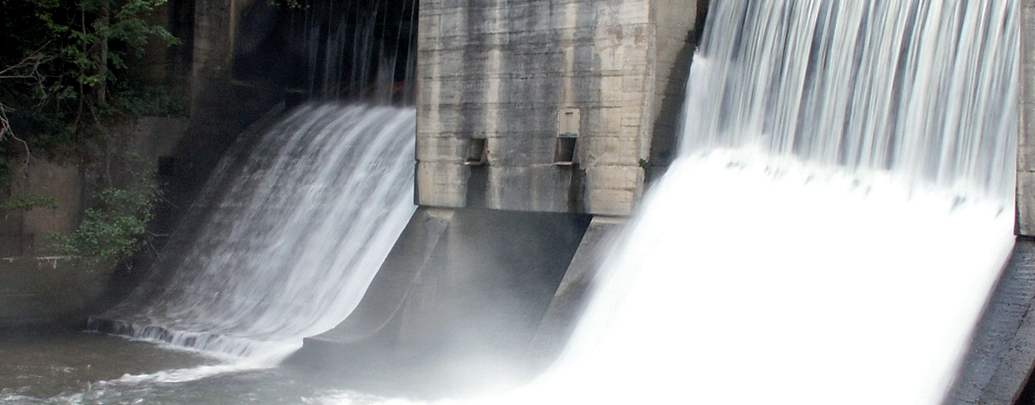
The power of water
JUMO application example
Measuring the turbidity of a success story
Renewable energy sources and a shift away from fossil fuels are becoming increasingly important. In the year 2020 alone, about 20% of Germany's final energy consumption was covered by alternative energy sources, including 18,6 billion kWh from hydropower. Internationally, the topic of energy transition is a priority, resulting in the movement being subsidized with 302 billion dollars worldwide from 2004 to 2019. One country that is consciously investing in renewable energy is Ecuador in South America.Quest
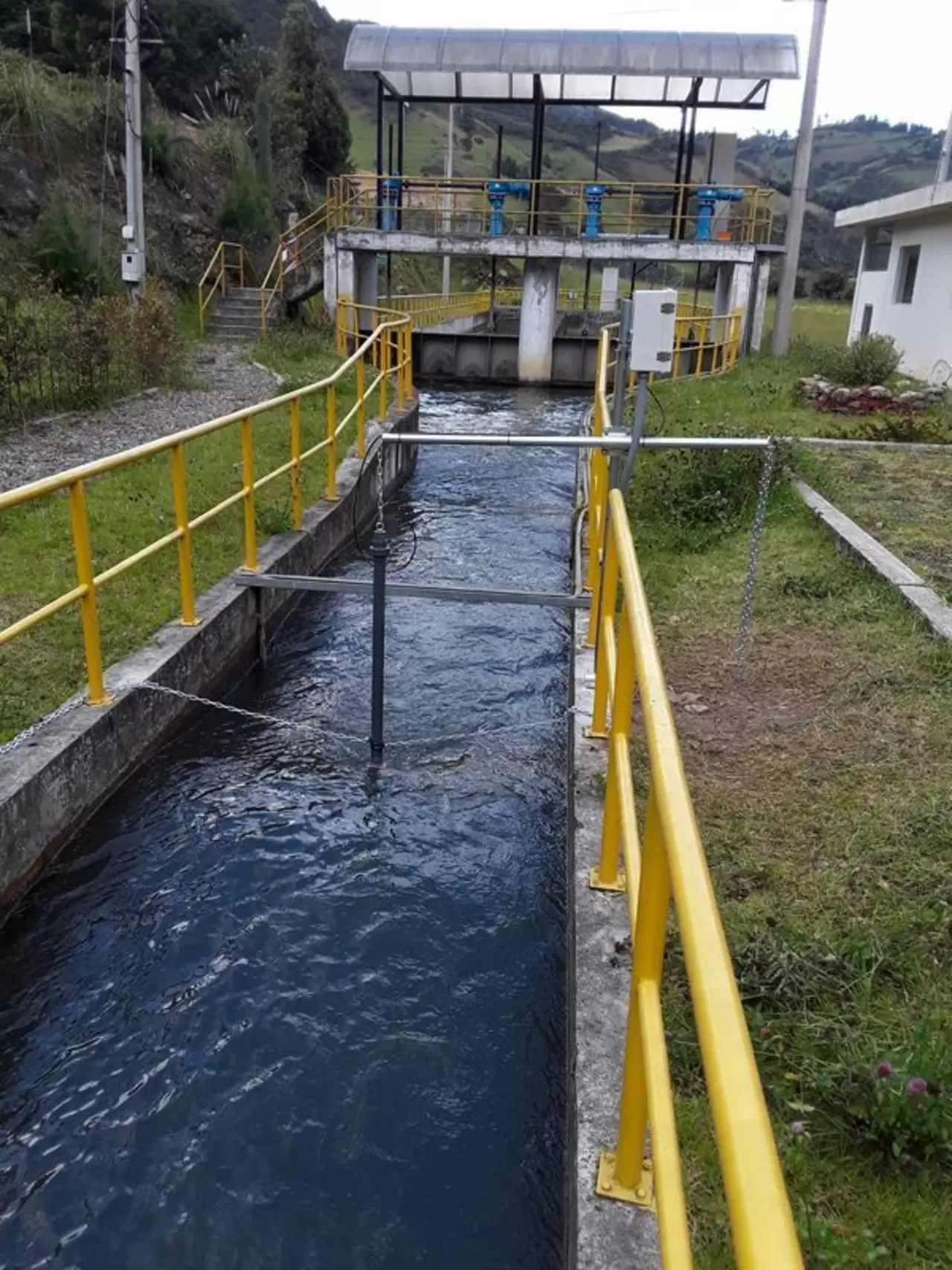
The Ecuadorian Electric Power Company CELEC EP operates several hydroelectric power plants on the Rio Mazar River with a total capacity of 20,8 MW. From this amount, 6,2 MW is generated at Alazan station. The water required for this is supplied from the river to the power plant via a canal. However, since the river originates at an altitude of about 3850 m in the Andes and flows through mostly mountainous terrain, water use is subject to major climate challenges.
The water becomes very turbid with sediment, especially after storms, which can lead to technical failures and increased wear on the turbine in the power plant. Reliable measurement with a digital sensor of turbidity in the inlet channel of a hydroelectric power plant and installation of a weather-resistant transmitter on the bank of the channel should provide a remedy and enable early countermeasures. In addition, sand trap cleaning intervals should be optimized.

Solution Approach
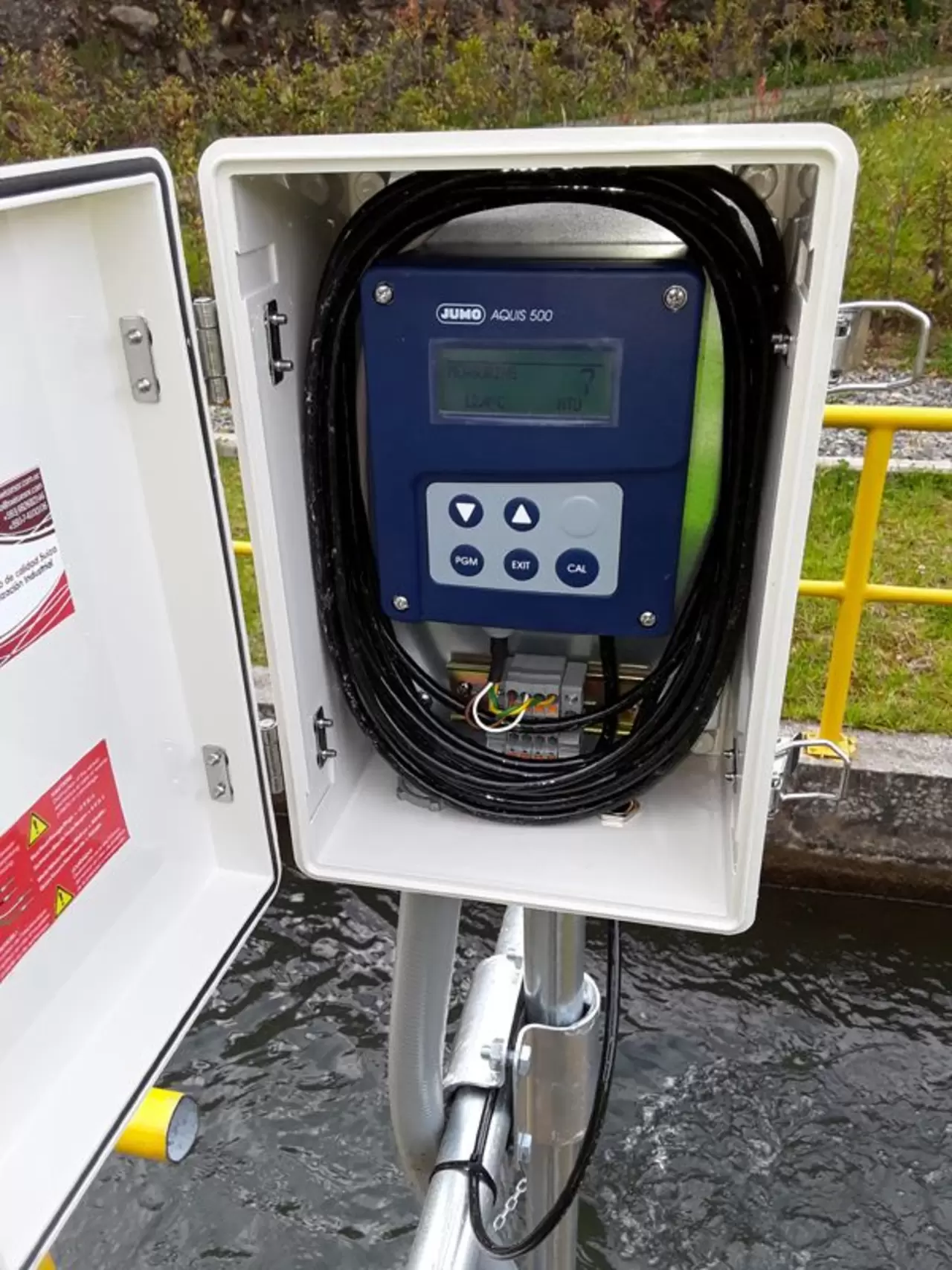
All requirements were met by the manufacturer JUMO's representative in Ecuador, Swissesor, led by CEO Mr Michael Wohlend (Dipl.-Ing.). The JUMO ecoLine NTU digital turbidity sensor and JUMO AQUIS 500 RS transmitter were used. The turbidity sensor withstands a maximum flow of 3.44 m3/s. It was secured with 2 chains for stable readings and mounted to allow movement to prevent entanglement, using an immersion fitting suspended by a chain from a cantilever arm at the inlet. The sensor's 90° scattered-light principle supports a wide measuring range and varied applications. Measurement data is processed directly in the sensor and transmitted to the JUMO AQUIS 500 RS indicator via RS485 using interference-resistant Modbus RTU. It is then forwarded to the plant's SCADA system. The AQUIS itself has an IP67 watertight field housing and was installed in a small control cabinet to protect it against frequently harsh weather.
Project results
The customer needed reliable water quality control through continuous monitoring and transmission of turbidity readings. Swissesor, JUMO’s representative in Ecuador, fully met these requirements using the ecoLine NTU and AQUIS 500 RS.
90° scattered light principle
Interference-resistant Modbus RTU protocol
Interface RS485
Find the right partner for you