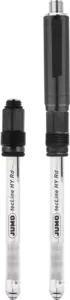
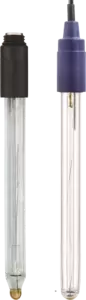
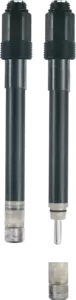
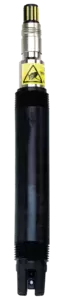
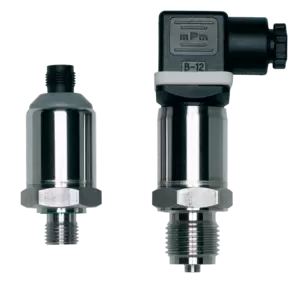
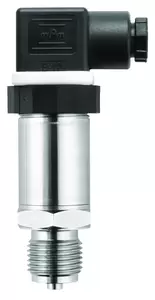
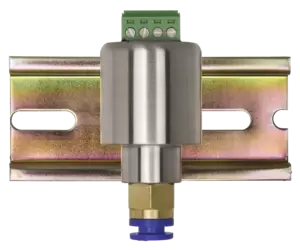
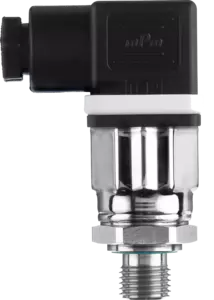
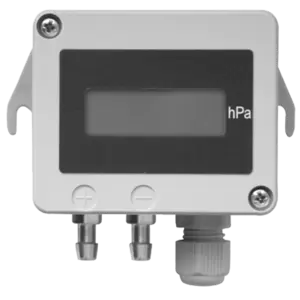
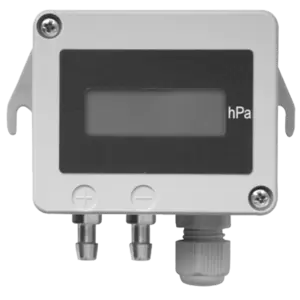
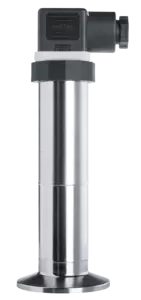
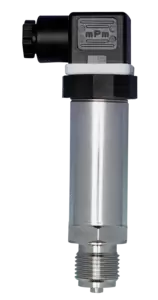
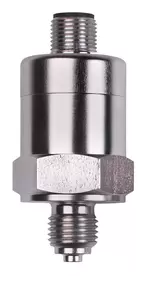
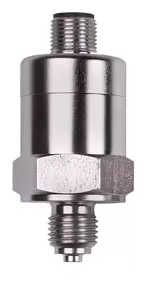
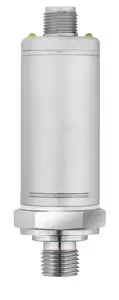
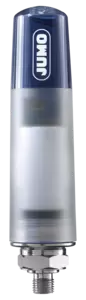
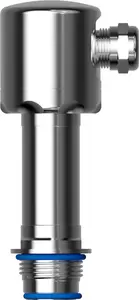
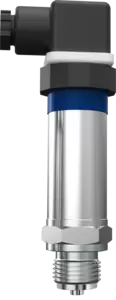
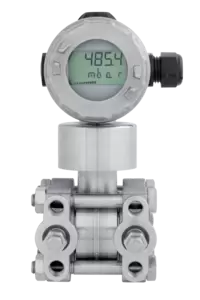
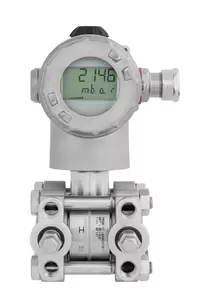
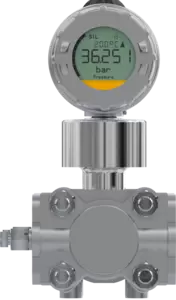
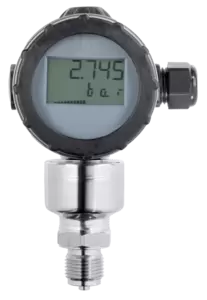
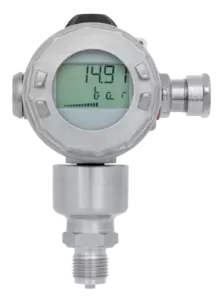
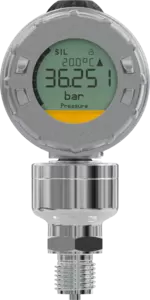
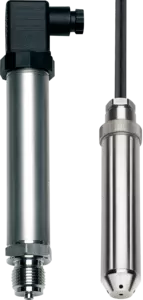
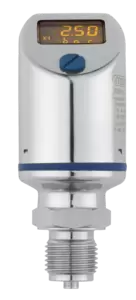
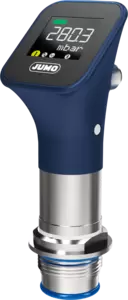
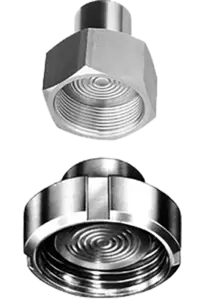
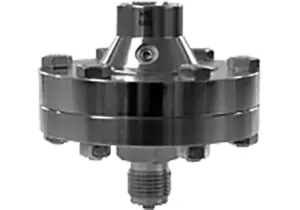
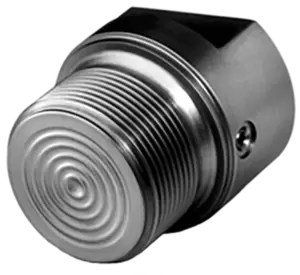
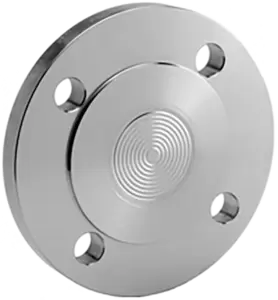
What are differential pressure sensors?
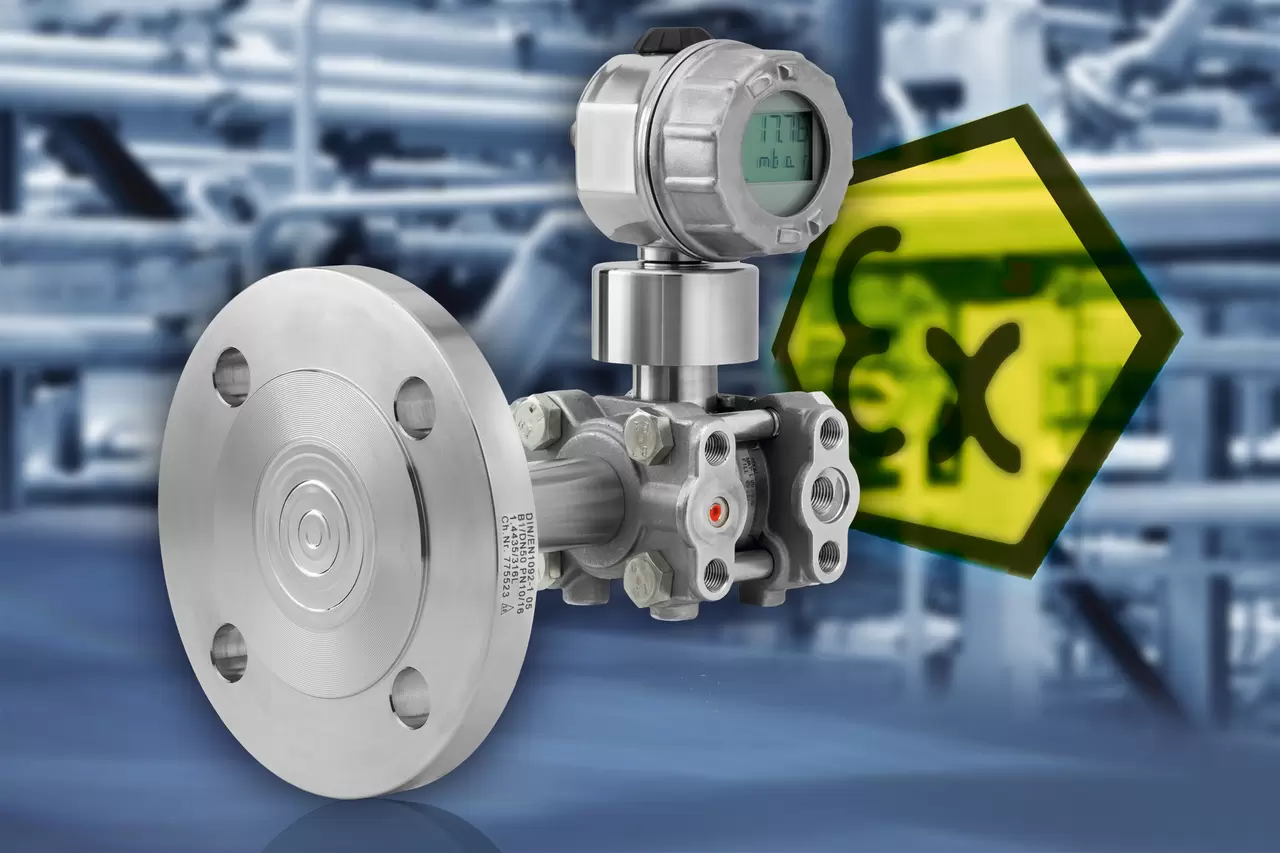
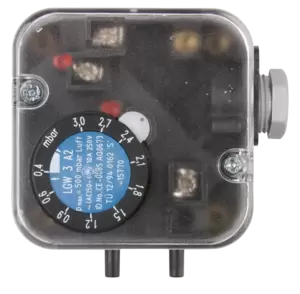
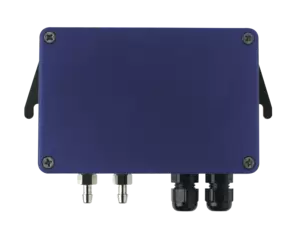
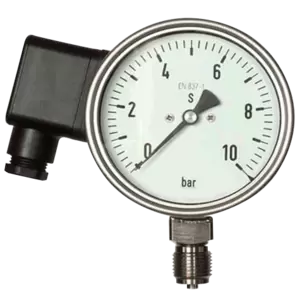
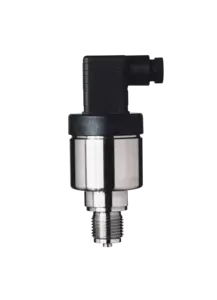
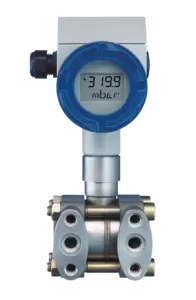
Differential pressure sensors measure the difference between 2 absolute pressures p1 and p2 in gases, steam and liquids. Other applications include filter monitoring, level measurement in closed containers, and safety-critical systems. They are often called differential pressure transmitters or differential pressure transducers.
How does a differential pressure transmitter work?
The differential pressure transmitter has 2 hermetically/airtight sealed chambers, each with a process connection, which are separated from each other by a flexible membrane with a resistance bonded bridge. The process connections are connected in front and behind the possible pressure reduction so that the pressures act on the membrane in the opposite direction. If the pressure in the chambers is the same, the membrane remains flat. When the pressure in one of the chambers decreases or increases, the membrane tilts towards the chamber with lower pressure.
What are the different types of differential pressure sensors?
A distinction is made between piezoresistive and capacitive measurement. Most differential pressure sensors today are based on the piezoresistive effect (change in electrical resistance of a material caused by stress or pressure). This effect is achieved by metal strain gauges, which are glued to the already mentioned elastic membrane, or by silicon wafers.
Where are differential pressure sensors used?
Differential pressure sensors can be found wherever pressure relationships need to be continuously measured and verified (for example in filter monitoring or flow measurement).