Logo JUMO

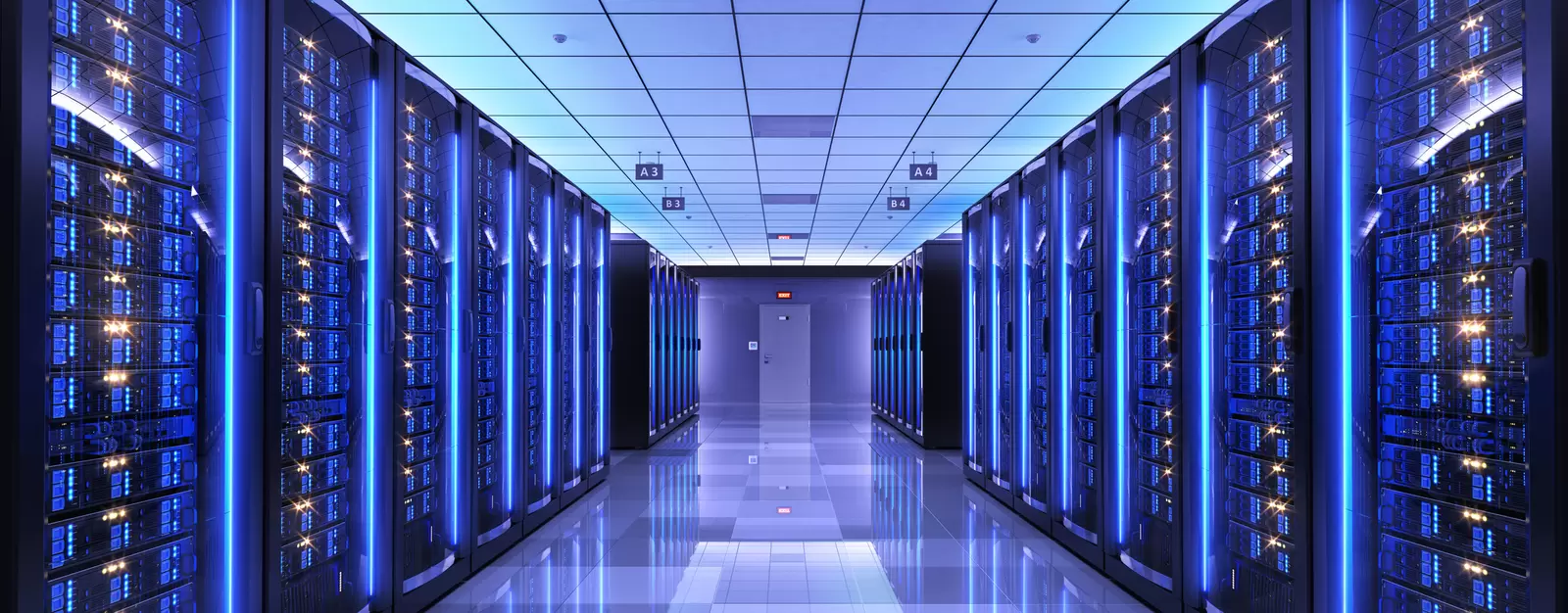
Climate control and cooling in data centers

Climate control

The smooth operation of data centers and server rooms depends on constant monitoring and control of environmental factors. Failure to provide adequate monitoring can result in overheating, equipment failure, and deterioration of the PUE value. Fortunately, the JUMO comprehensive system for measuring, regulating and recording critical parameters ensures maximum security for your data center and can be customized by our specialist engineers to suit your specific requirements. You can count on:

Precise sensor technology for a wide range of measured values
Reliable and automated control
Flexible browser-based rating system
Contact us!

Data Center Cooling in Practice

During operation, equipment and installations consume electricity, which leads to increased heat generation in data centers. Therefore, the generated waste heat must be efficiently removed to maintain the air temperature within the optimal range at all times. Especially in hot months, warm air circulation alone is not enough. That's where JUMO comes in with its advanced data center cooling solutions. A perfectly coordinated system of sensors, controls and data analytics ensures your data center operates optimally even at high temperatures.

Sensors

We offer you a wide range of analog and digital sensors, specifically designed to meet the demands of today's data centers. Parameters measured include temperature, humidity, level, flow and conductivity.

Management

Our sensors transmit measured values to a data processor/controller or directly to JUMO variTRON series automation systems using modern communication standards such as IO-Link or Single Pair Ethernet (SPE). This seamless integration enables precise, real-time control of data center airflow.

Data processing

Data processing JUMO variTRON is done on a web browser basis using our cloud solution/system SCADA. It can be implemented from any location - even if there is no data center - as long as you have access to the Internet. When controlled by JUMO controller, a JUMO variTRON. series device is required as a gateway

Download

Brief overview in PDF format

Multisensor for temperature, humidity and level measurement CO₂

Watch video
Video JUMO

Intelligent Cooling Systems for Data Centers

  • Perfect interaction
  • Modern communication standards
  • Browser-based assessment
  • Customizable dashboards
  • High level of data security
  • Alarm management

Sensor technologies and transducers

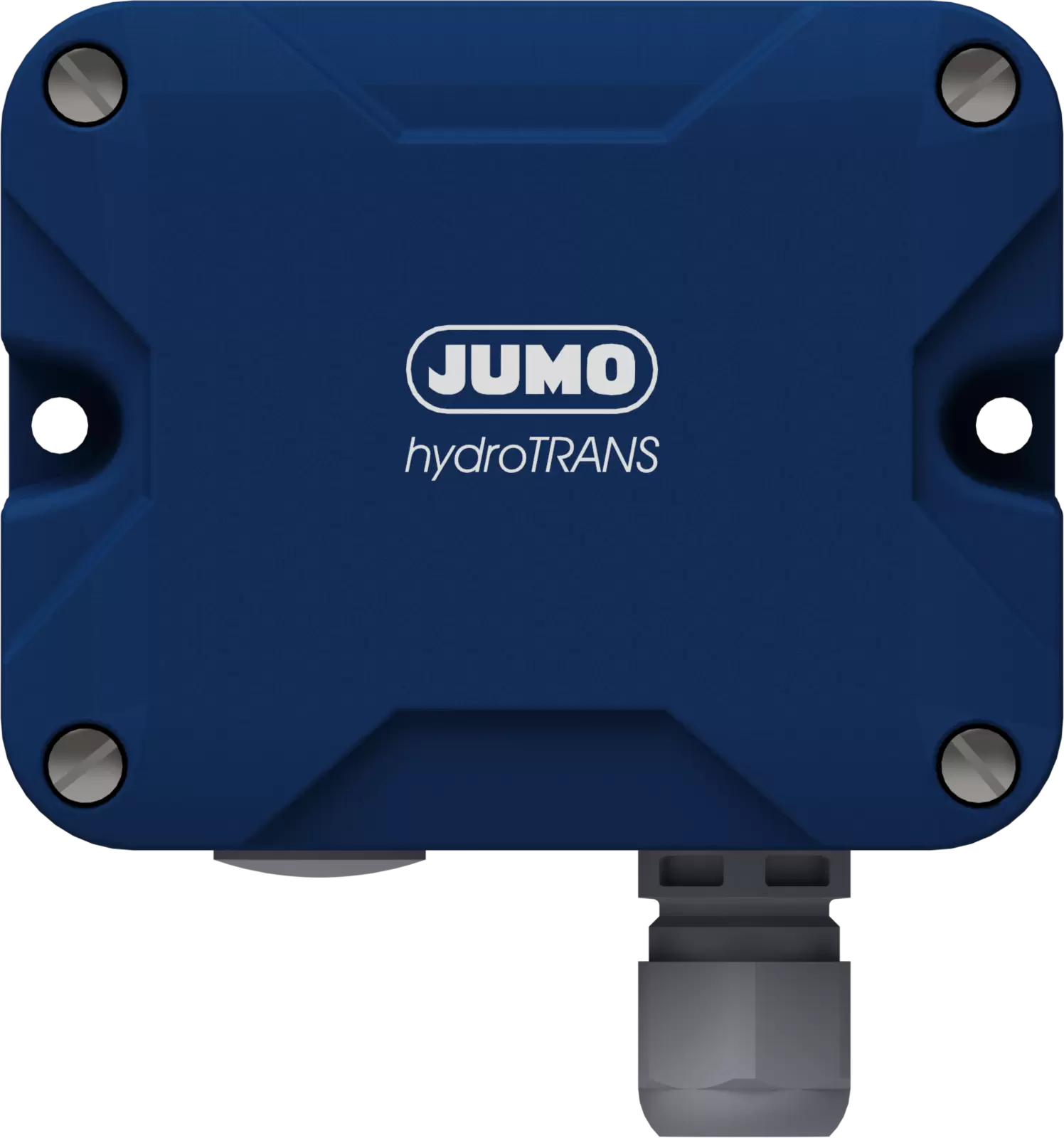
JUMO hydroTRANS S30

Humidity and temperature sensor with additional module CO₂, channel version

  • Easy assembly
  • Heating, ventilation and air conditioning systems, building automation
  • Multisensor (temperature, humidity, CO₂)

To the card

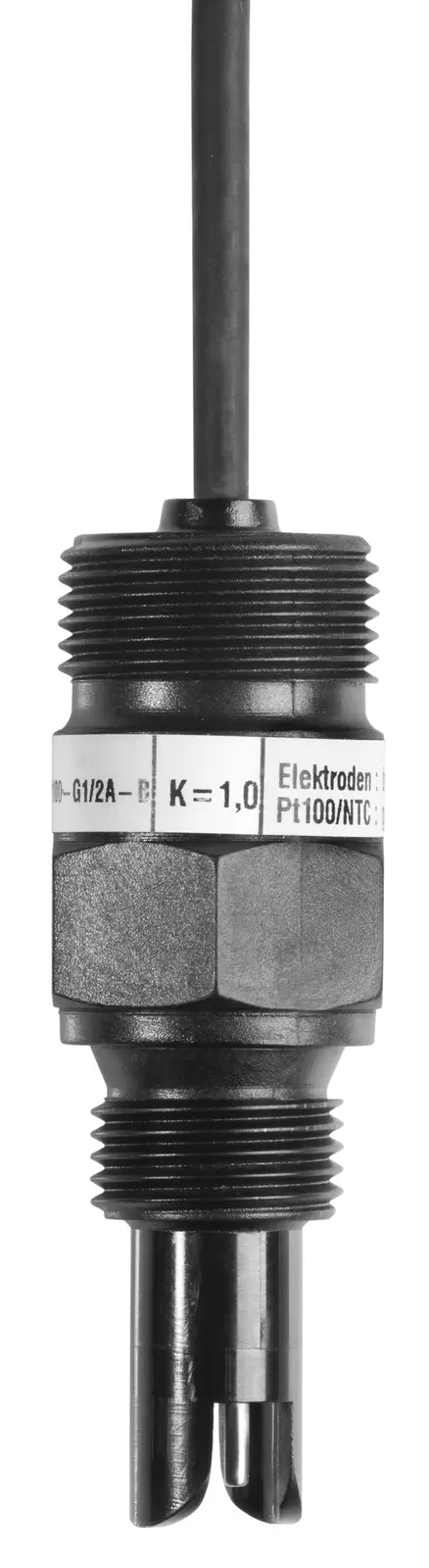
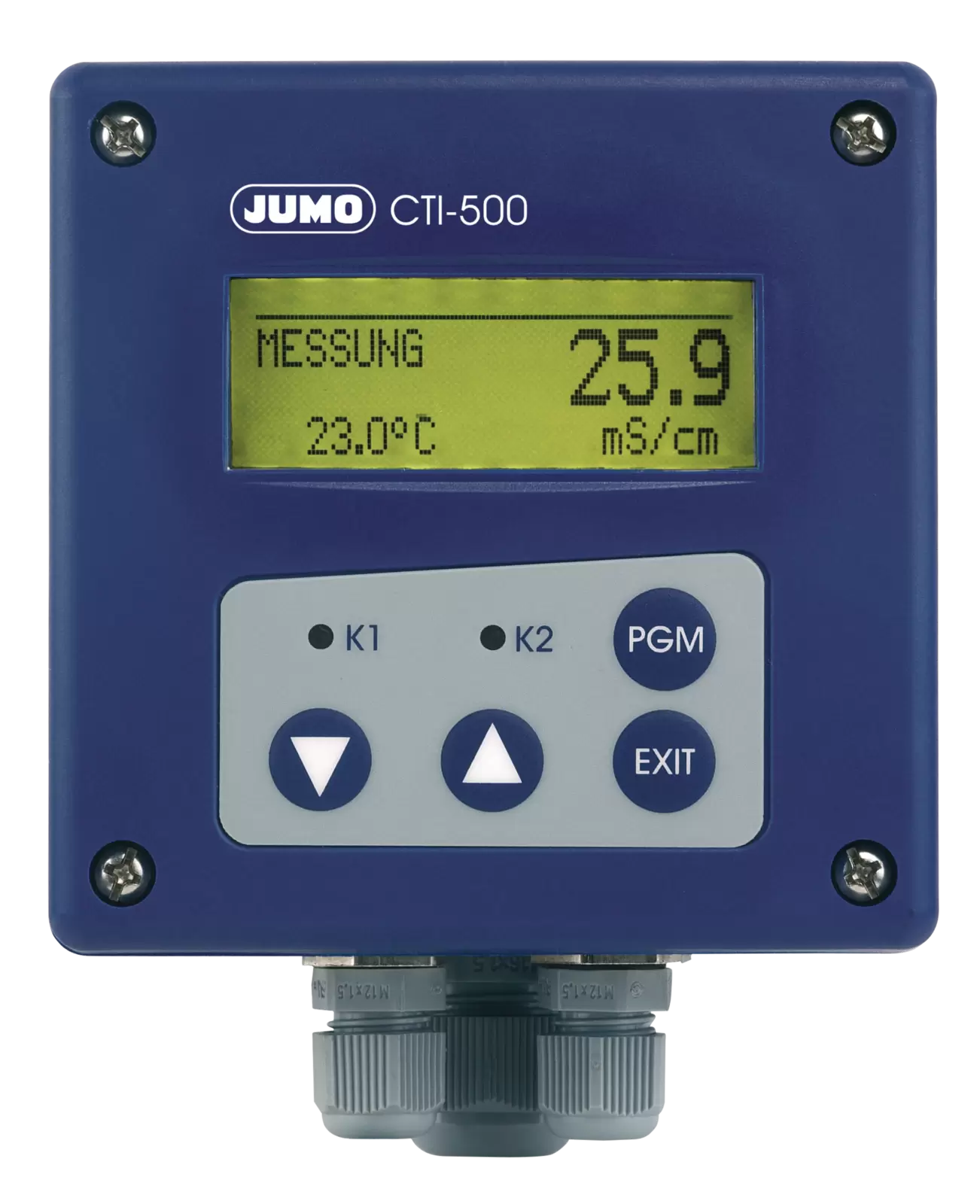
JUMO CTI-500

Conductivity sensor with switching contacts
  • Activation 4 measuring ranges
  • User-friendly programming option
  • Activation 4 temperature coefficients
To the card

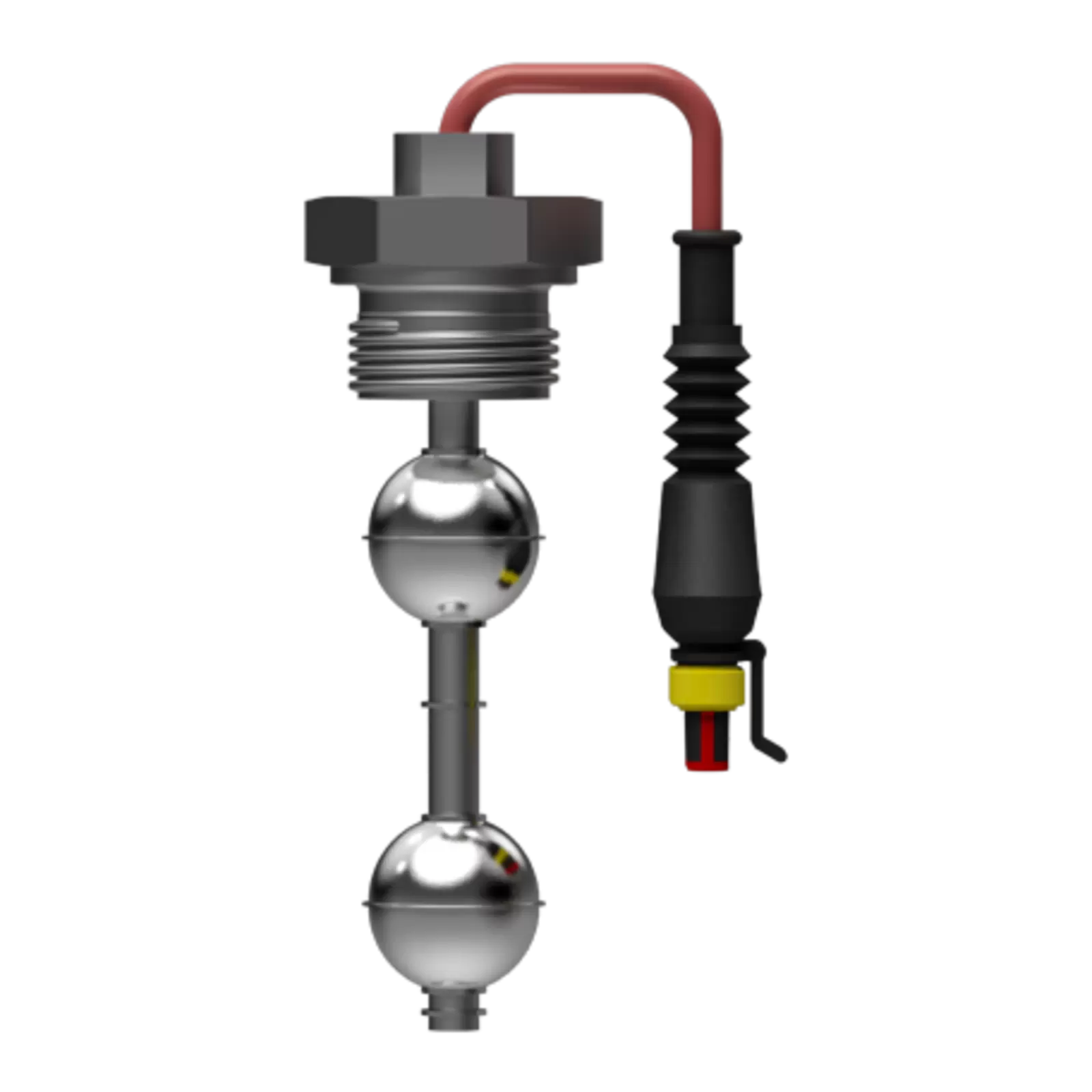
JUMO NESOS R01 LS

Miniature floating switch

  • Excellent value for money
  • For [Ex d] an amplifier with disconnector is not required
  • Set up your device without the need for maintenance
To the card

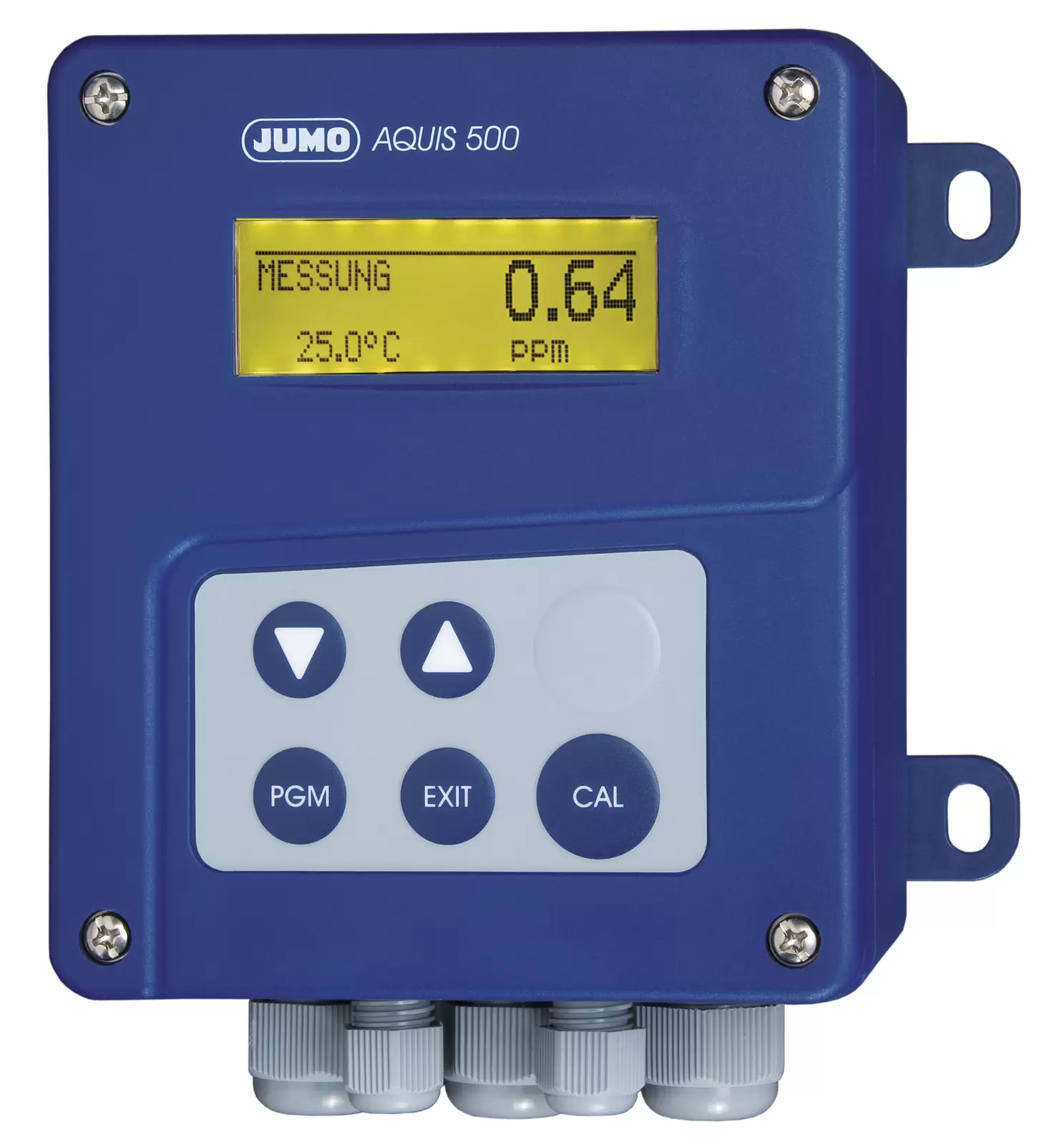
JUMO AQUIS 500 CR

Conductivity sensor and controller

  • Selecting Data Visualization Methods
  • Convenient programming
  • Automatic temperature compensation
To the card

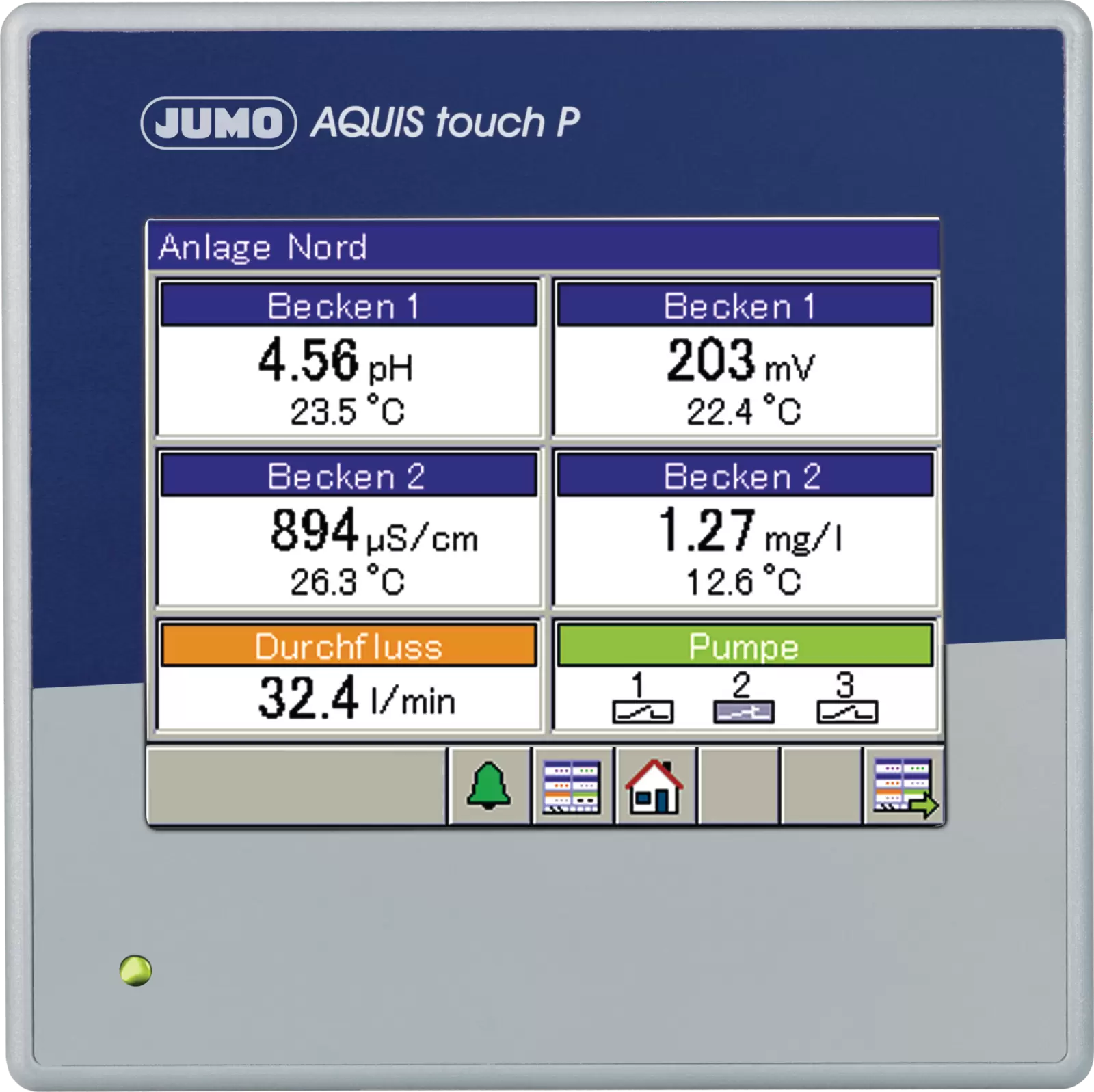
JUMO AQUIS touch P

Modular multi-channel measuring device (liquid analysis)
  • 15 additional measuring signals can be connected
  • 2 input for analysis in any combination
  • 10 configurable switching outputs
To the card

Automation

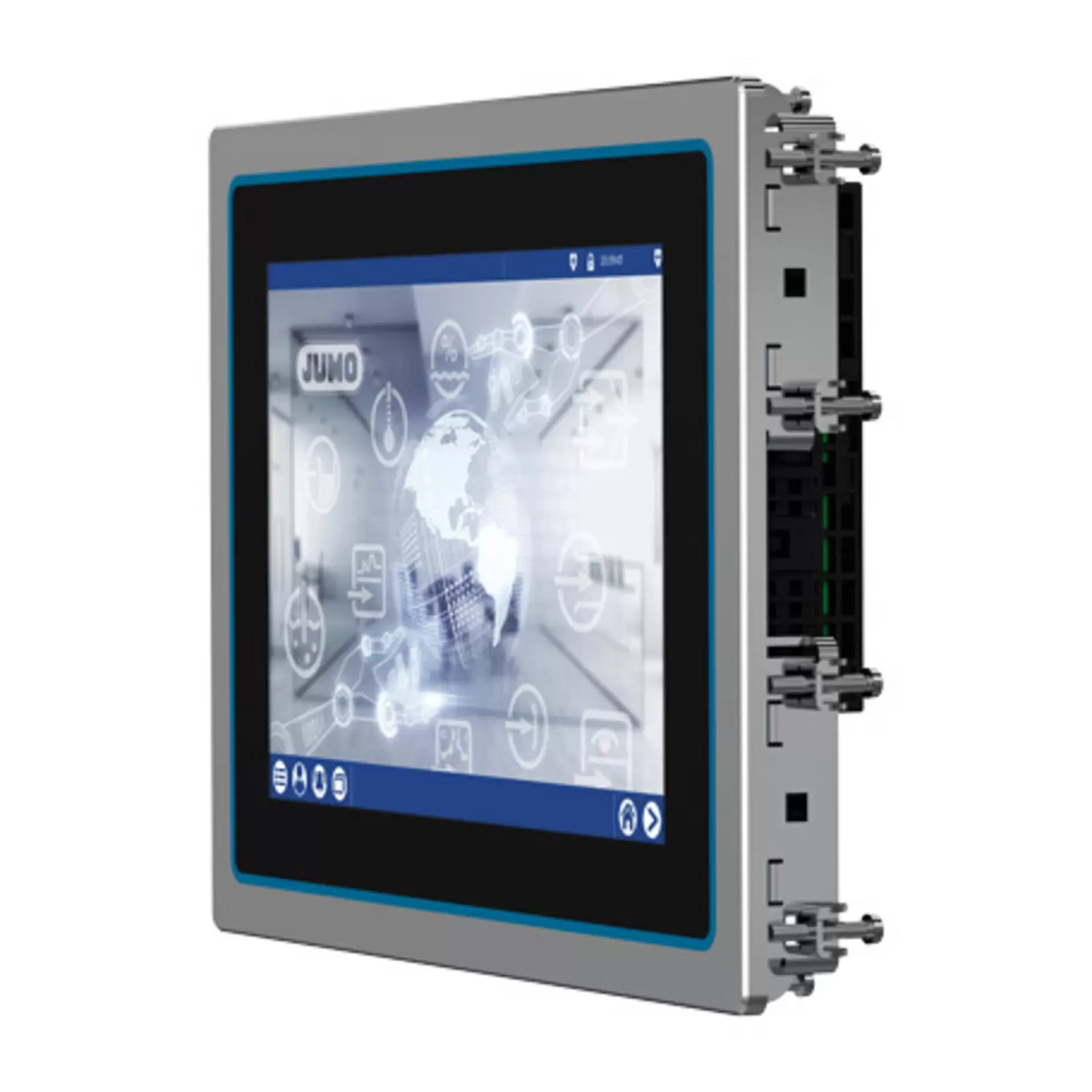
Touch PLC Controller JUMO variTRON 500

Touch panel with integrated CPU for automation system
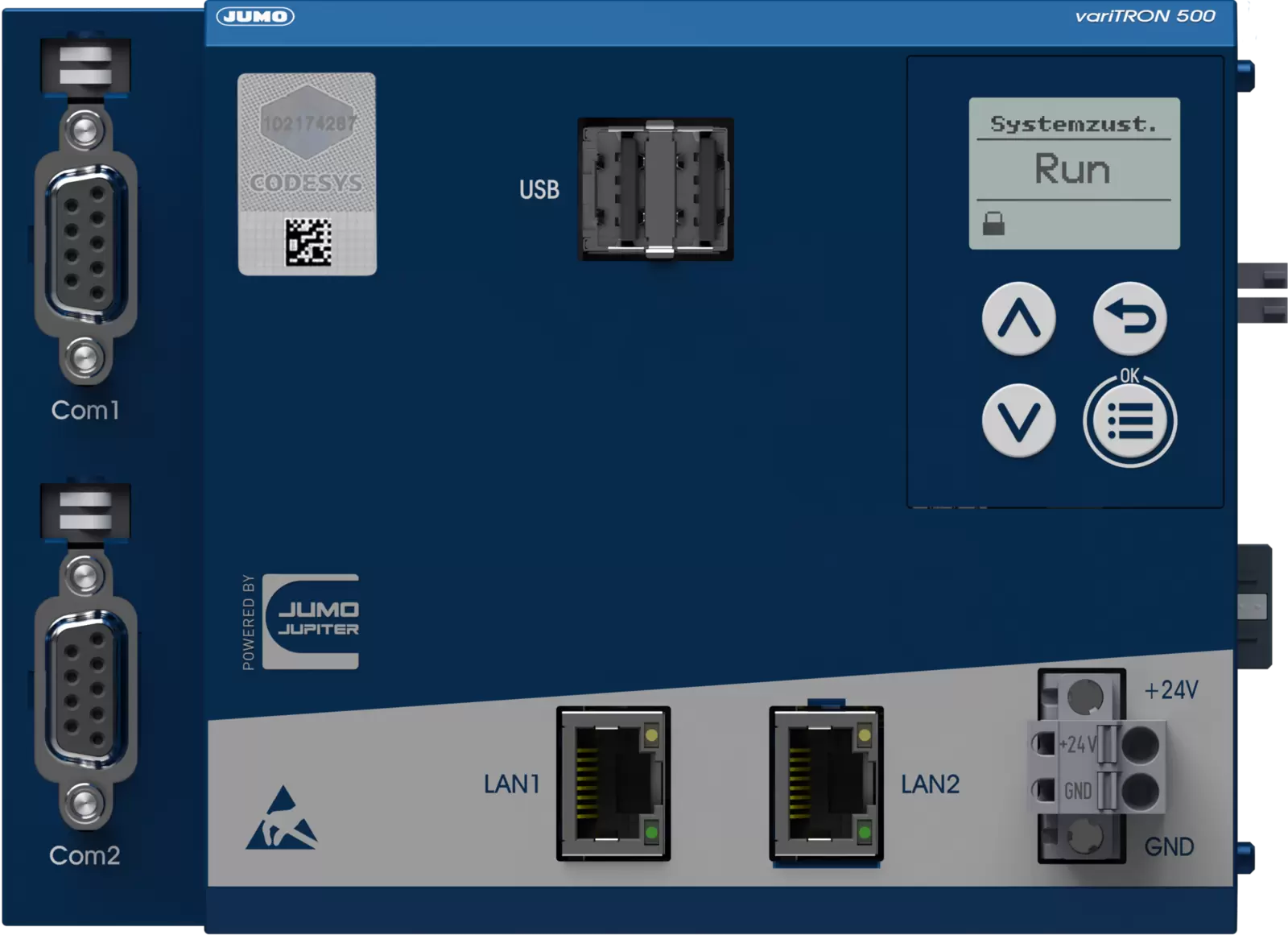
  • Visualization of technological processes and production facilities
  • CODESYS V3.5 and Node-RED as development environments
  • Supports multiple fieldbus systems
To the card

JUMO variTRON 500

Central processor for automation system
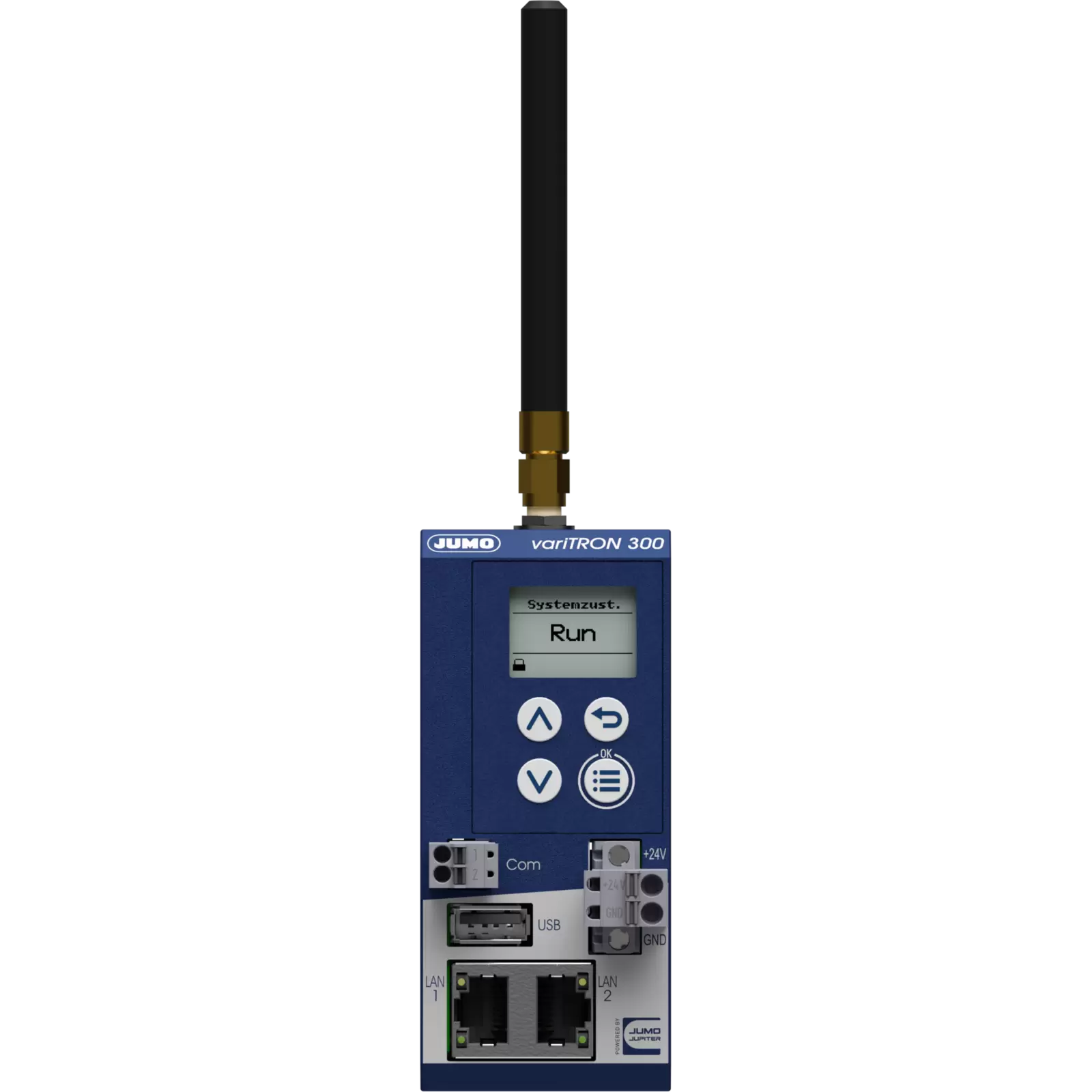
  • Software function integration (PLC)
  • High degree of scalability
  • Process diagram of all connected modules
To the card

JUMO variTRON 300

Central processor for automation system with optional wireless interface
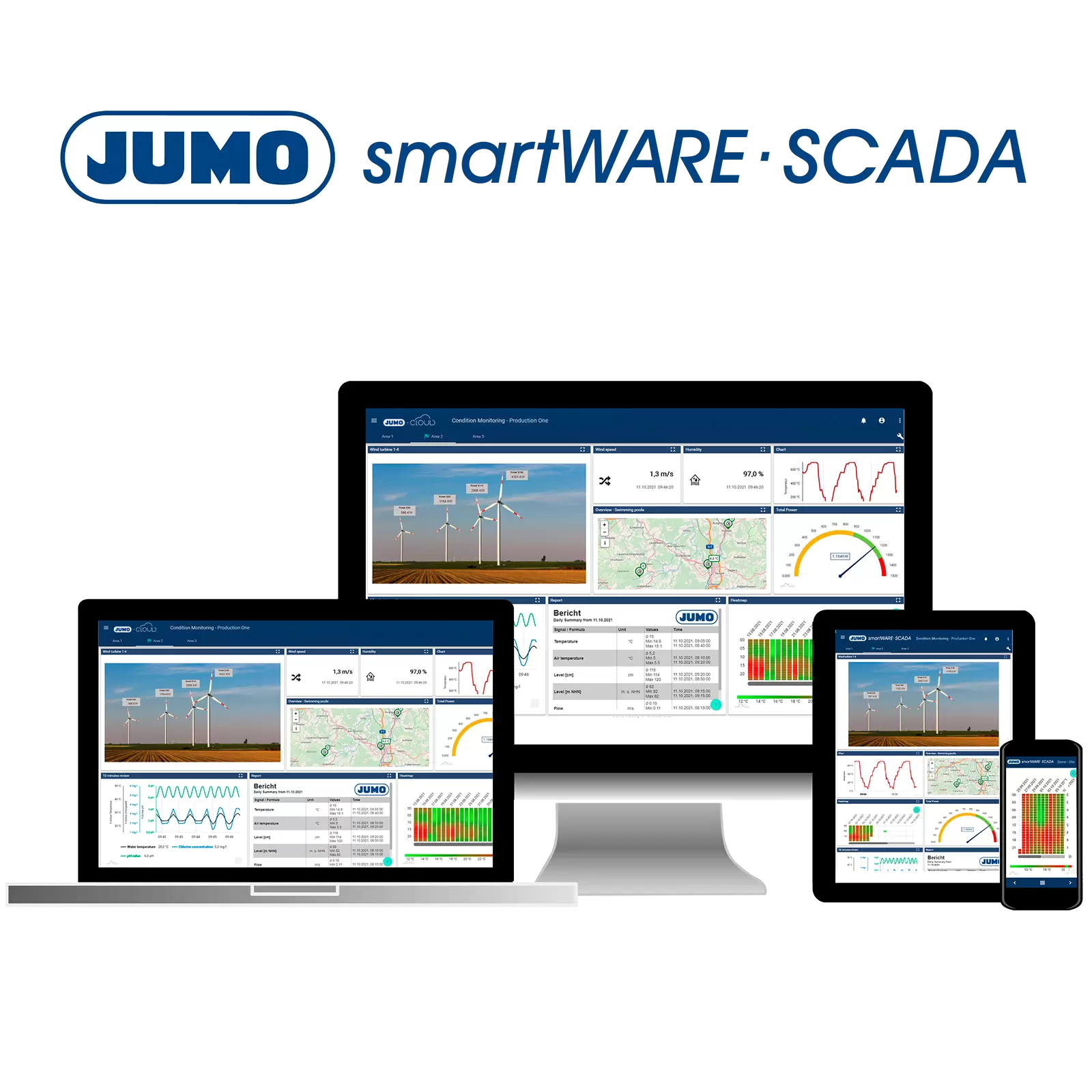
  • Supports multiple fieldbus systems
  • Connecting modern web panels
  • Programming environment CODESYS V3.5
To the card

Evaluation

JUMO smartWARE SCADA

Software for monitoring and controlling technological processes
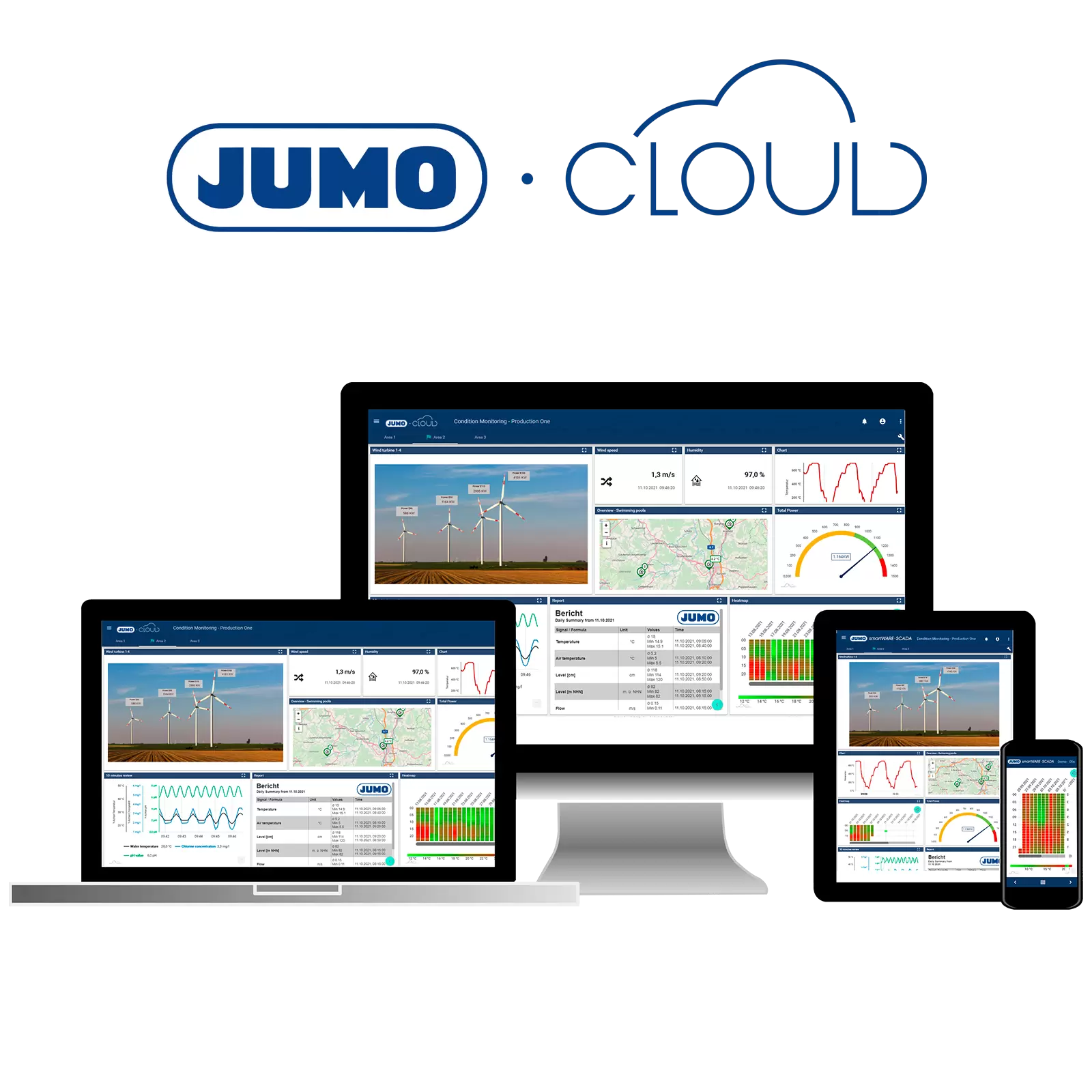
  • Maximum transparency of your processes
  • Alert system management as part of preparedness planning
  • Unlimited access via browser
To the card

JUMO Cloud

Internet of Things (IoT) platform for reliable process control
  • Accessible worldwide from any standard browser
  • Alarm management
  • High level of data security
To the card

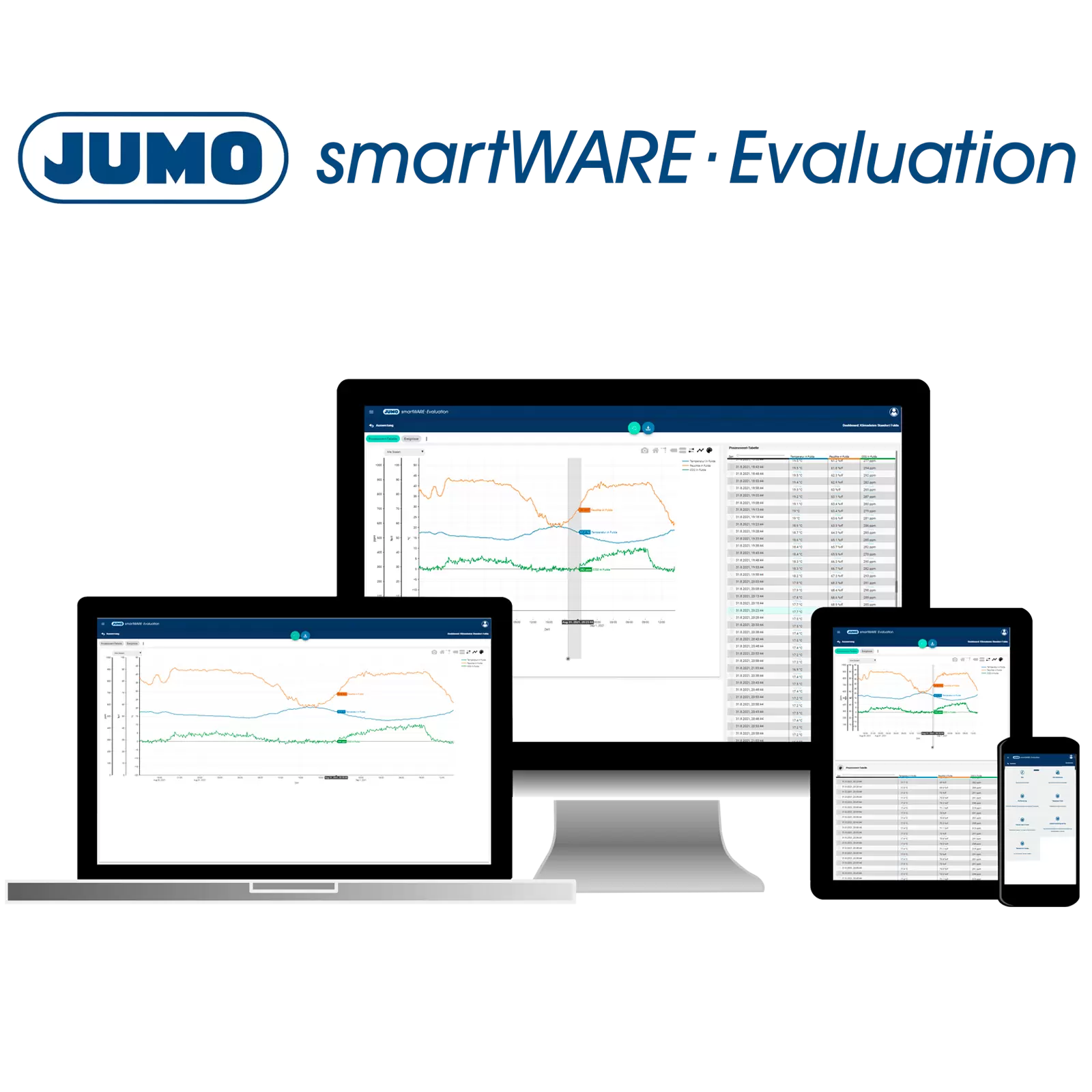
JUMO smartWARE Evaluation

Software for analysis and visualization of measurement data recorded by the JUMO variTRON device

  • Analysis of process data using a browser
  • Customizable dashboards
  • High level of data security
To the card

A Brief Overview of Data Center Cooling Systems

The most important background information

What temperature range is recommended for data centers?
The optimal temperature range is usually between 21 and 24 °C. However, some modern data centers are adopting more flexible temperature guidelines, as many devices can operate efficiently at higher temperatures (up to 27 °C and above), reducing energy costs.
Which cooling methods are particularly effective?

To achieve the best possible cooling efficiency, different methods can be combined. The choice of such combinations depends on the specific requirements and location of the data center. These methods include

  1. Free Cooling: Uses cool outside air to lower indoor temperatures, which is especially energy efficient in cold climates.
  2. Liquid cooling: Uses liquids such as water or special refrigerants to remove heat directly from components, which is more efficient than air cooling.
  3. Inter-Row Cooling: Places cooling units directly between rows of servers to optimize heat dissipation and prevent hot spots.
  4. Cold and hot aisle isolation: Separates cold and warm air flows to improve cooling efficiency and minimize energy loss.
  5. Adiabatic cooling: Uses the evaporation of water to cool the air, which is especially effective in dry climates.
  6. Recooling units: Use cooling towers or dry coolers to remove heat to the environment, often combined with other methods.
What role does airflow management play in commercial data centers?
Airflow management is critical to cooling data centers. Properly regulated airflow ensures cool air enters the servers and warm air escapes. This avoids the formation of “hot spots” that can lead to overheating and equipment failure. In addition, optimizing air flow helps reduce energy consumption because cooling systems require less effort to maintain a set temperature. Ultimately, a well-designed air management system improves the reliability and extends the life of your IT infrastructure.
What are the benefits of smart cooling systems for data centers?
Modern cooling systems automatically adjust cooling capacity in real time according to current demand, which not only reduces energy consumption, but also reduces energy costs through precise temperature control. Continuous data collection enables informed capacity planning and identification of hot spots, while remote monitoring capabilities provide additional flexibility and reliability. This allows you to remotely control cooling processes and quickly respond to changes, which minimizes downtime.
What challenges are data center operators currently facing?
The growing popularity of cloud services, machine learning and the Internet of Things is accelerating the growth in demand for data centers and, as a result, the need for efficient cooling systems. Therefore, adaptability and scalability of cooling and climate control systems, as well as prediction of future thermal density, play an important role in ensuring cost-effective operation of data centers. At the same time, due to growing demand, accurate measurement of energy consumption is becoming increasingly important. After all, cooling can account for a significant portion of a data center's energy consumption.
How will thermal management in data centers and server rooms evolve in the future?
In addition to the introduction of smart technologies, the development of server technology is becoming increasingly important for cooling in data centers. Modern servers are increasingly designed with higher operating temperatures in mind. As a result, both cooling requirements and environmental impact are reduced. Likewise, liquid cooling is increasingly being used in data centers because it provides more efficient heat dissipation than traditional air cooling. Heat is removed directly from the components, which is especially effective in high-density server environments.

Privacy Settings

This preview uses local files. Analytics services JUMO are not connected.