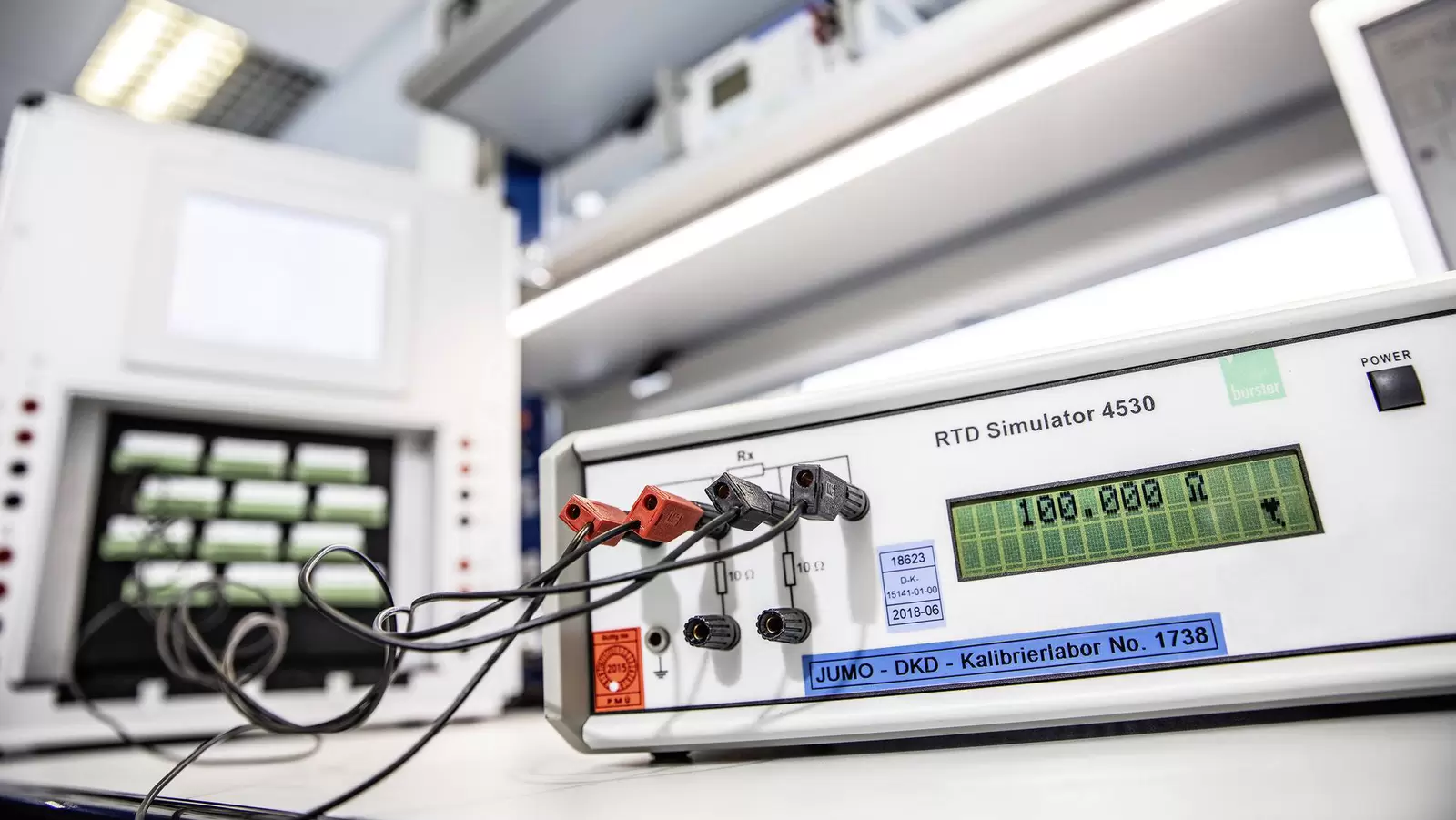
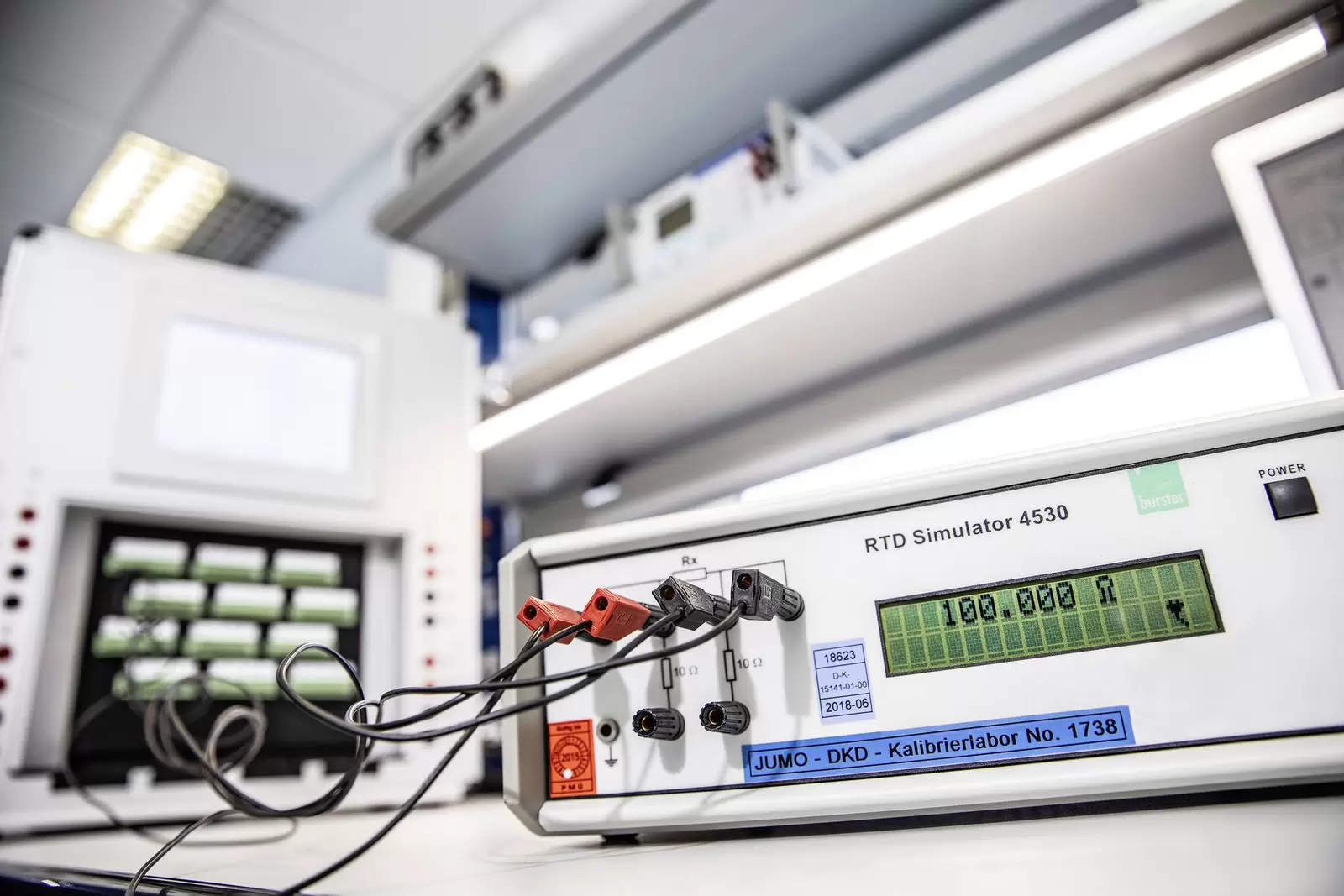
Calibration
DAkkS calibration - what you should know
Never before have optimizing production processes, improving product quality and increasing plant productivity been so important as in today's world VUCA. DAkkS calibration is one of the most important keys to achieving these goals. Find out more about DAkkS calibration and its benefits!
What is DAkkS calibration?
The abbreviation DAkkS stands for DeutscheAkkreditierungsstelle GmbH, which is responsible for the accreditation of calibration laboratories in Germany. The colloquial name "DAkkS calibration" means calibration in which the results are traceable to national standards. This calibration is carried out by an accredited calibration laboratory. This means that the laboratory operates according to certain quality standards and is recognized by DAkkS.
What recommendations are used to calibrate DAkkS?
The calibration is based on internationally recognized calibration guidelines such as the DKD (German Calibration Service) DKD-R 5-1 directive. The calibration results are therefore internationally comparable and in accordance with recognized standards. At the same time, the quality and traceability of the calibration are guaranteed.
DAkkS accredited laboratory
What is the difference between DAkkS calibration and DKD calibration?
Until 2010, calibration in Germany was carried out according to Deutscher Kalibrierdienst (DKD) specifications. With the creation of DAkkS, DKD was integrated into DAkkS, so that the calibration DKD corresponds to today's DAkkS calibration. The two terms are often used interchangeably.
What does the DIN EN ISO/IEC 17025:2018 standard provide?
The standard DIN EN ISO/IEC 17025 sets the requirements for testing and calibration laboratories. It covers various areas including qualifications of personnel, use of suitable test and calibration methods, traceability of measurements to recognized standards, control of measurement uncertainty, quality assurance and monitoring of measuring devices. It also sets out requirements for the presentation of results, including the presentation of measurement uncertainties and other relevant information.
How does DAkkS calibration work?
Calibration of DAkkS is performed according to standard calibration procedures. First, the measuring device to be calibrated is examined or evaluated for calibration capabilities. Calibration is then carried out using high-precision standards. The measured values are compared with known reference values and documented.
How are the DAkkS calibration results documented?
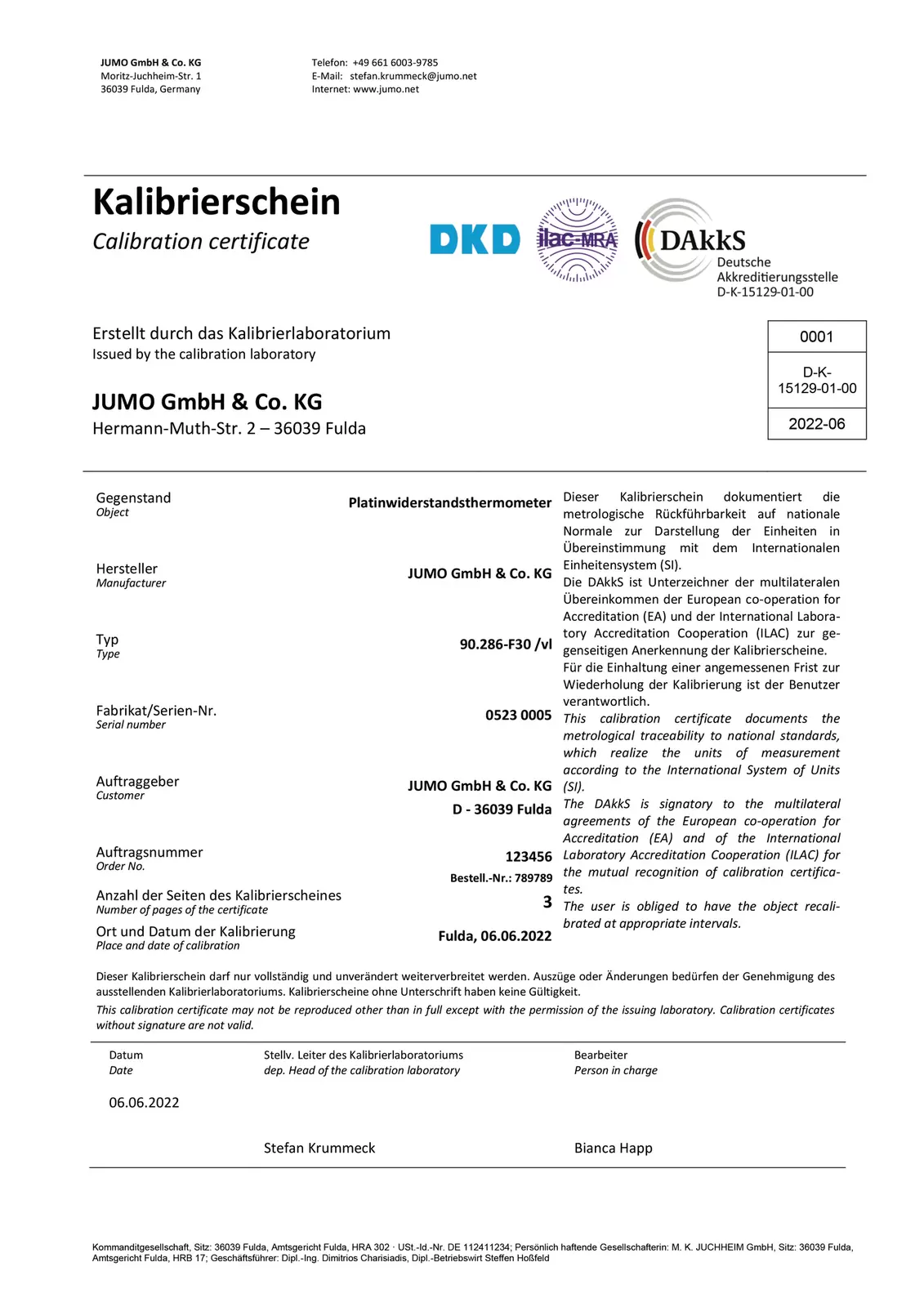
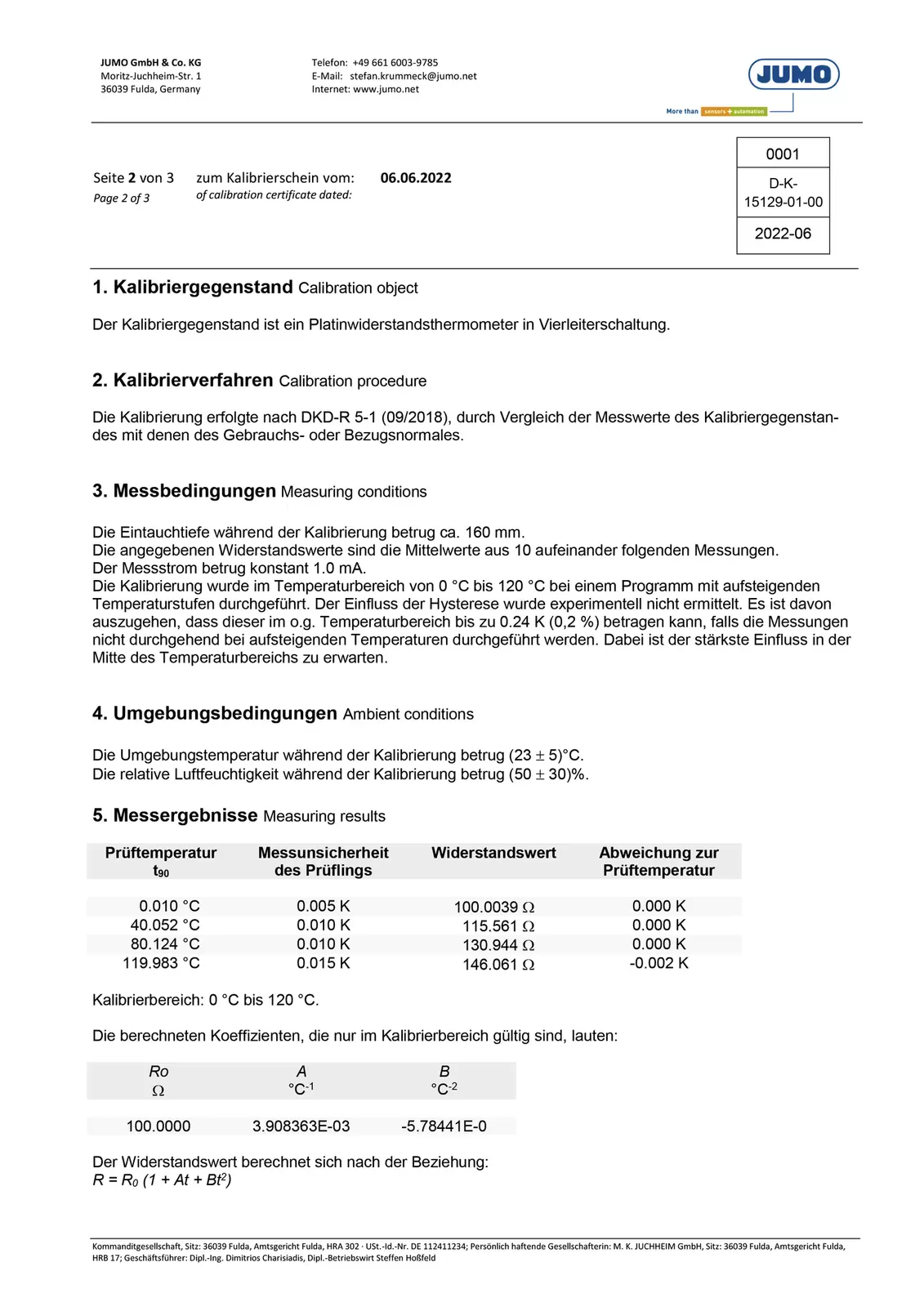
Upon completion of DAkkS calibration, device owners receive a calibration certificate. It contains detailed information about the calibrated device, the calibrations performed, and the calibration results. The Calibration Certificate provides proof of calibration, traceable to national standards, and can be presented in the event of a quality audit or customer request.
How often should DAkkS be calibrated?
The frequency of DAkkS calibration depends on various factors, such as standard requirements, manufacturer specifications and the specific conditions of use of the measuring device. The frequency of recalibration is determined by the user. Typically, annual recalibration is initially recommended to ensure that the measuring instruments continue to perform with high accuracy. It is important that the user knows the history of their measuring device and, if necessary, extends or shortens the recalibration period to ensure that the measuring device meets the device specification between recalibration periods.
For whom is DAkkS calibration required?
In many industries, such as automotive, healthcare or food production, accurate measurements are critical. After all, incorrect measurements can lead to quality problems, safety risks or legal consequences. Calibration in an accredited calibration laboratory ensures that measuring instruments comply with current standards and requirements and provide accurate results. If a standard or directive requires "measured values traceable to national standards", a DAkkS calibration is always preferable since the DAkkS calibration certificate, unlike the ISO calibration, is already considered proof.
What are the benefits of DAkkS calibration?
Even companies for which DAkkS calibration is not mandatory benefit from high measurement accuracy when calibrated according to DIN EN ISO/IEC 17025. In this way, they can more easily achieve their internal and external quality goals and pass audits more reliably. Additional costs of repeated audits and product recalls due to poor quality can be avoided.
What is the difference between DAkkS calibration and ISO or factory calibration?
In addition to the DAkkS calibration, which is at the top of the calibration hierarchy, other calibration procedures are available:
Calibration ISO
The ISO calibration is carried out by specialized calibration laboratories in accordance with ISO standards (ISO). Requirements for quality management systems and technical expertise of calibration laboratories are defined by the standard ISO 9001. This ensures consistent quality and traceability to the so-called reference standard. If DAkkS calibration is not absolutely necessary, is not available for the measured variable or is not required for cost reasons, calibration can also be performed in accordance with ISO 9001. However, calibration certificates do not have international validity.
Factory calibration
Factory calibration or manufacturer calibration is performed by the meter manufacturer. The instrument is calibrated before delivery to the customer to ensure that it meets the stated specifications. The factory calibration can be used as a reference point to verify the instrument's measurements. However, it should be noted that factory calibration does not generally provide the same traceability to codes and standards as DAkkS calibration.
Our services