
FAQ on the topic of humidity measurement
Air humidity measurement
Introduction
In addition to temperature, humidity is a very important process parameter. The relative humidity of the surrounding atmosphere, for example, has a far-reaching effect on our well-being and health. In industrial processes, correct humidity control is often critical for product competitiveness and quality. Correctly adjusting the humidity level can also contribute to noticeable energy savings. The list of applications in which moisture measurement is considered important can be extended indefinitely. Wherever the water vapor content of the air can produce or influence chemical, physical or biological processes, continuous humidity monitoring is essential.Concepts and physical laws
Air composition
Clean and dry air contains the following components (in%):
78,10 Volt% nitrogen
20,93 Volt% oxygen
0,93 Vol-% argon
0,03 Vol.% carbon dioxide
0,01 Volt% hydrogen
along with smaller amounts of neon, helium, krypton and xenon.
In addition to these components, indoor and outdoor air contains a number of gases and solids, as well as a certain amount of moisture in the form of water vapor. Air, therefore, is a homogeneous mixture of various gases and can be considered an “ideal gas”. Solar radiation and wind ensure uniform mixing of the gases involved so that there is no stratification despite differences in specific gravity.
Dalton's Law P = P1 + P2 + ...
The total pressure of a gas mixture consists of the sum of the partial pressures of its components. In simple terms, air thus consists of dry air and water vapor.
P = Pw + Pdry
Where(P)w) is the partial pressure created by water vapor, and (Pdry) is the sum of the partial pressures of all other gases.
Steam saturation pressure
Air is capable of absorbing and storing a certain amount of water vapor depending on its temperature. This amount increases with increasing temperature. At any particle temperature, the resulting water vapor pressure can only rise to the saturation limit, which is denoted as the saturation water vapor pressure PS.
Atmospheric pressure and the presence of other gases or pollutants do not affect the behavior described above.
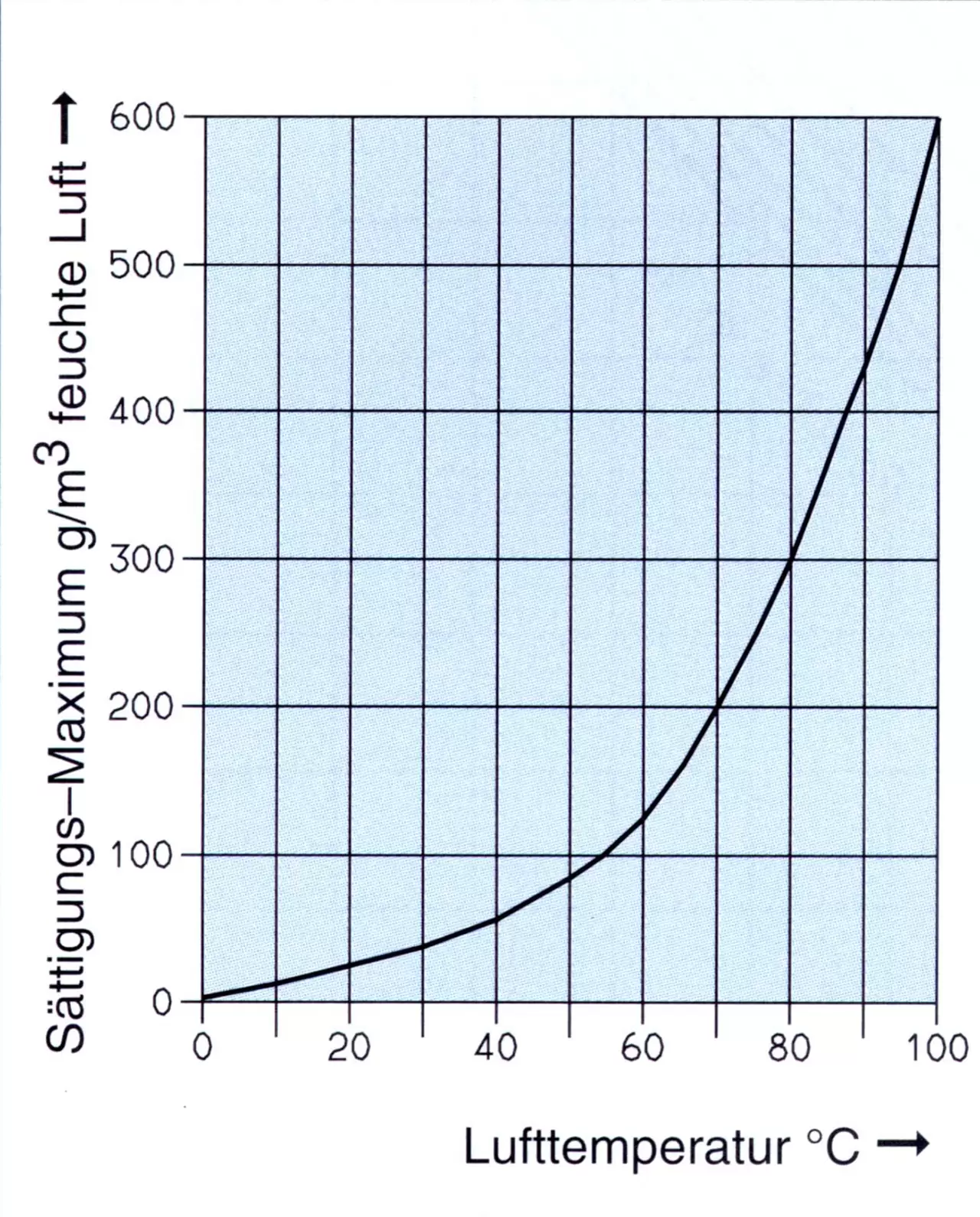
dew point
dew point temperature Td the temperature at which the air is saturated with water vapor; Further addition of water vapor or cooling of the air leads to condensation. Excess water vapor condenses as rain, fog or condensation. The saturated state is maintained. The dew point temperature is equal to the saturation temperature of water vapor and can be maximum at 100 °C of normal pressure.
Parameter measurement
The air humidity content can be characterized by two parameters. We distinguish between relative humidity and absolute humidity.
What is relative humidity?
Relative humidity is defined as the ratio between the actual vapor pressure Pw in gas and the maximum possible vapor pressure, i.e. vapor saturation pressure Psat a certain temperature.
rH=100 * ( Pw / Ps (t) ) [%]
Relative humidity is a non-dimensional value. It represents a ratio and is indicated as a percentage. Since saturation pressure depends only on air temperature, it follows that relative humidity also depends on temperature.
Effect of temperature change ±1 K at different temperatures and humidity
10 °C | 20 °C | 30 °C | 50 °C | 70 °C | |
10 % rF | ±0,7 % | ±0,6 % | ±0,6 % | ±0,5 % | ±0,5 % |
50 % rF | ±3,5 % | ±3,2 % | ±3,0 % | ±2,6 % | ±2,3 % |
90 % rF | ±6,3 % | ±5,7 % | ±5,4 % | ±4,6 % | ±4,1 % |
What is absolute humidity
Absolute humidity is the amount of water vapor contained in a certain volume of air.
a = mass of water vapor / volume of air
The unit for absolute humidity is g/m3Measuring absolute humidity has the great advantage that it represents the amount of water actually present in the gas, for example, regardless of temperature.
Mixing ratio or water content (x)
This represents the ratio of the mass of water vapor to the mass of dry gas. The units usually used are g/kg of broken air and %.
Thus, it indicates how many grams of water vapor are contained in one kilogram of dry air. In process engineering, the determination of water content plays an important role as it provides much more meaningful data compared to relative humidity.
The dimensions of absolute and relative humidity have a fixed ratio to each other. Absolute humidity units can be selected according to relevant requirements.
The most common units are:
Dew point (temperature) - °C
Mixture ratio - g/kg dry air
Absolute humidity - g/m3
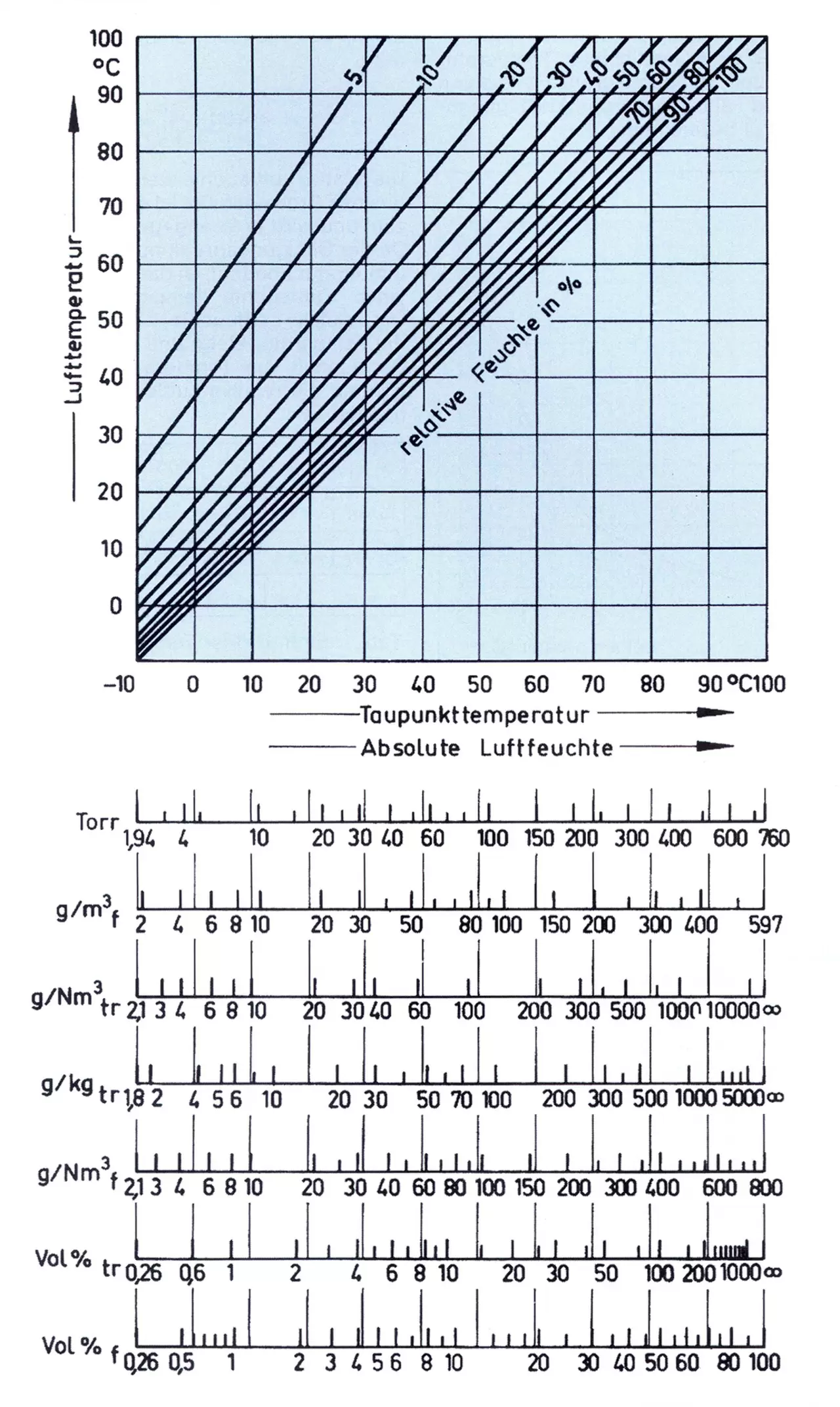
Relationship between temperature, moisture content and relative humidity
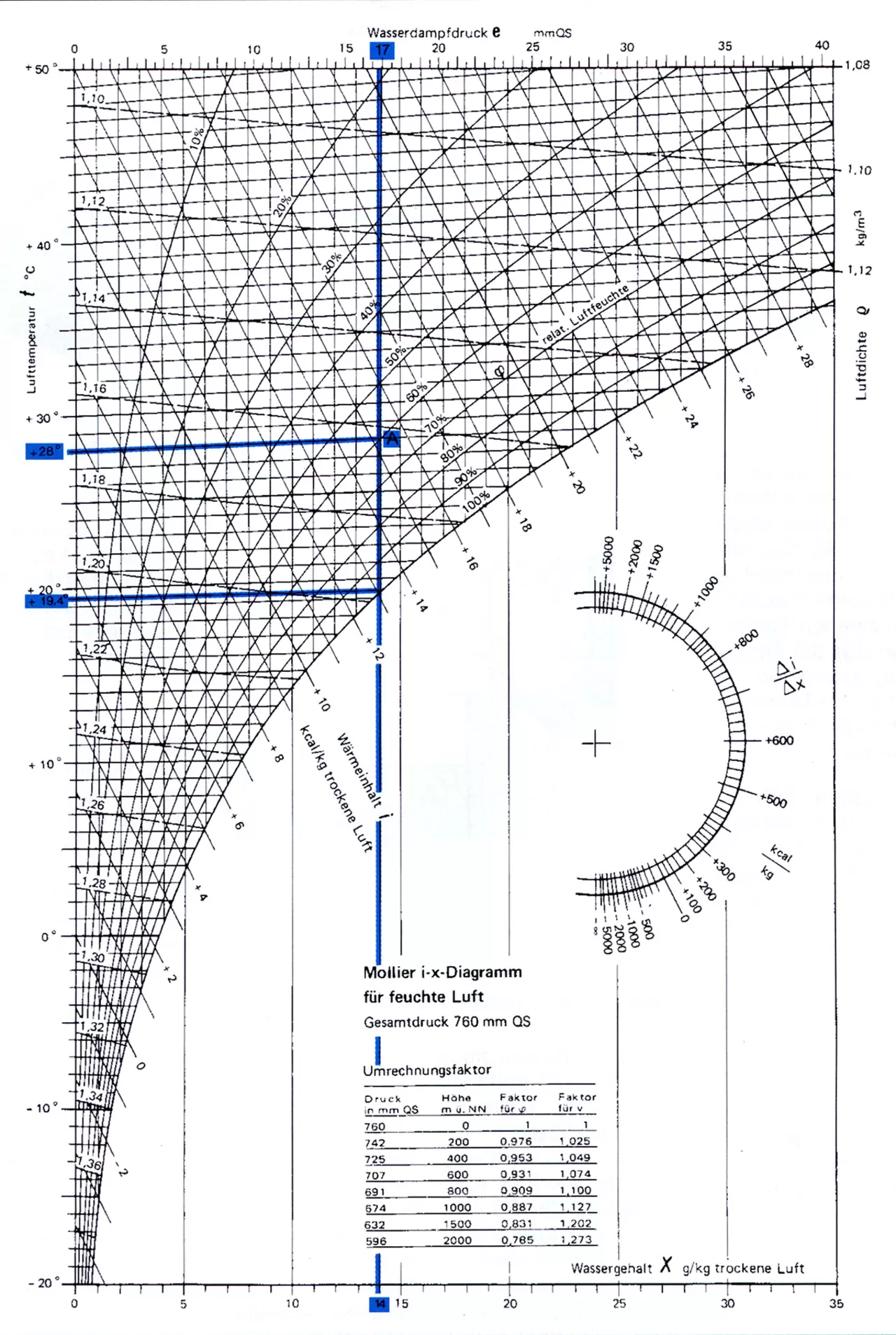
The corresponding correlations are shown in the i-x diagram (Molière diagram).
Example of using a diagram:
a) Determination of water content X and water vapor pressure e
Measured:
Air temperature 28 °C
Humidity 60% pH
Find the measured values on the chart and determine the intersection point A. Draw a vertical line at the intersection point and draw to the top and bottom edges of the chart. The intercept at the upper edge gives the water vapor pressure e = 17 mm QS, which at the lower edge gives the water content X = 14 g/kg.
b) Determination of dew point temperature
Measured:
Air temperature 28 °C
Humidity 60% pH
As described in point a) Determine the intersection point A. From the intersection point A, move vertically to the maximum humidity 100% and from this point draw a line along the axis (to the left) with temperature division. The new intersection point results in a dew point temperature of 19,4 °C. The dew point temperature 19,4 °C is the same as the dew point temperature 19,4 °C.
Humidity measurement methods and their applications
Various measurement methods can be used to determine air humidity. The selection of the most appropriate measurement method is usually made by the user in relation to the object to be measured. It is often possible to achieve higher measurement accuracy or meet required requirements with a simple but properly positioned moisture measuring device. For general assistance, some of the best known and most commonly used moisture measurement methods and their applications are described below.
Psychometric measurement method
With the psychometric measurement method, relative air humidity is determined directly. The measurement method is based on the principle of heat exchange.
A psychrometer basically consists of two independent temperature sensors, one of which is used as a humidity temperature sensor and the other is used as a dry temperature sensor. The humidity temperature sensor is surrounded by absorbent fabric soaked in water. Depending on the temperature or moisture content of the circulating air, a certain amount of water vapor is released by evaporation through the required air flow. This causes the surface of the wet bulb to cool noticeably (wet bulb temperature). In this case, the ambient air temperature (dry temperature) is measured by a second temperature sensor. Thus, the determined psychometric temperature difference is a measure of the relative humidity of the air.
With the help of a psychometer and careful processing, accurate measurements of air humidity can be made. For example, Assmann aspiration psychometers are used as internationally recognized reference and control devices. An integrated spring-coil fan provides an average constant air speed of approximately 3 m/s, which flows around the thermometers. The temperature difference is read using two calibrated glass thermometers.
The assessment is carried out manually using a table or graphical panel of the psychrometer. The German Meteorological Service's psychrometer aspiration diagrams, divided into 10th degrees, can also be used for higher estimation accuracy.
In addition to the aspiration psychometer, a variety of designs are also available. The field of application of most mechanical psychometers with glass thermometers is limited to the climatic range for measurements at temperatures ≤ 60 °C. The advantage of these designs is that no power is required.
Electric psychrometers provide an expanded field of application. The wet bulb and dry bulb are measured with Pt-100 resistance thermometers. This means that relative humidity, determined by the "Sprungsche formula", can be directly displayed or further processed in microprocessor-controlled displays, control and recording devices with appropriate input circuitry. The temperature range is from almost 0 to 100 °C.
The psychrometric measurement method is insensitive to other methods of measuring humidity and is therefore largely suitable for measurements in dirty, solvent-containing and corrosive gases. For example, electrical psychometers are used for continuous measurements in the meat and cheese industry.
Using a psychometric measurement method that has been known for over a hundred years, a simple and cost-effective method for measuring humidity is realized. Reliable continuous measurements, however, require specific criteria that must be met. For example, adequate ventilation and humidification, as well as maintenance of measuring equipment. For details, refer to the operating and procedure instructions for the relevant instrument.
Capacitive measurement method
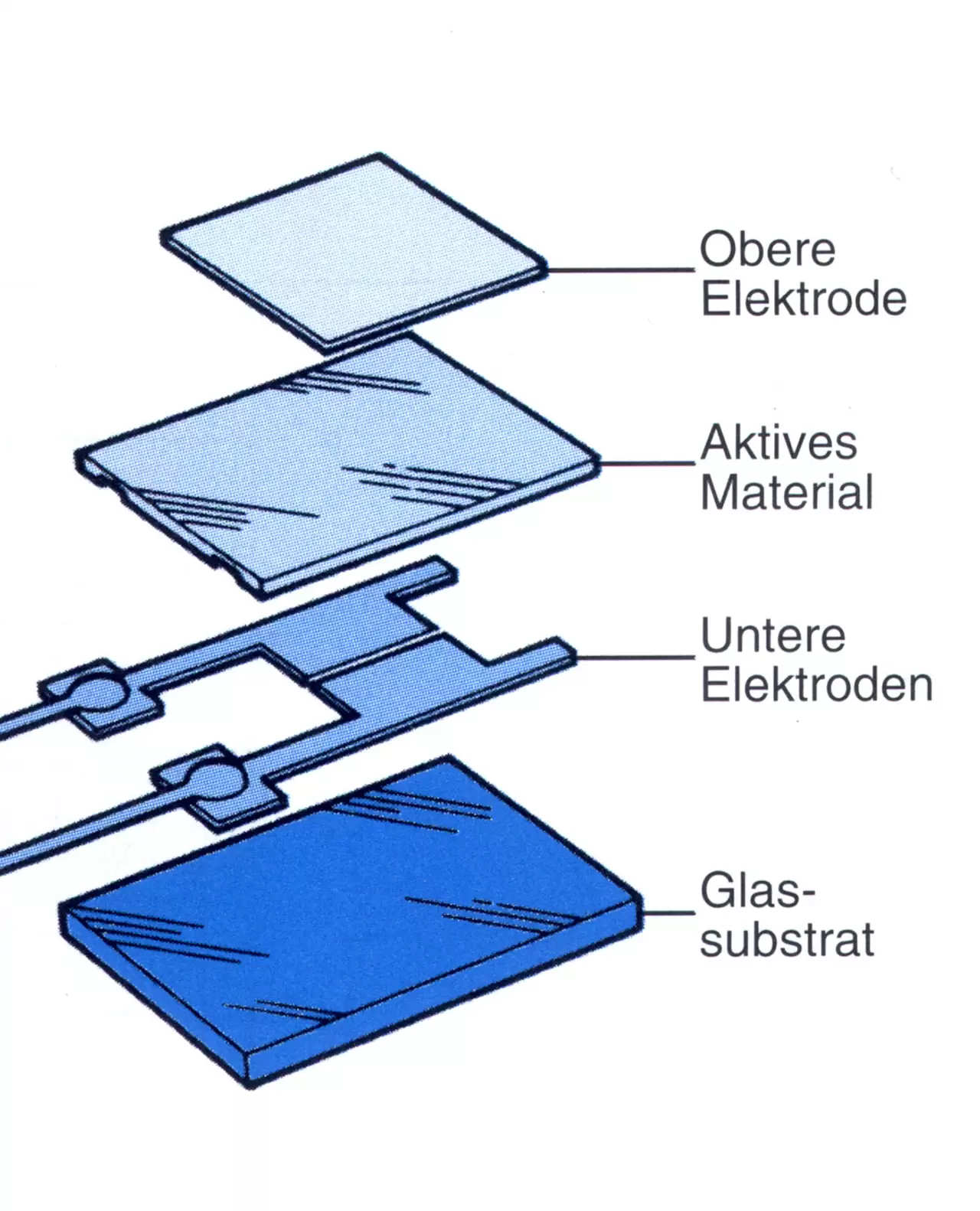
The moisture content of the ambient air, which depends on temperature, penetrates the hygroscopic top electrode of the humidity sensor in the form of water vapor and reaches the active polymer film.
The amount of water vapor absorbed in the polymer film changes the electrical properties of the humidity sensor and affects the change in capacitance. The change in capacitance is proportional to the change in relative humidity and is evaluated by the downflow electronics and converted into a standardized output signal. The evaluation electronics must be adapted to the base capacity of the corresponding humidity sensor.
Thanks to the special design and low dead weight of capacitive humidity sensors, very fast response times are achieved. They are also largely insensitive to light clogging and dust. To protect against contact with the surface, the sensors are enclosed in a plastic housing. For applications in high humidity ranges, dew-proof versions are available.
Capacitive measurement methods are used, for example, in the climate sector and in industrial processes where there are no high concentrations of corrosive gases or solutions.
The standard measuring range for capacitive humidity sensors is mainly from 10 to 90 % RH. With higher quality versions, measurements in the range from 0 to 100 % RH are possible.
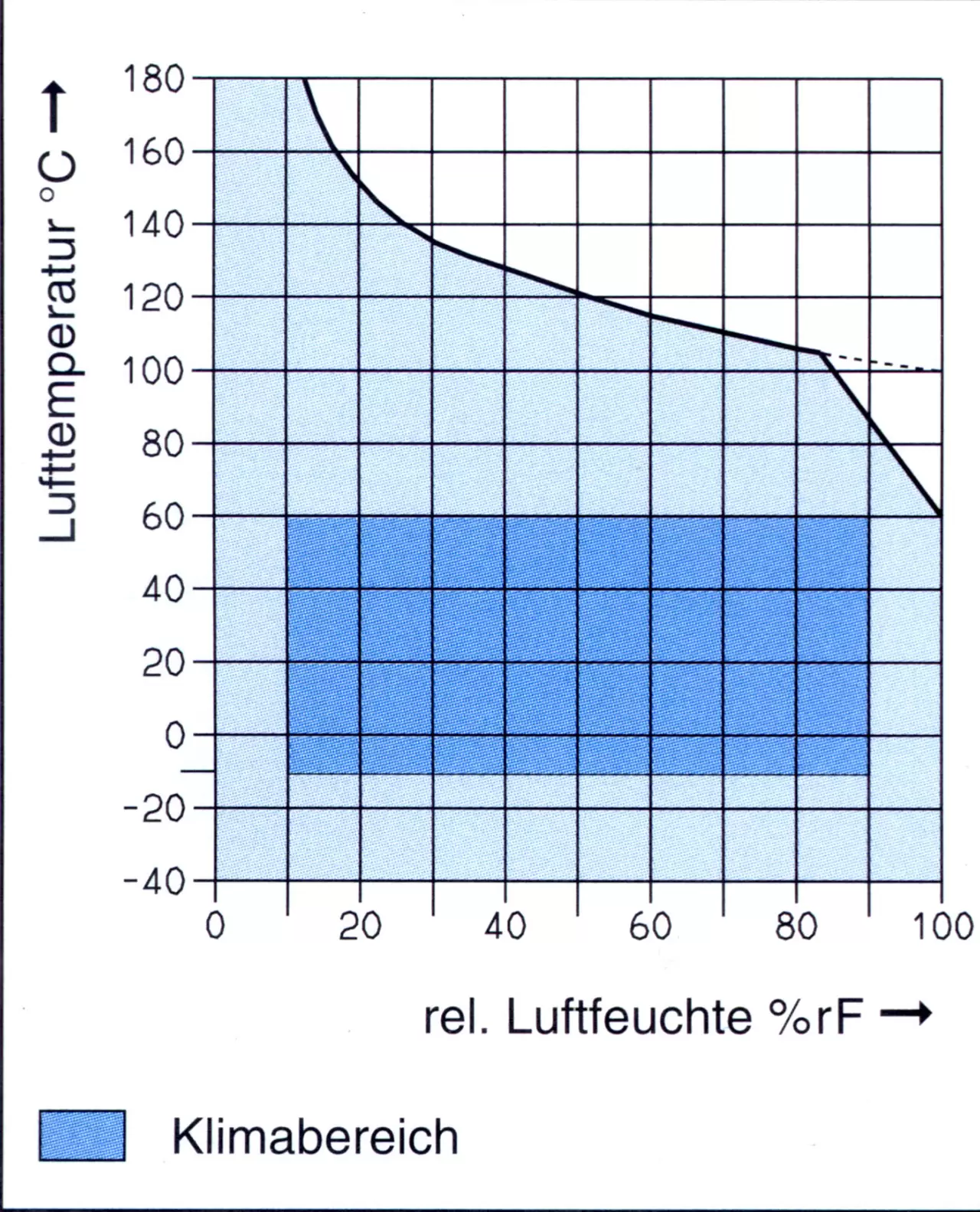
One of the main advantages of the capacitive measurement method is the possible temperature range over which humidity measurements can be made. For example, modern humidity sensors for industrial applications allow measurements between -40 to +180 °C, with the temperature recorded simultaneously and also available as a standardized output signal.
Depending on the device version, deviations in the displayed operating range may occur.
Due to purely electrical measurement, the capacitive measurement method offers an additional advantage. For example, high-quality humidity sensors equipped with the latest microprocessor technology can be equipped with many possible options and functions.
Since different gas pressures and air velocities have little effect on the capacitive humidity sensor, versions of the devices are available that allow measurements in systems with pressures from 0 to 100 bar.
The measurement accuracy ranges from ±2 to ±5 % rf, depending on the device version. Under certain conditions, even a measurement accuracy of ±1 % RH can be achieved.
Hygrometric measuring method
The hygrometric measurement method uses the special properties of hygroscopic fibrous materials to determine air humidity. If these fibers are exposed to ambient air, measurable changes in length occur after compensation time depending on the moisture content of the air.
The corresponding condition of the pulp now allows a direct conclusion to be drawn about the air humidity present. Hygrometric measuring elements mainly use specially prepared plastic threads and human hair.
Hair measurement element
The effectiveness of the measuring element is based on the fact that the hair used is able to absorb moisture. The absorption of moisture creates a puffy effect on the hair, which is mainly noticeable when changing length.
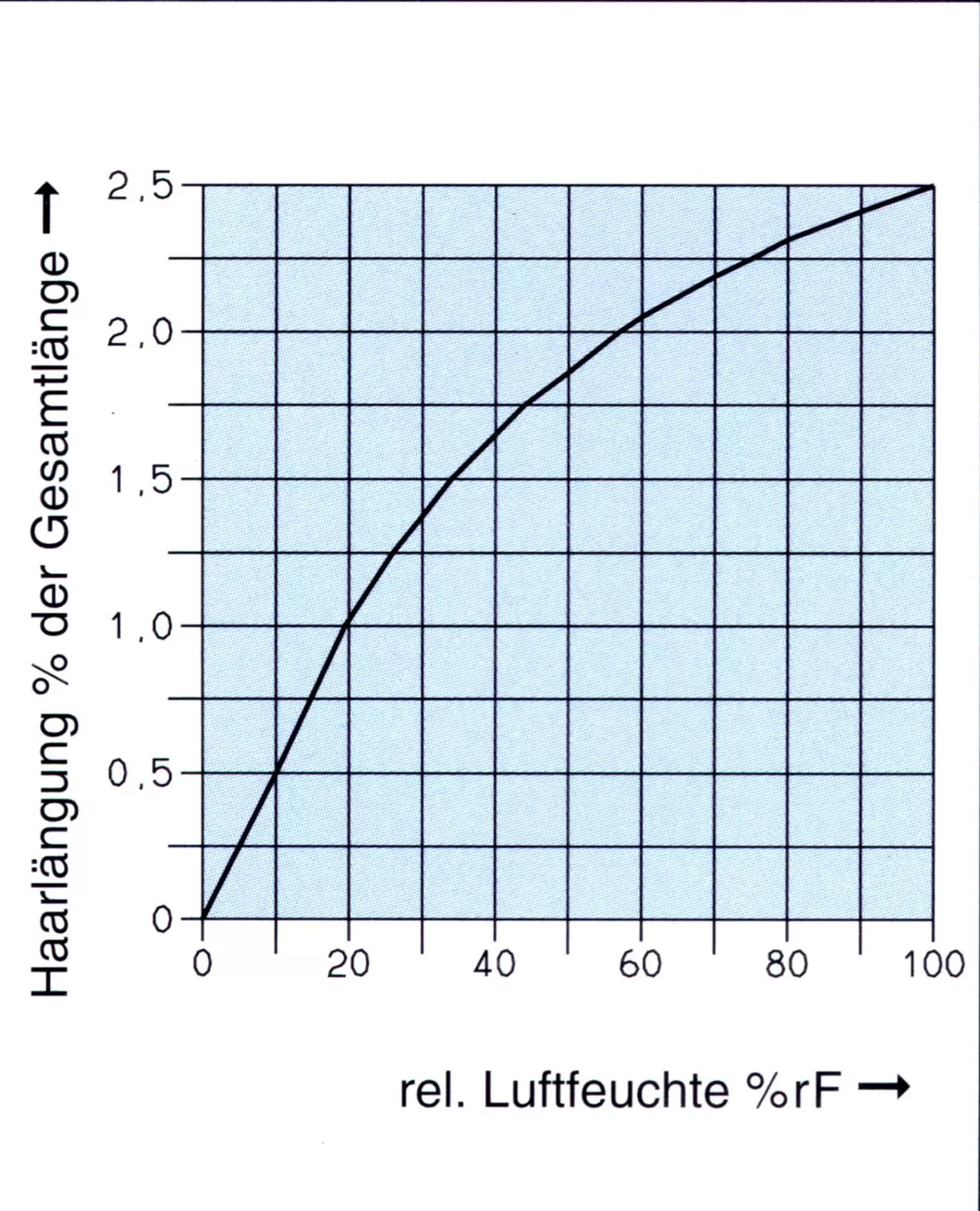
As humidity increases, hair lengthens. The change in length is about 2,5 % with respect to hair length with a change in humidity from 0 to 100 %. Hair, however, shows only relatively little elongation at high humidity (see picture above).
Hair measuring elements are preferably used in indicating instruments for climate applications. The change in hair length is transferred to the pointer or pencil by a special, precise mechanical transmission. For reasons of mechanical stability, several hairs are combined to form a hair bundle or hair harp.
The measurement method guarantees an accuracy of ±3 % in the measurement range from 0 to 90 (100) % RH. Ambient temperatures from -35 to +50 °C are possible. For long-term use in the low humidity range below 40 % RH the hair element must be regenerated. To do this, the hair hygrometer is exposed to nearly saturated air (approximately). 94 to 98%) for approximately 60 minutes. Possible corrections to the position of the pointer can then be made using the adjustment screw. Hair hygrometers are sensitive to hygroscopic dust and must therefore be protected or cleaned at regular intervals.
Measuring plastic element
The plastic measuring element uses plastic threads instead of human hair. A special process also gives these fibers hygroscopic properties. Changes in relative humidity cause a proportional change in the length of the measuring element. The elongation is also transmitted using precise mechanical transmission.
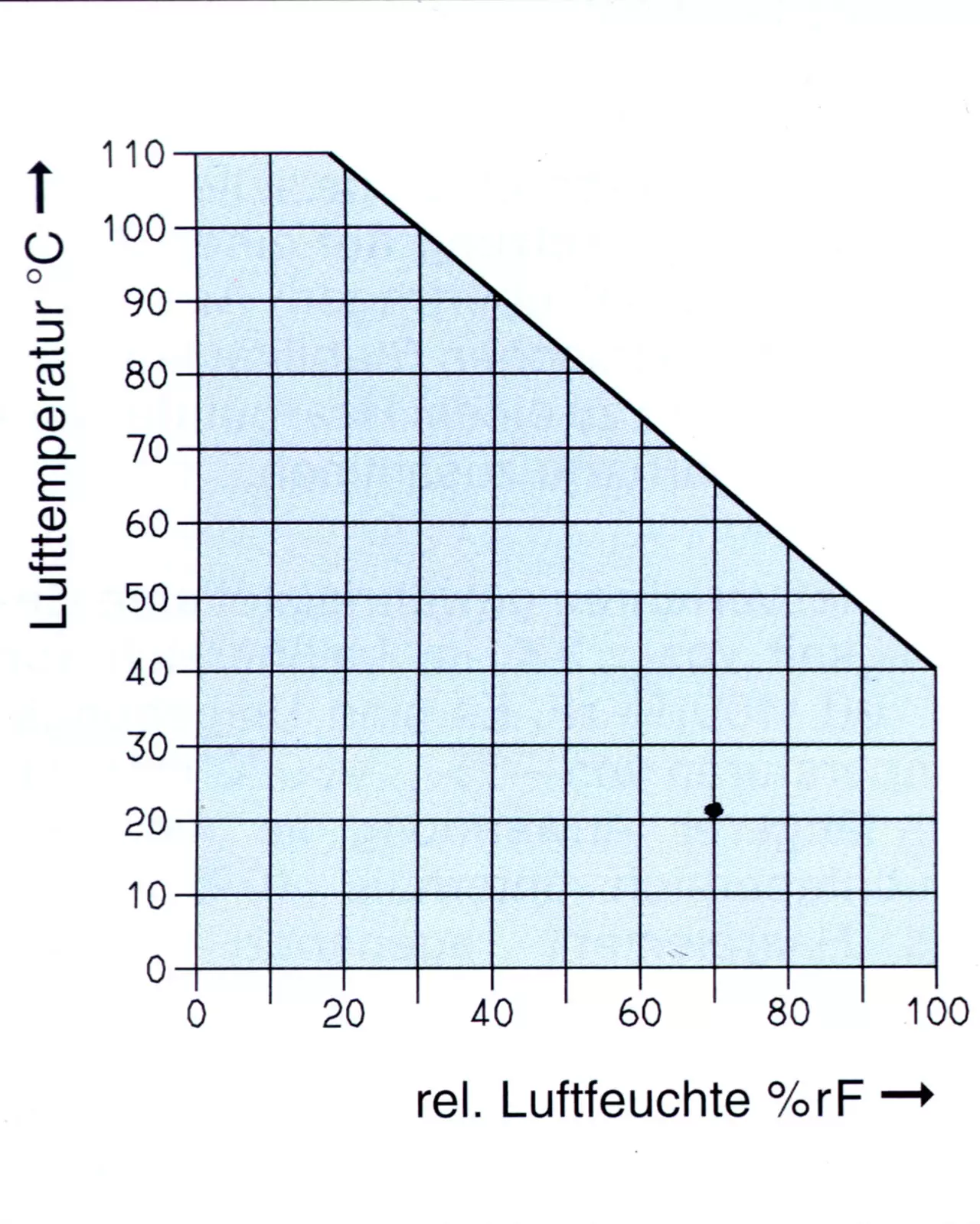
The advantage of the plastic measuring element is that it can be used at higher temperatures (up to 110 °C) and also for longer periods of time at low relative humidity. Regeneration, known from hair measuring elements, is not required here.
The plastic measuring element is waterproof and insensitive to dry dirt, dust, lint and similar contamination. The measuring or operating range is (0)30-10% RH, but depends on the ambient temperature (see figure below). The measurement accuracy is ±2-3 %.
Hygrometric transducers with a plastic element are used for continuous measurements in industrial process engineering and climate control applications due to their high insensitivity and higher temperature compatibility. Depending on the respective application, a wide variety of device versions are available.
These include, but are not limited to:
Hygro sensor
The change in length of the plastic measuring element is sensed by a suitable system and is usually converted into a linear resistance signal. Versions with built-in two-wire transmitters are also available, whereby standardized current and voltage signals are available at the output. Devices with an additional temperature measurement range are called hygrothermal converters.
Hygrostats
In this embodiment, a change in the length of the measuring element is used to actuate a switch contact. Hygrostats are used to control humidification and dehumidification systems.
Hygrograph
A hygrograph is a humidity recorder with hygrometric hairs or plastic measuring elements. Additional temperature recording (hygrothermograph) is also possible. Applications - eg weather stations.
With the hygrometric method of measuring humidity in non-pressurized and non-aggressive air, it is generally possible to measure humidity. Measurements in solvent-containing and aggressive media should be avoided, as their type and concentration may cause incorrect measurements or destroy the measuring element.
Final observation
The section on moisture measurement methods and their applications covers the basic principles. Therefore, the described instrument versions and technical specifications may differ from the technical specifications of the manufacturer. Therefore, more detailed information can be found in the operating instructions or in the specifications of the individual devices.