
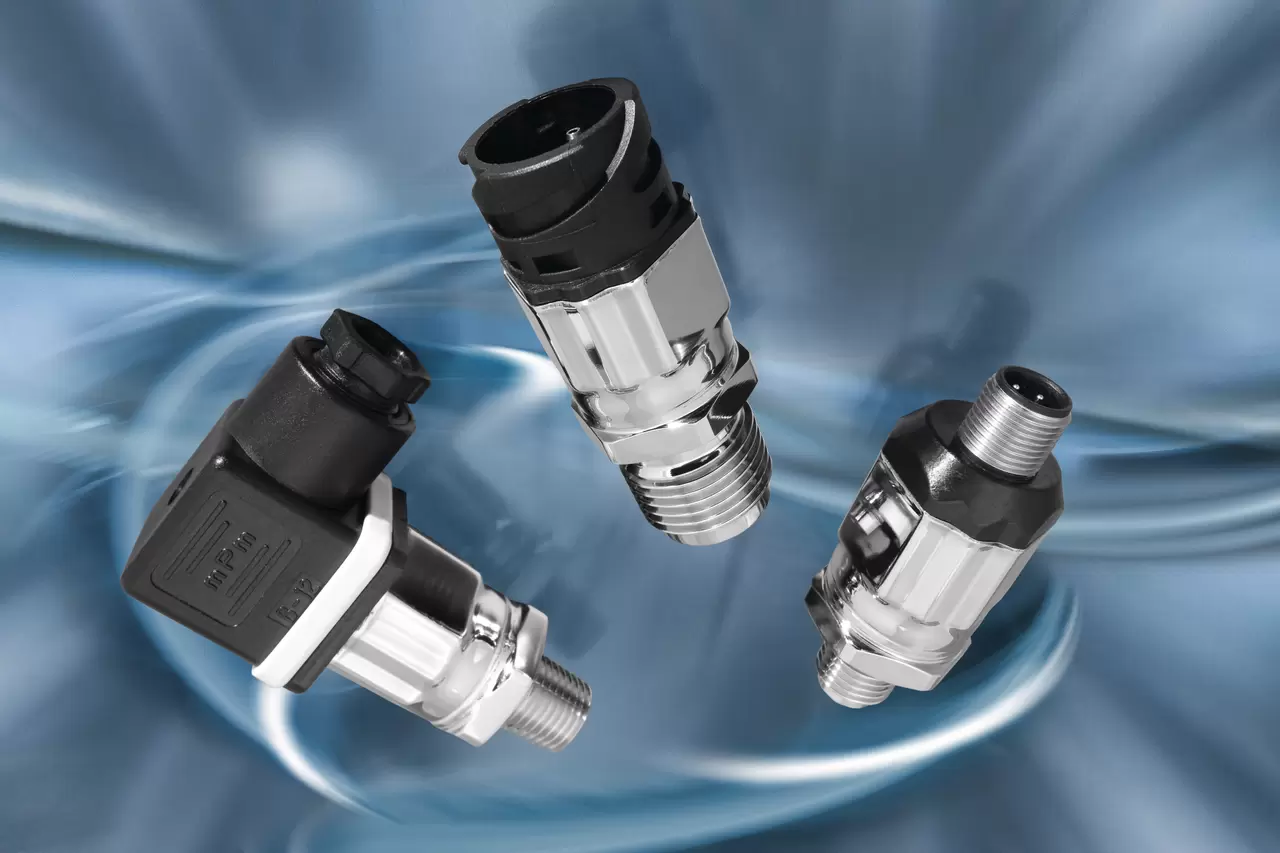
Absolute pressure
Pressure measurement
Depending on the process and application, absolute pressure is not automatically the best choice as a reference pressure. Indeed, numerous applications require the determination of a fixed point that is independent of fluctuating atmospheric pressure. However, absolute pressure measurement plays an important role in industrial processes. Below you will find answers to the most basic questions about "absolute pressure".What is absolute pressure?
The zero point of the absolute pressure scale is vacuum. Therefore, absolute pressure data always refers to vacuum and is the result of a difference with vacuum. Absolute pressure is indicated by the index pabs In industrial applications, absolute pressure is the sum of atmospheric pressure and process pressure.
Solutions for your problem
Where does absolute pressure occur?
Typical applications have always been air pressure measurements, such as barometers or altimeters in aircraft. The weight of our atmosphere determines the air pressure PambThis is about 1013 mbar.abs at sea level and decreases with increasing geographic altitude. At the top of Mount Everest, for example, it is only about 400 mbarabs.
How is atmospheric pressure displayed?
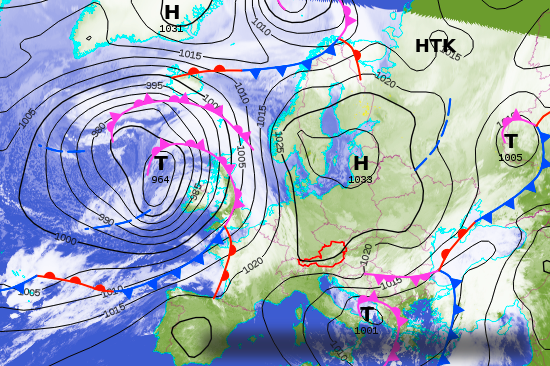
In weather forecasts, the course of atmospheric pressure is shown in so-called isobars (see figure above). Places with the same atmospheric pressure are connected by lines. These isobars are usually divided into steps of 5 hPa.
What do isobars mean?
If an area is surrounded by isobars in a circle, the center is recognized as an area of high or low pressure depending on the direction of pressure (falling or rising). The weather-related variation between high and low pressure areas is about +/-20 hPa. This corresponds to 20 mbar / 2% air pressure /
0.2 mH₂O
What processes use absolute pressure?
Engineering processes often take place in evacuated containers, such as sterilizers or autoclaves. The measured process pressure is then separated from the atmosphere and determined by absolute pressure transmitters. In the automotive industry, robots with vacuum grippers are used to transport large areas such as engine hoods. Here the vacuum is controlled to ensure the suction capacity of the grippers. In plastic packaging machines, vacuum levels are measured to control the compaction process.
Colloquially, the term vacuum is often used to describe a largely airless space. For example, people say: “Something is vacuum packed.”
How is absolute pressure measured?
Absolute pressure sensors consist of a membrane and a vacuum chamber. Atmospheric pressure, excess pressure and vacuum act on the diaphragm, the deformation of which is recorded and allows conclusions to be drawn about the absolute value of the pressure.
How to calculate absolute pressure?
Absolute pressure pabs is determined relative to vacuum, so its value depends on atmospheric pressure pamb and process pressure pp Depending on whether there is a positive or negative pressure relative to atmospheric pressure, the process pressure pp can take on positive or negative values.
pabs = pamb + pp
How is gauge pressure converted to absolute?
When converting absolute pressure to relative pressure or vice versa, it is important to know which value the measurement refers to. Pressure sensors can measure and display two types of pressure depending on their design: relative and absolute pressure. A pressure sensor without atmospheric pressure compensation displays an absolute value. A device that measures not only absolute pressure, but also atmospheric pressure, will give a gauge pressure reading. The user of an application with instruments that measure only absolute pressure should be aware that the result is affected by changes in atmospheric pressure, which depends on many factors.
What role do pressure sensors play in level measurement?
Many industrial applications use relative or differential pressure transmitters to measure tank levels. In open tanks, the starting point is the ambient pressure and the absolute pressure is measured. In this case, the measurement result is affected by weather fluctuations that change the ambient pressure. In addition, an absolute pressure transducer must have a larger measuring range when taking into account atmospheric pressure, but this results in a larger measurement error. The best solution for level measurement is a differential pressure transmitter. The device has two process connections for measuring process pressure and ambient pressure. The ambient pressure is compensated in such a way that weather fluctuations do not have a negative impact on the measurement results.

Devices and services JUMO