Hydrostatic pressure
Pressure measurement
Hydrostatic pressure plays an important role in all applications and activities that occur in liquids. This includes, among other things, pressure measurement in the industrial sector. With us you will learn how hydrostatic pressure is determined, how it works and what impact its behavior has on the measurement. Find out more!How to determine hydrostatic pressure?
The pressure in a fluid at rest (non-fluid) subject to a uniform gravitational field is called hydrostatic pressure. The higher the liquid column, the higher the pressure at the bottom of the tank. Thus, the hydrostatic pressure in a liquid increases with depth.
Likewise, pressure depends on the density of the liquid. A liquid with high density, such as water, exerts more pressure on the bottom than a liquid with the same volume but lower density, such as oil.
The external pressure is also affected by the pressure of the fluid being tested. For example, atmospheric pressure corresponds to the pressure exerted on the earth's surface by the weight of a column of air whose height is equal to the thickness of the earth's atmosphere. The average atmospheric pressure at sea level is 1013,25 hPa.
In open tanks, fluid pressure is the sum of the pressure due to the weight at a certain height and the atmospheric pressure above the level. In closed tanks, the external pressure is equal to the pressure above the surface of the liquid.
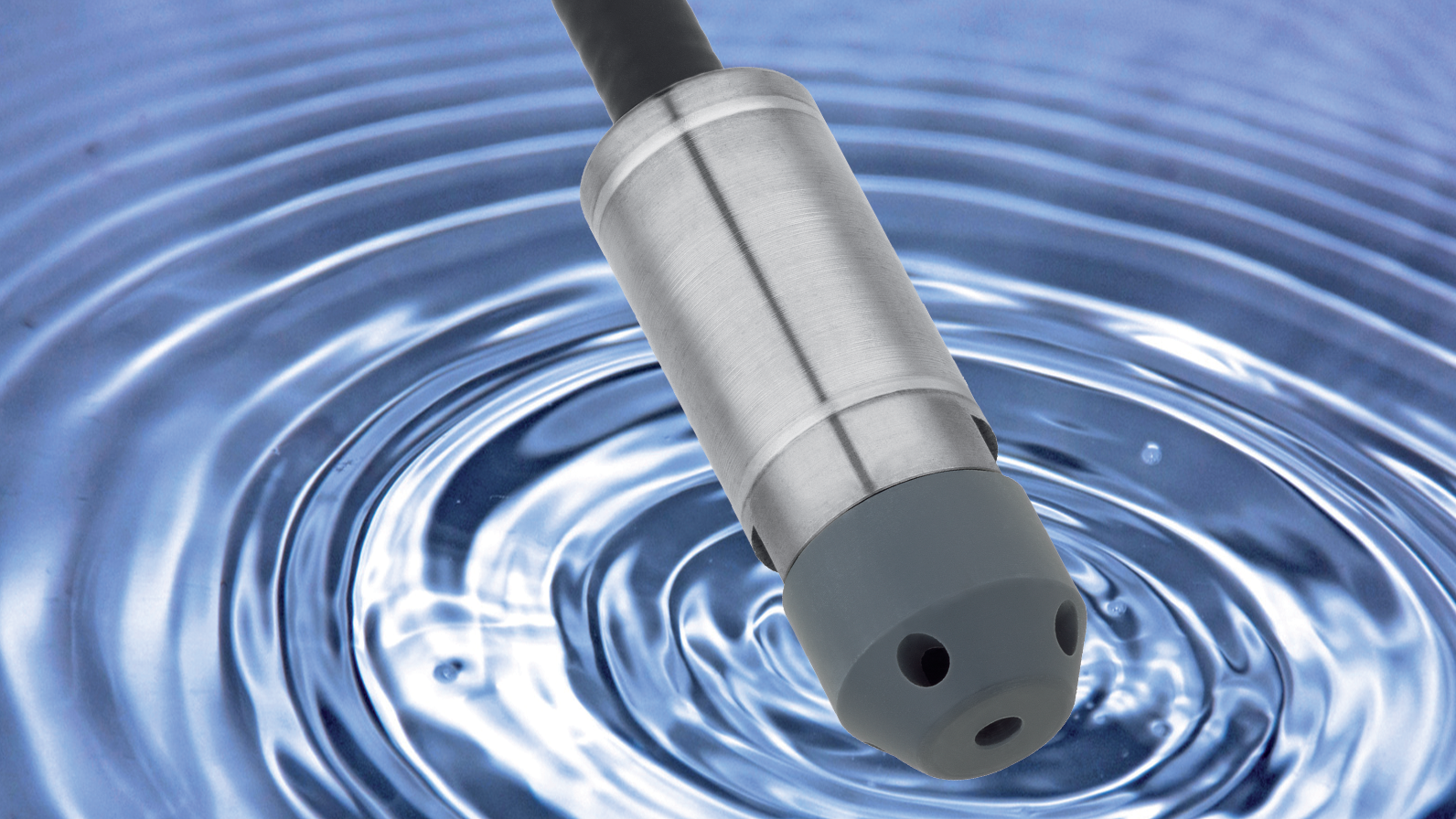
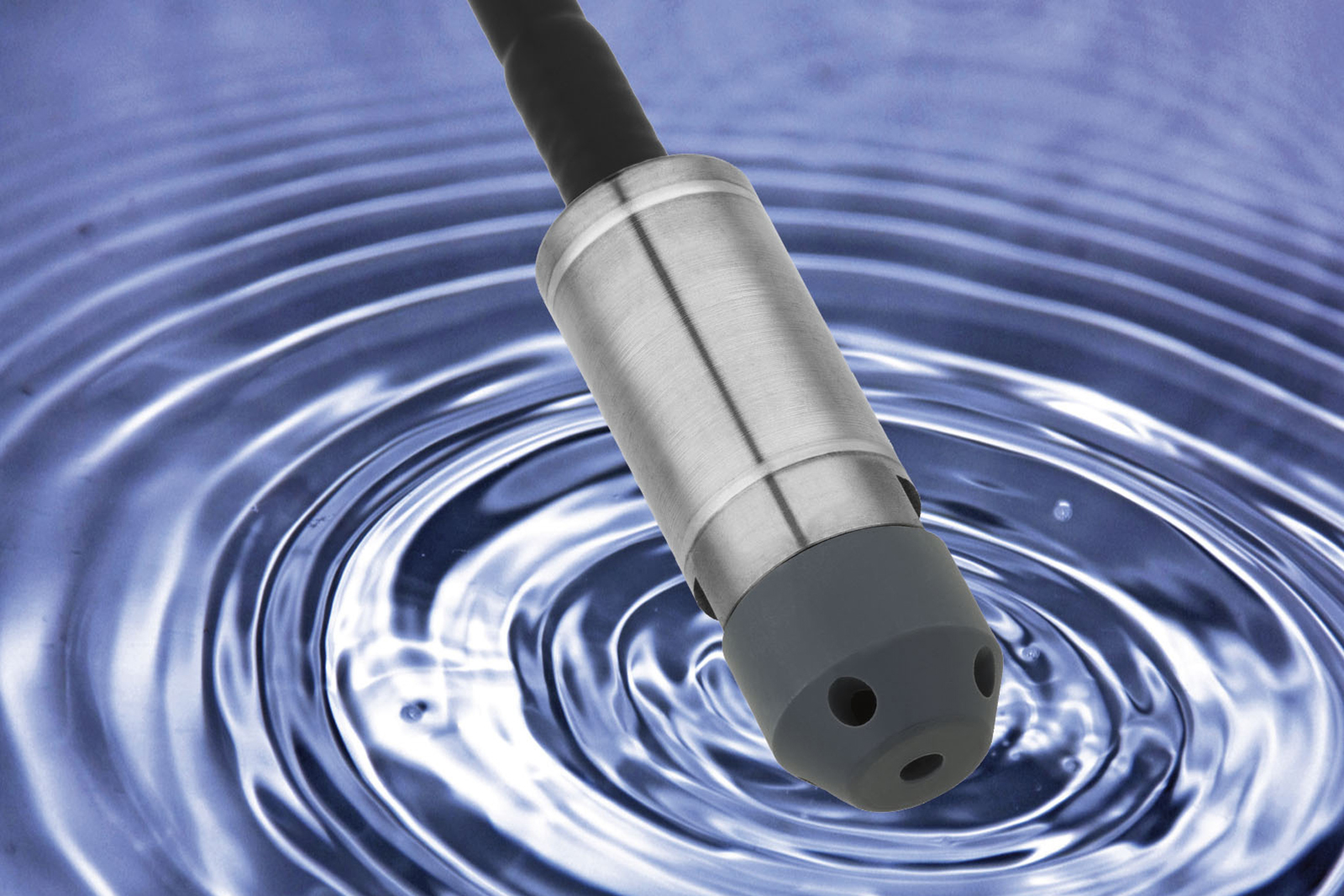
Hydrostatic probes
What factors influence hydrostatic pressure?
As mentioned above, physical quantities affecting hydrostatic pressure ph:
- - gravitational acceleration constant g [m/s2],
- - height of the liquid column h [m],
- density of the liquid to be tested ρ [kg/m3] and
- External pressure p0 [Pa].
How to calculate hydrostatic pressure?
The previous section listed all the physical quantities that affect the hydrostatic pressure of a liquid at the bottom of a vessel, which leads to the following formula for hydrostatic pressure:
ph = ρ × g× h
In what units is hydrostatic pressure measured?
The SI unit of pressure is the pascal (Pa). One pascal is the pressure exerted by a force of 1 N distributed uniformly over an area of 1 m². One newton equals 1 kg·m/s². For example, at an approximate acceleration of free fall of g = 10 m/s², a mass of 0.1 kg has a weight of 1 N.
Example of hydrostatic pressure calculation
Consider the pressure at the bottom of an open container of water at 4 °C. Liquid density ρ = 1000 kg/m3. The height h of the water in the tank is 15 m. Assuming atmospheric pressure 1013,25 hPa and acceleration due to gravity g = 9,81 m/s2, the fluid pressure at the bottom of the tank is:
ph = 1000 kg/m3 × 9,81m/s2 × 15m + 1013,25hPa
ph = 1481,6hPa + 1013,25hPa = 2494,85hPa = 2,49 bar
The actual pressure value at the bottom of the tank in question is 2,49 bar, and half of this value consists of external pressure. Based on this result, it is not possible to calculate the height of the liquid column, since the result is the sum of hydrostatic pressure and variable atmospheric pressure. Therefore, pressure transducers convert the difference between pressure measurements at the bottom of the tank and above the surface of the liquid. This compensates for the influence of external pressure.
Practical advice:
One meter of water column generates hydrostatic pressure approximately.
0,1 bar.
What is the hydrostatic paradox?
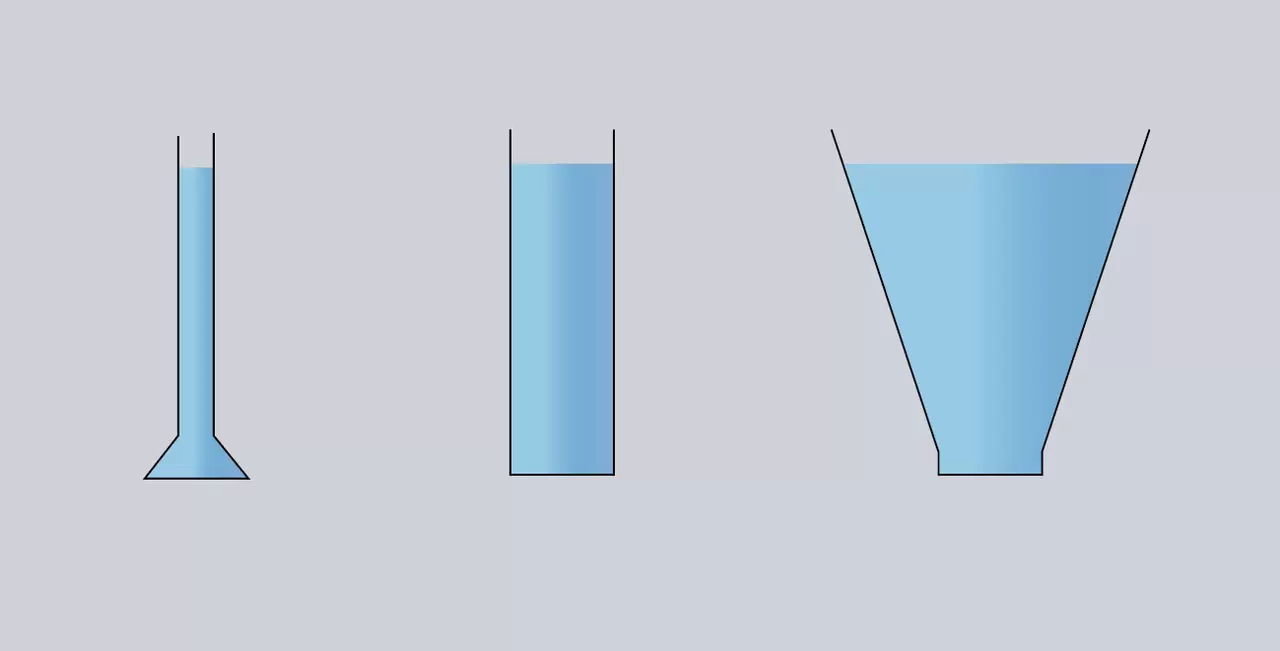
The formula and the above calculations make it clear that to calculate the pressure value it is not necessary to know the total volume of the vessel. The necessary information is the density of the liquid as an independent property of the medium being tested and the height of the liquid column. This leads to a certain property called the hydrostatic paradox. Thus, the hydrostatic paradox describes the phenomenon in which the pressure at the bottom of a vessel filled with liquid does not depend on the shape of the vessel and the volume of the liquid. The pressure of the water column is always the same.
What should you consider when installing the sensor?
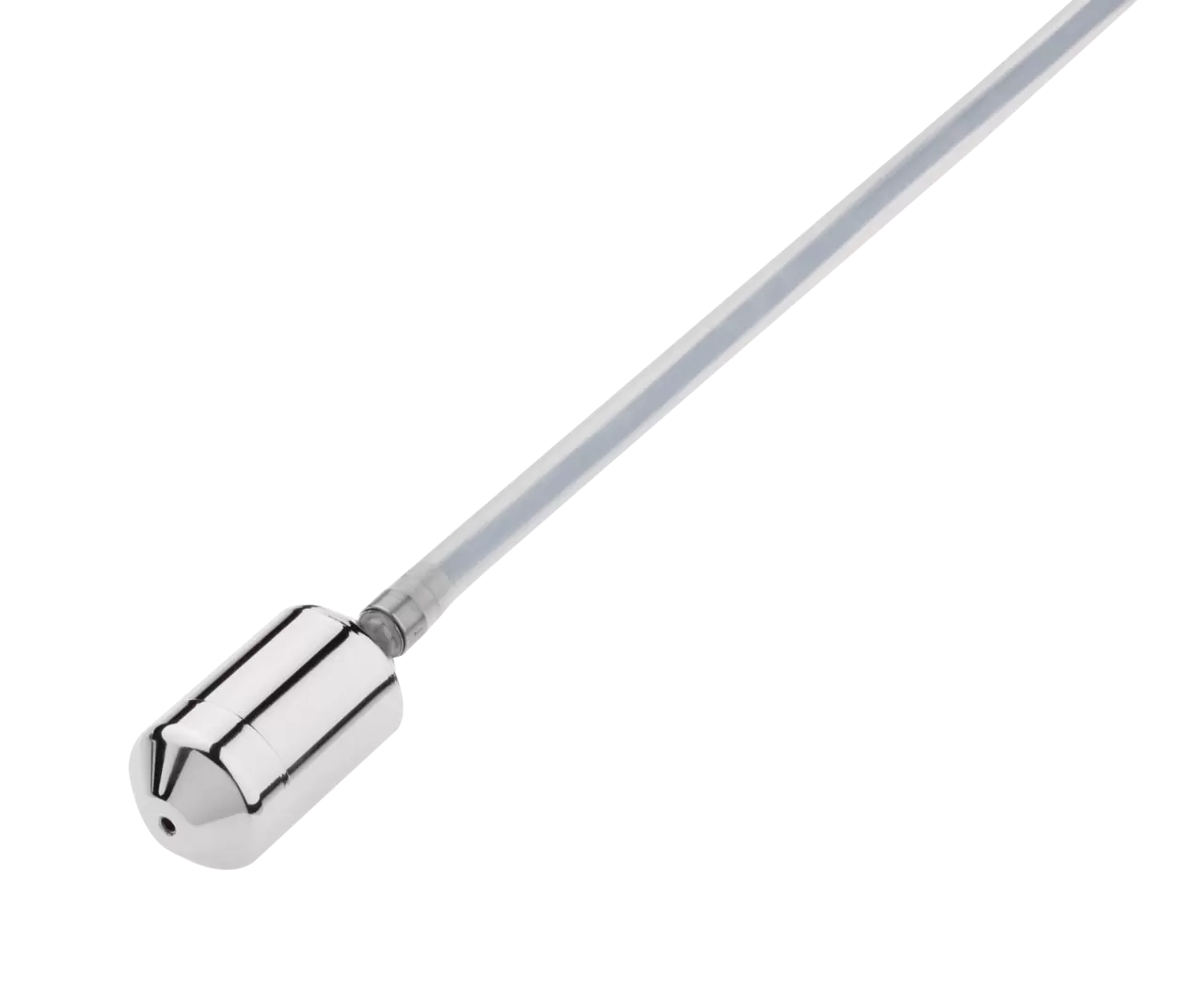
The mounting position of the sensor diaphragm does not matter for hydrostatic measurement. Pressure acts in all directions at any height. The pressure transmitter can be installed on the side of the tank or suspended in the tank as a level probe. Only the mounting height is decisive for the measurement result - the measurement is based on the complete coverage of the diaphragm.
Devices and services JUMO