System SCADA – what you need to know
automation
In an increasingly digitalized and automated world, technologies for monitoring and controlling technical processes are becoming increasingly important. In addition to cloud solutions, these also include locally installed systems SCADA. In the following text FAQ we answer the most important questions about the SCADA system, how it works, its applications and its benefits.What is the SCADA system?
System SCADA (Supervisory Control and Data Acquisition) is a computer system for visualization, analysis and management of process data. It is an operating technology (OT) and, unlike traditional process control systems, is designed for centralized control of widespread installations. Within the control level, SCADA links the process level with IT and creates a continuous flow of data along the automation pyramid.
Purchasing system SCADA
How does the SCADA system work?
The heart of the system is the software SCADA, which links all automation levels together. At the field level, sensors and actuators continuously collect process data such as temperature, pressure or fill level. This data is sent to the control level - usually programmable logic controllers or regulators.
Standardized communication protocols such as OPC UA or Modbus ensure that recorded data is transferred to the control level where it is visualized, analyzed and archived in real time. This provides a clear picture of the current state of the plant, including all relevant measured values, warning messages and time series.
How is system SCADA accessed?
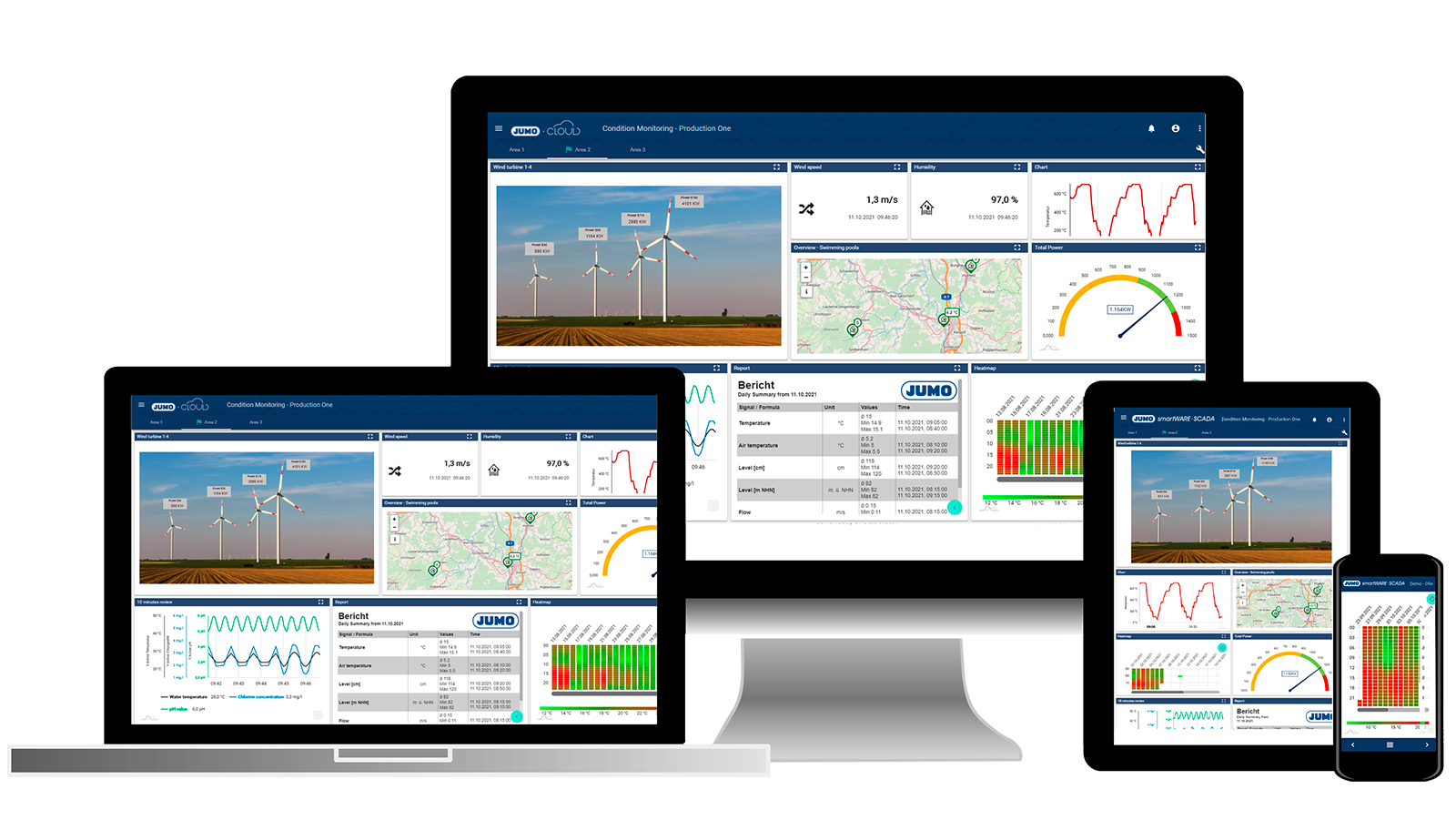
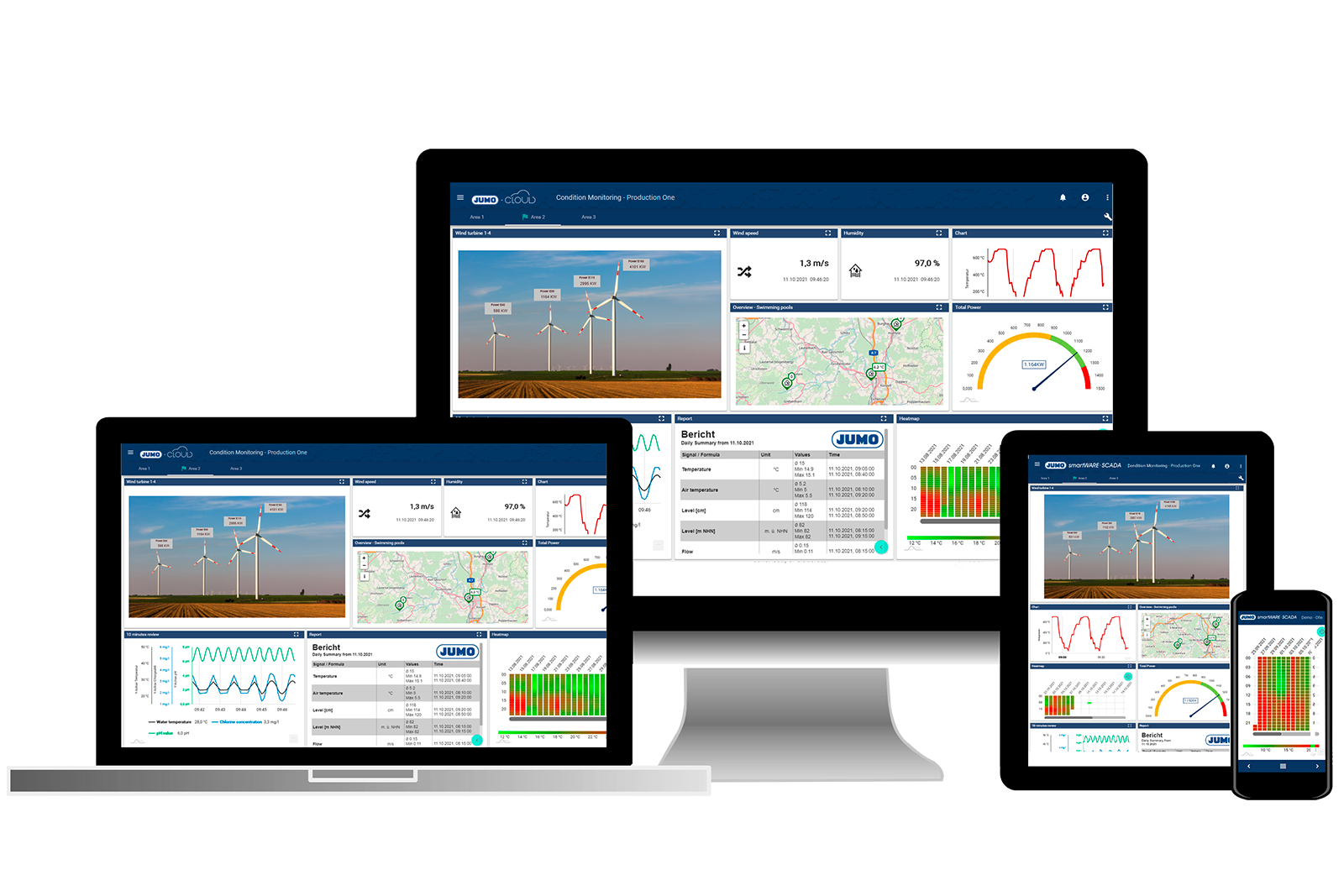
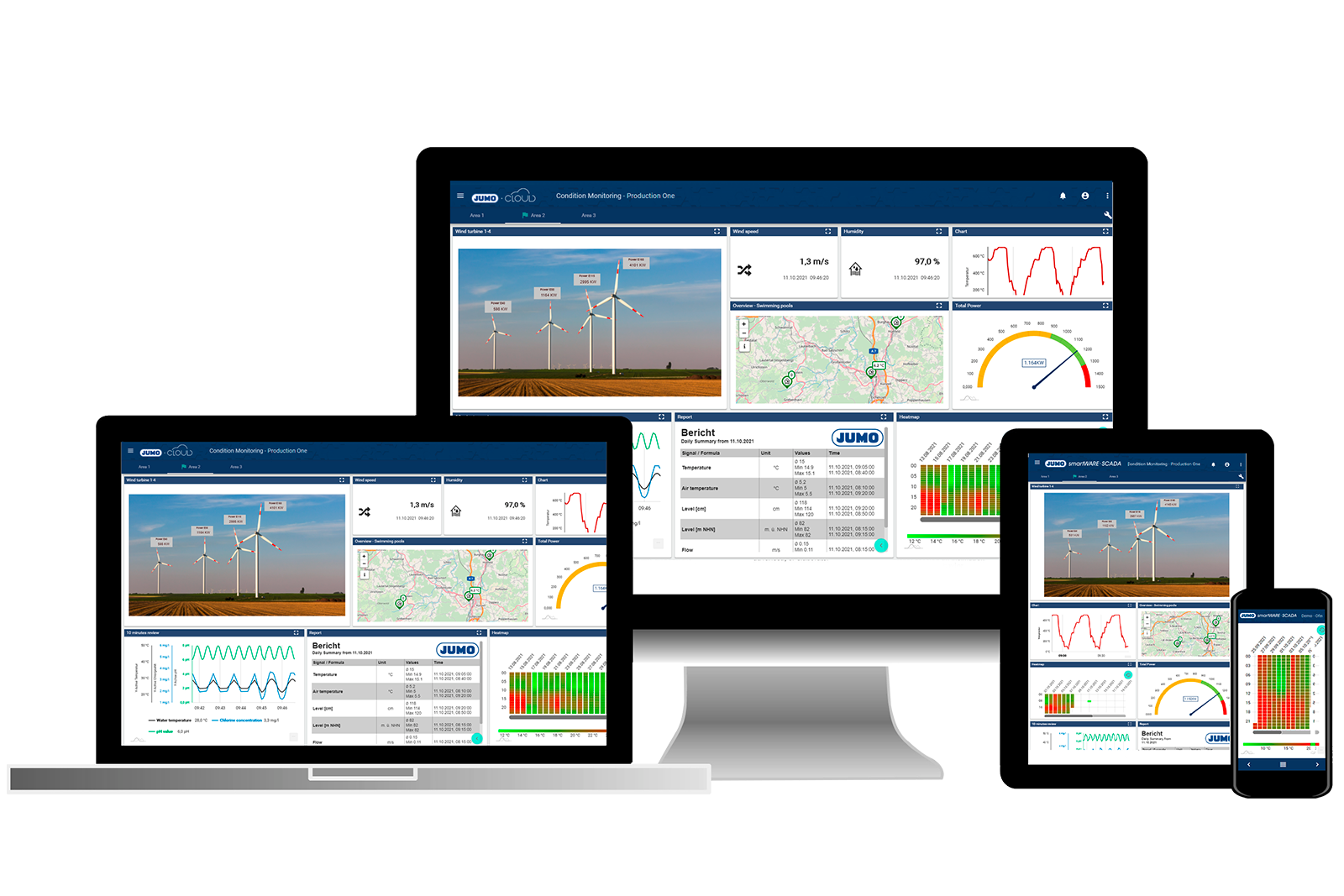
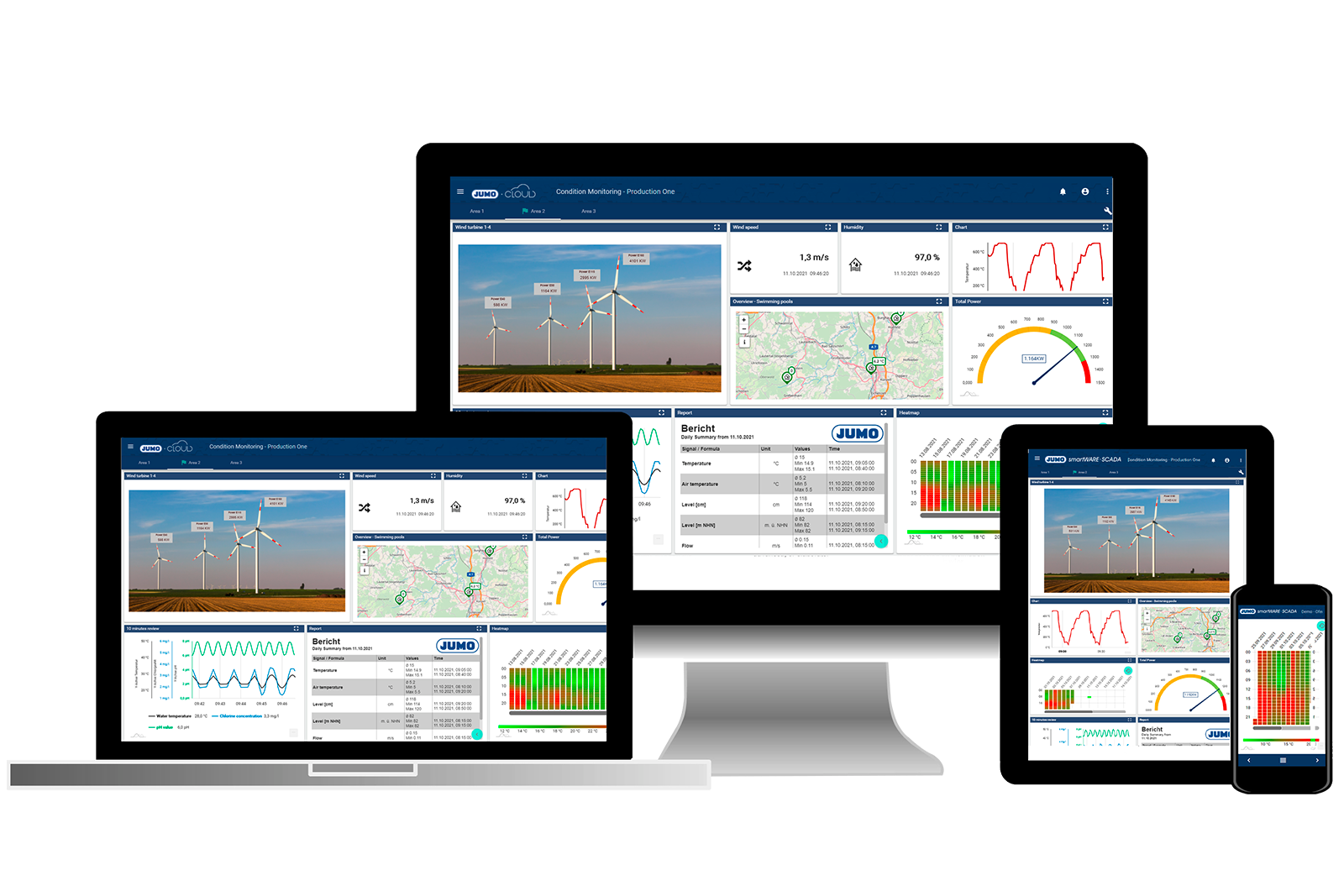
SCADA systems are traditionally controlled by local control devices such as human machine interfaces (HMI), which are located directly on site. Automation systems with touch panelsModern SCADA solutions increasingly offer web-based access options, allowing operators to access visualization and control of systems through regular Internet browsers or specialized web clients.
This flexibility not only allows access from a variety of end devices such as PCs, tablets or smartphones, but also enables secure remote access from external locations. This requires appropriate security measures such as encrypted connections, VPN and access controls to ensure the integrity and confidentiality of process data.
What are the advantages of the SCADA system?
SCADA systems offer many advantages that relate to both technical and economic aspects.
1. Centralized monitoring of processes in real time
One of the biggest advantages of the SCADA system is the continuous monitoring of all associated processes and systems - in real time and from a central control station. Operating states, measured values, alarms and events are continuously recorded, visualized and documented. This allows operations personnel to respond to early deviations, errors or safety events before they have a negative impact on operations. In this way, downtime, production losses or machine damage can be minimized and machine availability increased.
2. Improved database for analysis and optimization
SCADA systems capture and archive large volumes of process data over defined periods of time. This history provides a valuable basis for subsequent analysis - for example, to investigate the causes of errors, optimize energy consumption or improve production processes. In addition, many SCADA solutions support export to formats that can be easily integrated into business intelligence tools or management systems, such as MES or ERP.
3. Integration and networking of existing systems
The SCADA system can usually be easily integrated into existing automation structures. It interfaces with a wide range of controllers, sensors or field devices via standardized protocols (such as OPC?UA, Modbus or SCADA). special forcesThis creates a consistent, interoperable overall system without the need to completely replace existing infrastructure.
4. Increased operational reliability and error prevention
With extensive diagnostic and alarm functions, the SCADA system helps improve operational reliability. Critical conditions such as limit values exceeded, pump failures or communication errors are automatically detected and reported to responsible parties. When combined with redundancy concepts and user roles, security requirements and access controls can also be effectively implemented.
5. Scalability and future-proofing
The well-planned SCADA system is modular and can therefore be flexibly expanded for digital transformation. New machines, sensors or entire plant components can usually be integrated without much effort. This makes the solution future-proof, especially in times of increasing demands from Industry 4.0 or IoT. SPS-STORE In 2014 it was reported that modern SCADA systems are considered the basis of digital manufacturing processes.
6. Supports remote access and decentralized work
Many modern SCADA systems also provide secure access to data processing via VPN or web clients. This is especially beneficial for companies with multiple locations or for factories that operate in different geographic areas (for example, in the energy or water industry or smart city mobility).
7. Documentation and traceability
All events, status changes and operator interventions are automatically recorded. This ensures full traceability from a quality assurance, audit or regulatory perspective – for example in food safety, energy supply or environmental technology. Even in the event of errors or accidents, it is possible to reconstruct exactly what happened and when.
Purchasing system SCADA
What makes SCADA systems different from cloud solutions?
Systems SCADA and cloud solutions They pursue similar goals, such as monitoring, control and analysis of technical processes, but are fundamentally different in their architecture, application, security and flexibility. However, they are not direct competitors, but increasingly complement each other.
Architecture and data processing
- System SCADA (local)
They work on the company’s internal servers, often directly on the website. Sensor and control data are processed and visualized locally. - Cloud solution
Data processing in external data centers. Communication occurs over the Internet and can be accessed from anywhere via web browsers or applications.
Real-time capability and response time
- System SCADA
Responds within milliseconds to seconds—ideal for time-critical or safety-related applications. - Cloud system
Not suitable for direct process control due to Internet latency. Better suited for higher level analysis, reporting or monitoring.
Data security and data protection
- SCADA
The data remains on the local network, under full control by the company. Particularly important for critical infrastructure. - cloud
Refers to modern encryption and access control, but requires trust in the provider. The data leaves the company's own network.
Operation and Maintenance
- System SCADA
Internal IT or automation teams take care of operations, updates, backups, and error analysis. - Cloud technologiesThe supplier takes care of maintenance, system support and updates, reducing the burden on internal IT, but requires clear rules SLA.
Cost structure
- SCADA
Higher initial investment (hardware, licenses, installation) but stable operating costs over the long term. - cloudSubscription or usage model (SaaS). Low initial costs, but potentially rising operating costs with heavy use.
Purchasing system SCADA
What does the future hold for SCADA technology?
In 2024 the SCADA technology was valued at $41,75 billion according to a market research company. FortuneBusiness InsightsThis development is accelerated by technological advances and ongoing digitalization.
The future of SCADA systems lies in modular, intelligent platforms tightly coupled with IIoT, cloud technologies, edge computing and AI applications. Today's SCADA solutions no longer function solely as visualization and control tools, but as central data hubs for real-time analysis, remote access, predictive maintenance and adaptive process optimization.
At the same time, openness (for example through OPC UA or MQTT), interoperability and cybersecurity are becoming increasingly important, for example through the implementation of established security standards such as IEC 62443. In many industrial applications, companies are therefore increasingly relying on hybrid architectures. While SCADA remains responsible for local real-time control, cloud systems take over higher-level data analysis, AI-based optimization or mobile visualization.
How does the implementation of the SCADA system work?
The implementation of a SCADA system typically occurs in several coordinated stages, from initial needs assessment to final commissioning. To successfully implement such a project, a structured approach and consultation with a system specialist SCADA is required.
Requirements Analysis
Requirements analysis determines the specific objectives and framework conditions of the project. This includes issues such as which processes should be monitored and controlled, which data points should be recorded, what response times are required, and whether existing automation systems (such as PLC or RTU) need to be integrated. The analysis also includes requirements for security, availability, redundancy, and user rights. The results of this stage are recorded in a detailed specification sheet, which serves as the basis for all further planning stages.
Selecting the right hardware and software components
Based on certain requirements, the SCADA platform is selected, which matches the existing infrastructure, is scalable and provides all the necessary functions. In addition, management hardware (such as programmable logic controllers or remote terminal units), network components (such as switches, gateways, or firewalls), and servers and operating devices for data visualization and storage are selected. This step also considers the licensing model, maintenance contracts and possible interfaces to existing IT systems (such as ERP or MES).
System planning and architecture development
The entire structure of the SCADA system is designed here - from the network topology and server and client structure to redundancy strategies, security concepts and integration of external systems. It is precisely defined which devices are connected, at which points communication occurs, and how the system should respond to errors or failures. Additionally, a project schedule is created with milestones, resource requirements, and responsibilities.
Engineering Engineering
At the design stage, the previously specified structure of the system is implemented. The SCADA software is configured, data points are created, communication protocols are implemented, and visualizations—such as process images, block diagrams, alarm stages, and instrument panels—are created. User management with different access rights is also configured. If necessary, scripts are programmed to implement automated processes or calculations.
System integration
Software configuration is followed by system integration, i.e. connecting the SCADA platform to real field devices and controllers. This involves checking the correct communication with sensors, actuators and PLCs. The connection between the control plane and the control plane is checked, data is transmitted live, commands are transmitted correctly, feedback is checked. Minor technical problems such as incorrect addressing or temporary delays in data transmission often arise at this stage, but these can usually be resolved quickly.
Test phase and commissioning
Here the entire SCADA system is tested under real conditions. Functional tests ensure that all visualizations work correctly and that controls function as intended. Signals are simulated to see if they are triggered and forwarded. Performance is also tested, for example under high data loads or redundancy scenarios. The testing phase is critical to ensure operational safety and must be carefully documented. Only when all functions are functioning properly can commissioning be carried out, as a rule, first in observation mode before the system goes into productive operation.
What happens after implementing solution SCADA?
The work of the system SCADA does not end with commissioning. In addition to staff training and documentation, ongoing maintenance is required to ensure long-term system stability, safety and performance. This includes regular software updates, testing communications with field devices, backing up data and adapting to changing process requirements. Errors and errors are analyzed and promptly corrected to minimize downtime. Additionally, the system is checked for security vulnerabilities through regular audits to protect against cyber attacks and data loss.
Our services for you