
Temperature measurement
Pt100: device, application and characteristics
Pt100 is a platinum sensing element with a nominal resistance of 100 Ohm at 0 °C.
What is Pt100?
This is a platinum RTD with a nominal resistance of 100 Ohms at 0 °C.
How does Pt100 work with its pins?
The platinum sensing element is connected to the lead wires. The design protects the element and allows it to be connected to the measuring circuit.


Where is Pt100 with leads used?
Such elements are installed in sensors, probes and units where flexible wiring is required.
How is Pt100 designed in SMD?
The compact platinum element has pads for surface mounting on a printed circuit board.


Where are SMD-sensors used?
They are used to measure temperatures on boards and in compact electronic assemblies.

What is wire Pt100?
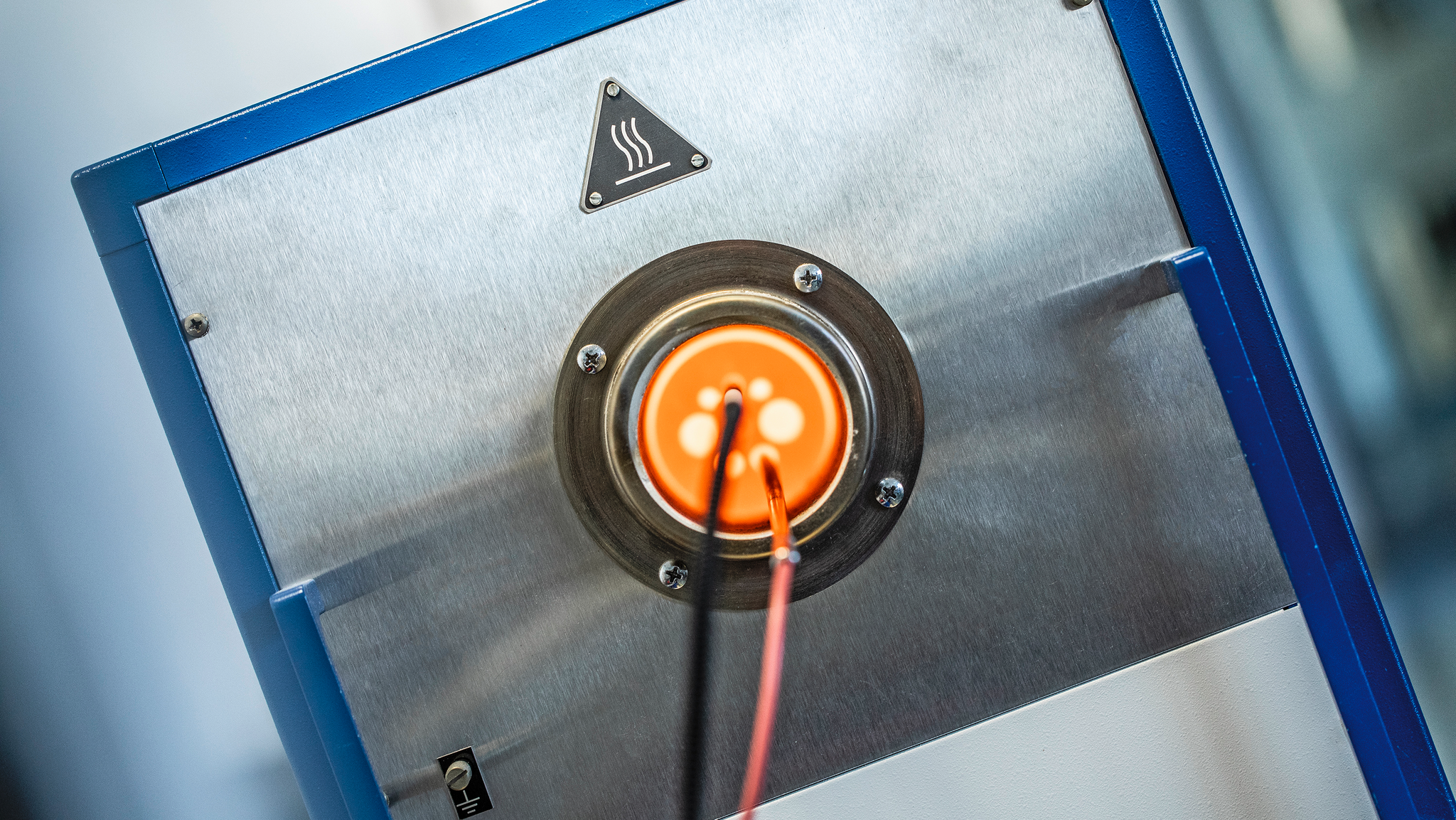
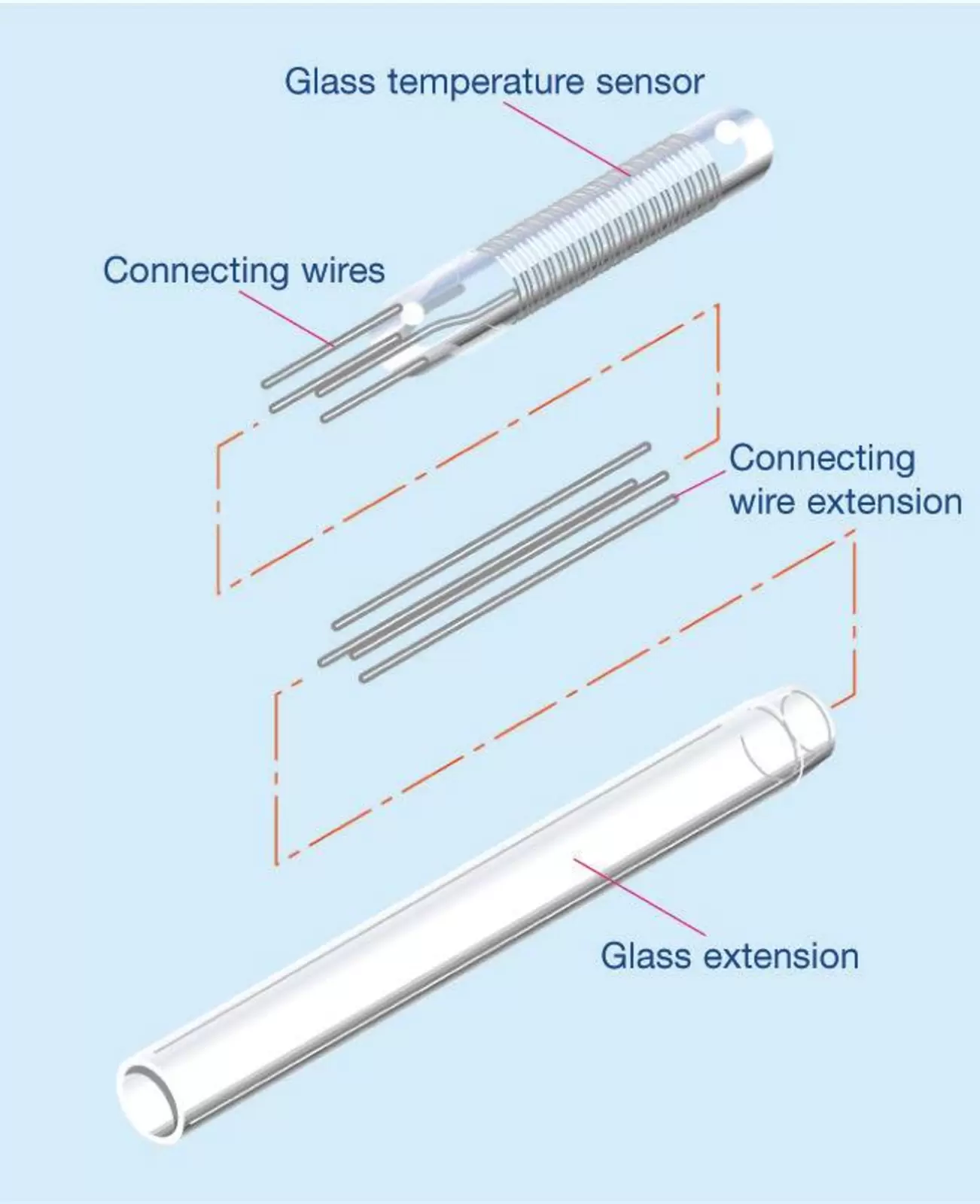
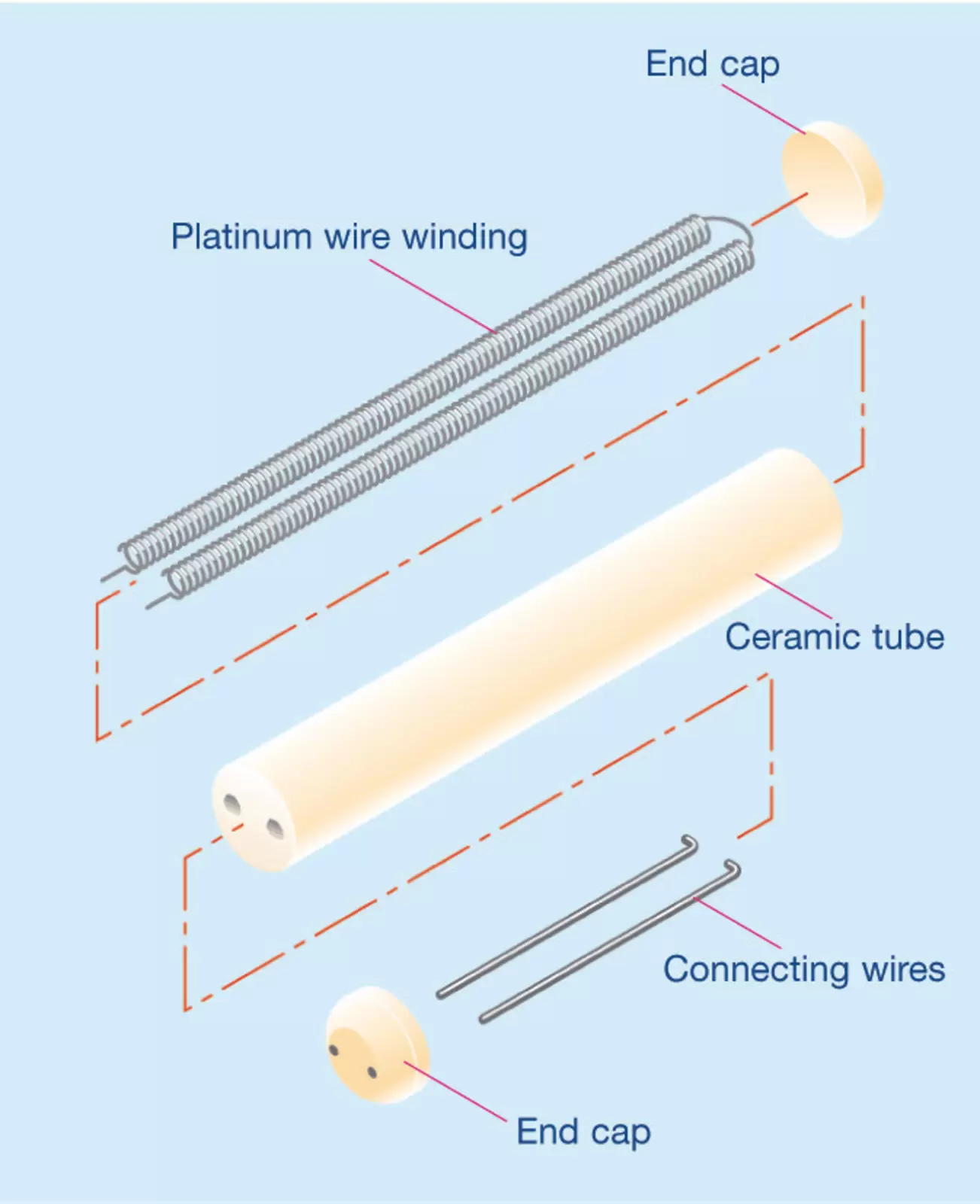
The sensitive element is made of thin platinum wire laid in a support or protective structure.
Where are wire Pt100 used?
They are used when stability, accuracy and the ability to measure over a wide temperature range are important.
What does the marking Pt100 mean?
Pt denotes platinum and 100 is the nominal resistance in ohms at 0 °C.
How does Pt100 work?
Platinum's resistance changes with temperature. The measuring device determines the resistance and converts it into a temperature value.
Why do you need a resistance table?
It relates resistance Pt100 to temperature and is used when checking readings and adjusting the device.
What does the formula Pt100 describe?
The dependence of resistance on temperature is described by a standardized equation. Coefficients and range are taken from the documentation for the measuring device and sensor.
For temperatures from 0 °C: R(T) = 100 Ohm × (1 + 3,9083 × 10⁻³ × T − 5,775 × 10⁻⁷ × T²), where T is the temperature in °C.
What other denominations are used?
One of the common options is Pt1000 with a resistance of 1 000 Ohm at 0 °C. The meter input must support the selected type.
What temperatures is Pt100 suitable for?
The range is determined by the sensing element, protection, cable and installation method. The permissible limits are specified in the data sheet.
What determines the accuracy of Pt100?
The tolerance class of the element, the device input, connection, self-heating and installation conditions are taken into account.
| Class | Maximum deviation, K |
|---|---|
| F 0,1 | ±(0,1 + 0,0017 × |T|) |
| F 0,15 | ±(0,15 + 0,002 × |T|) |
| F 0,3 | ±(0,3 + 0,005 × |T|) |
| F 0,6 | ±(0,6 + 0,01 × |T|) |
What are the advantages of Pt100?
The platinum element has repeatable performance and good long-term stability, which is convenient for industrial measurements.