


Buy resistance thermometers
The JUMO RTD sensors are available in a wide range of designs that can be used in many industries and applications. They meet the highest requirements in terms of chemical resistance, hygiene, fast response time, precision and vibration. Customized designs are available upon request. Buy resistance thermometers or request a price!
- Can be used at temperatures up to 600 °C
- Comes with transmitter
- Customized versions also available
- Various design options possible
- They got various permissions
- Versions for Ex zones
- Variants with class SIL
What is RTD?
The abbreviation RTD stands for “resistance temperature sensor” and refers to temperature sensors using the interaction of ohmic resistance and temperature. For this reason, such a sensor is also called a resistance thermometer. Depending on the application, the sensors RTD can have different resistance elements.
What sensors are installed in the RTD sensors?
Platinum temperature sensors are commonly used in RTD sensors. From a user's perspective, the advantage of platinum is its long-term stability. The most commonly used sensor is Pt100. The designation "Pt" indicates platinum, and the number "100" indicates the base resistance of 100 ohms at 0 °C. The resistance of the Pt100 sensor increases by approximately 0,38 ohms for every kelvin increase in temperature. Temperature sensors Pt1000 can also be found in industrial applications. In this case, the basic electrical parameters are ten times higher (basic resistance 1000 Ω and temperature coefficient about 3,8 Ω/kelvin).
How do resistance thermometers work?
A change in temperature directly affects the electrical resistance of a metal conductor, allowing temperature to be inferred. The temperature coefficient of platinum sensors (about 0,38 %/Kelvin) is based on the physical properties of platinum; basic resistances are determined from technical specifications. The characteristic line is defined in the DIN EN 60751 standard, which makes the application of the RTD sensors relatively simple. The sensor RTD is connected to the evaluation unit and the field device determines the ohmic resistance. Linearizations for Pt100 and Pt1000 are available in field devices. For example, when using Pt100, the sensor temperature is determined from the measured resistance if the linearization 'Pt100' is selected.
How does the device RTD work?
Resistance thermometers contain a temperature sensor, which in its basic form is connected to a connecting cable. Depending on the application, the RTD sensors are available with a terminal head or with connectors. They are also available as plug-in, screw-in or surface sensors.
RTD temperature probes
Found: 46
Technical filters
-
 New
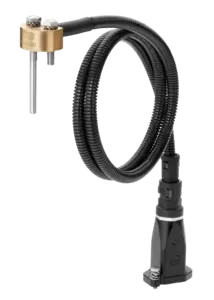
JUMO railTEMP
Type 902195- Certificate DIN EN 50155/61373
- Resistant to vibration and shock
- Flexible touch technology
-
-
 Popular product
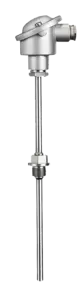
Screw-in RTD temperature probe
Type 902020- Sensor in single and double versions
- Version with temperature converter
- Replaceable measuring insert
-
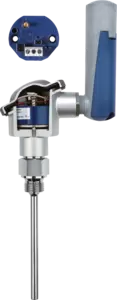
JUMO Wtrans B
Type 707060- Configuration using the PC setup program
- Stationary and mobile measurements
- Interference-free data transfer
-
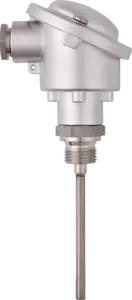
JUMO Etemp B
Type 902023- Single or double RTD
- Non-replaceable measuring insert
- Temperature converter 4...20 mA
-
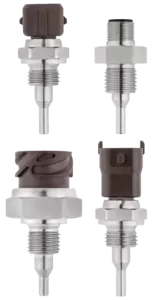
JUMO VIBROtemp
Type 902040- Reliable plug connection
- Vibration-resistant design
- Long term stability
-
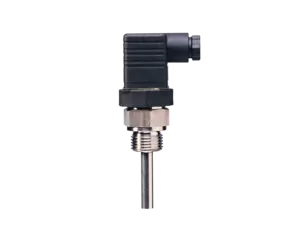
Screw-in RTD with plug according to DIN EN 175301
Type 902044- Reliable plug connection
- Versions with converter available
- Certified according to DNV GL
-
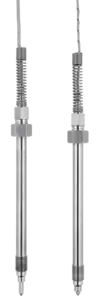
Screw-in melt RTD temperature probe
Type 902090- Measuring tip with ceramic insulation
- Stainless steel protection tube
- Pointed or flat tip
-
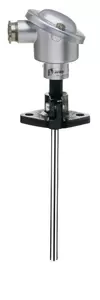
Push-in RTD temperature probe with terminal head (form B) for standard applications
Type 902120- Single or double sensor Pt100
- Replaceable measuring insert
- Temperature converter as option
-
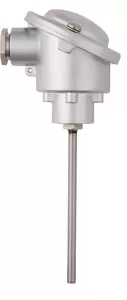
JUMO Etemp B
Type 902123- Single and double versions
- Non-replaceable measuring insert
- Version with built-in transmitter
-
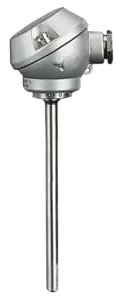
Plug-in resistance temperature sensors with J-head
Type 902130- Single and double versions
- 2-, 3- and 4-wire connections
- Head temperature converter (optional)
-

Plug-in resistive temperature sensor for solar collectors with cable
Type 902153- Cost-optimized design
- Long term stability
- Cable made of PVC, polyurethane, silicone or PTFE
-

Push-in RTD temperature probe with bayonet connection
Type 902190- Single and double versions
- Excellent thermal conductivity
- Tool-free installation
-

Sheathed resistive temperature sensor with free ends according to DIN EN 60751
Type 902210- Vibration-resistant measuring insert
- Any dive length
- Sheathed flexible cable
-
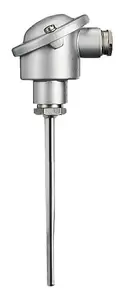
Sheathed resistive temperature sensor with type B head according to DIN EN 60751
Type 902220- Vibration-resistant measuring element
- Any dive length
- Sheathed flexible cable
-
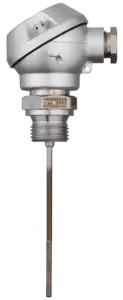
Sheathed RTD Temperature Sensor with J-Head according to DIN EN 60751
Type 902230- Vibration-resistant measuring element
- Immersion length on request
- Sheathed flexible cable
-

Sheathed resistive temperature sensor with connector LEMO according to DIN EN 6075
Type 902240- Vibration-resistant measuring insert
- Immersion length on request
- Sheathed flexible cable
-

Sheathed resistive temperature sensor with connecting cable according to DIN EN 60751
Type 902250- Sheathed flexible cable
- Impact-resistant measuring insert
- Immersion length on request
-

JUMO FOODtemp
Type 902350- Multiple measuring points
- Pressure resistance
- Vapor-tight design
-
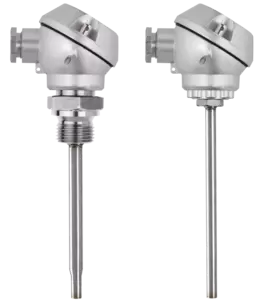
JUMO HEAT temp
Type 902427- Module D certification (MID/MessEV)
- DIN EN 1434, AGFW 202 and FW 211
- Compliant with German standard MessEG/MID
-
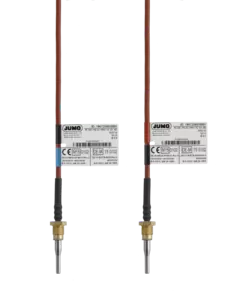
JUMO HEATtemp (Type DS/DL)
Type 902428- Pairing and certification MID
- DIN EN 1434, AGF FW 202 and FW 211
- Type Test Certificate
-
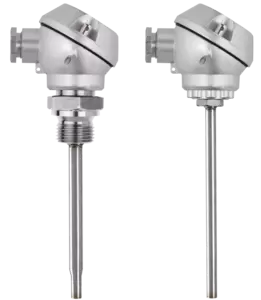
JUMO HEAT temp
Type 902437- Certificate for Module D of Directive MID
- DIN EN 1434, AGFW FW 202 and FW 211
- Compliance MID
-
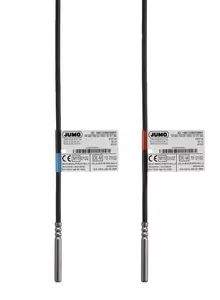
JUMO HEAT temp
Type 902438- Pairing and certification MID
- Type Test Certificate
- DIN EN 1434, AGFW FW 202 and FW 211
-
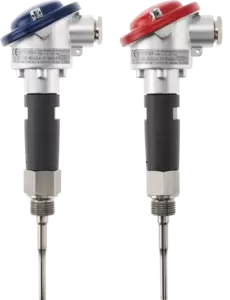
Screw-in paired resistance temperature sensors with type B head for heat meters (type DL)
Type 902454- Certification according to MID
- DIN EN 1434, AGFW FW 202 and FW 211
- Compliant with MessEG and MID standards
-
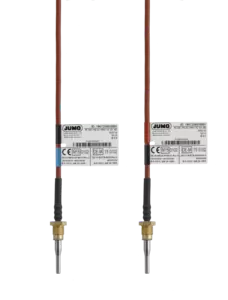
Paired temperature sensors for heat meters (type DS/DL)
Type 902455- Certification according to MID
- DIN EN 1434, AGFW FW 202 and FW 211
- Compliant with MessEG and MID standards
-
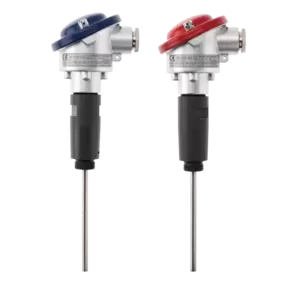
JUMO HEAT temp
Type 902464- Certificate for Module D of Directive MID
- DIN EN 1434, AGFW FW 202 and FW 211
- Compliant with MessEG and MID standards
-
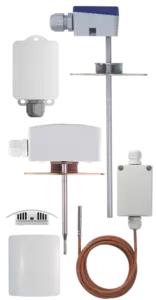
Resistive temperature sensor for indoor, outdoor and wall mounting
Type 902520- 2-, 3- and 4-wired connection
- Option with built-in converter
- Compatible with SIL and PL
-
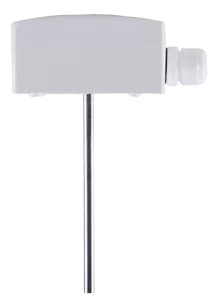
Resistive temperature sensor in duct version
Type 902524- Option with built-in converter
- Various types of temperature sensors
- Compatible with SIL and PL
-
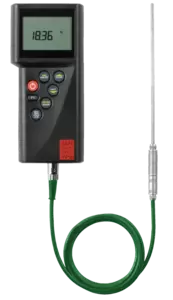
JUMO RTD temperature probes
Type 902721- DAkkS calibration
- Four-wire circuit
- Resistance sensor Pt100
-
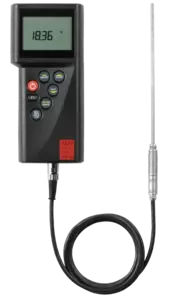
Portable indicator for measuring and monitoring temperature using sensor Pt100
Type 902722- USB-interface
- DAkkS calibration
- Accurate temperature sensor RTD Pt100
-
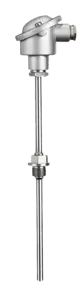
JUMO PROCESStemp
Type 902820- Replaceable measuring insert
- Stainless steel/titanium/tantalum/inconel/
- Two-wire converter available
-

Resistive temperature sensor with cable according to DIN EN 60751
Type 902821- Sheathed cables
- Two-, three- or four-wire
- Single, double and triple options
-

JUMO STEAMtemp
Type 902830- Two-, three- or four-wire
- Connecting cables PTFE, FEP, silicone
- 1-, 2- or triple thermometer RTD
-
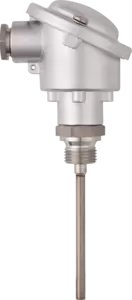
JUMO Marine Temp
Type 902850- Certified by Bureau Veritas
- Ambient temperature up to 100 °C
- Sealing at low and higher pressure
-
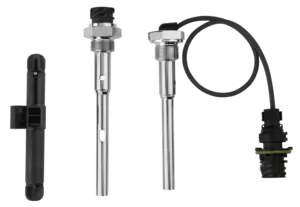
System for monitoring oil level and temperature in drives of trucks and agricultural machines
Type 902880- Position: standing or hanging
- Additional temperature output
- Connecting cable: polyester
-
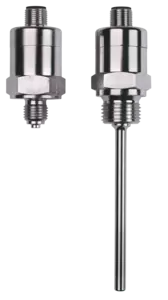
JUMO CANtrans T
Type 902910- Vibration-resistant design
- Limit monitoring
- Single or double sensor
-
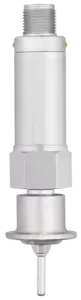
JUMO dTRANS T1000
Type 902915- Low maintenance and upkeep costs
- Process automation
- Reduced commissioning time
-
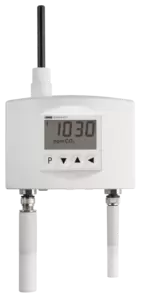
JUMO Wtrans E01
Type 902928- LCD display with backlight
- 2 data entry
- No wiring required
-
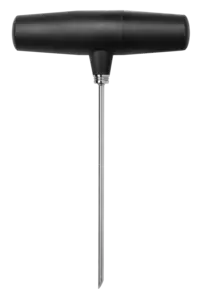
JUMO Wtrans T
Type 902930- No installation cables
- Interference-free data transfer
- Optional with ATEX
-

JUMO Wtrans T01
Type 902931- No wiring required
- Linearization according to customer requirements
- Up to 4 analogue outputs
-
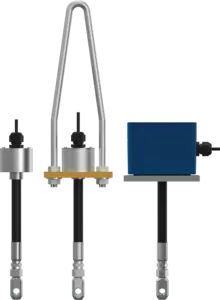
Multipoint temperature sensor
Type 903530- Up to 64 measuring points
- Robust industrial version
- Certificate ATEX
-

JUMO plastoSENS T01
Type 904001- Voltage-resistant temperature sensor
- AC electrical insulation current 3,5 kV
- High load capacity
-
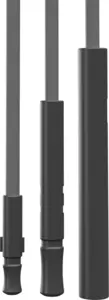
JUMO plastoSENS T02
Type 904002- Suitable for most liquids
- Shockproof
- Vibration and vibration resistance
-

JUMO plastoSENS T03
Type 904003- Completely sealed
- Vapor tightness even at the cable outlet
- Redundant measurement - 2 sensor
-
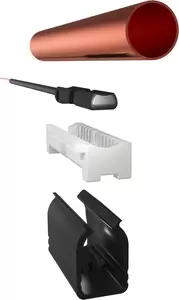
JUMO plastoSENS T04
Type 904004- Reliable measurement of temperature changes
- Assembly without additional tools
- Contact with pipe surface
-
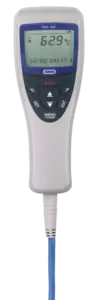 Out of production
JUMO TDA-300 / TDA-3000
Type 702540- Data logger up to 9999 values
- Calibration certificate DKD
- Reading data via interface USB
No results were found for the selected parameters.