Temperature measurement
What are temperature sensors?Platinum temperature sensors are sensors that use the effect of platinum's electrical resistance versus temperature to make measurements. The electrical properties of resistance material make highly accurate temperature measurements possible, which is why they are used for installation in resistance thermometers. Find out more about temperature sensors!Contents
What are temperature sensors?
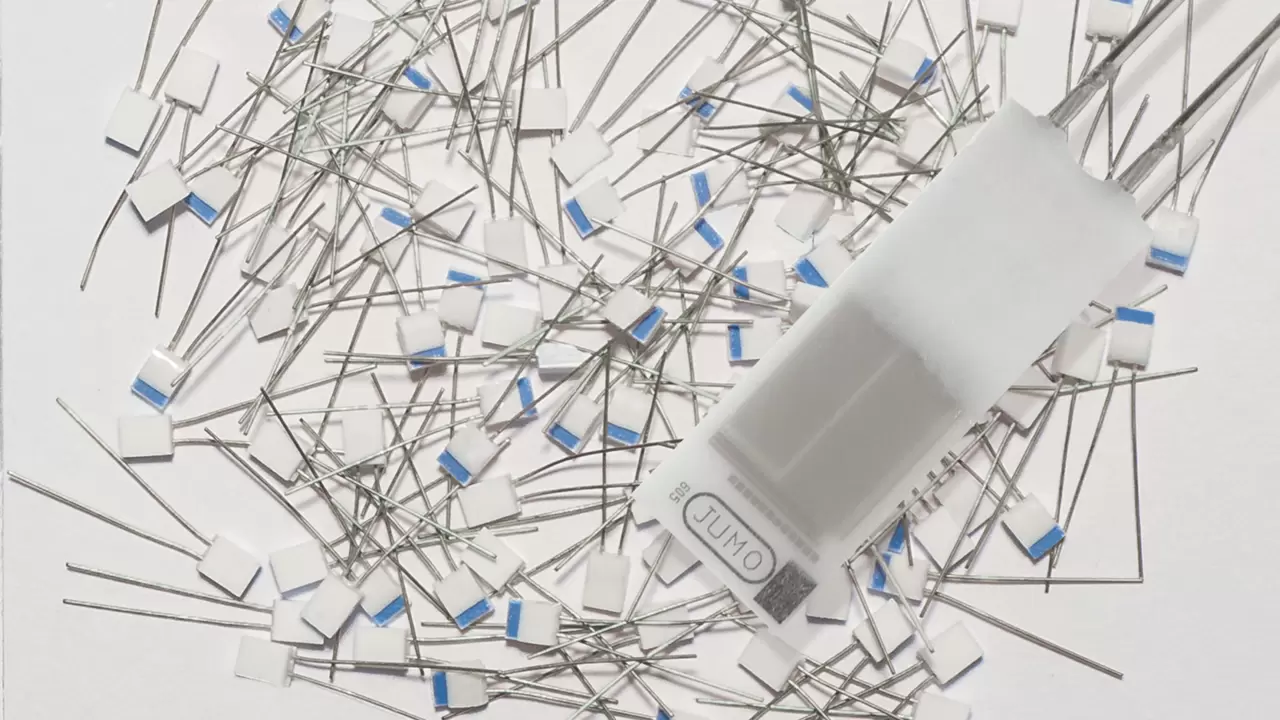
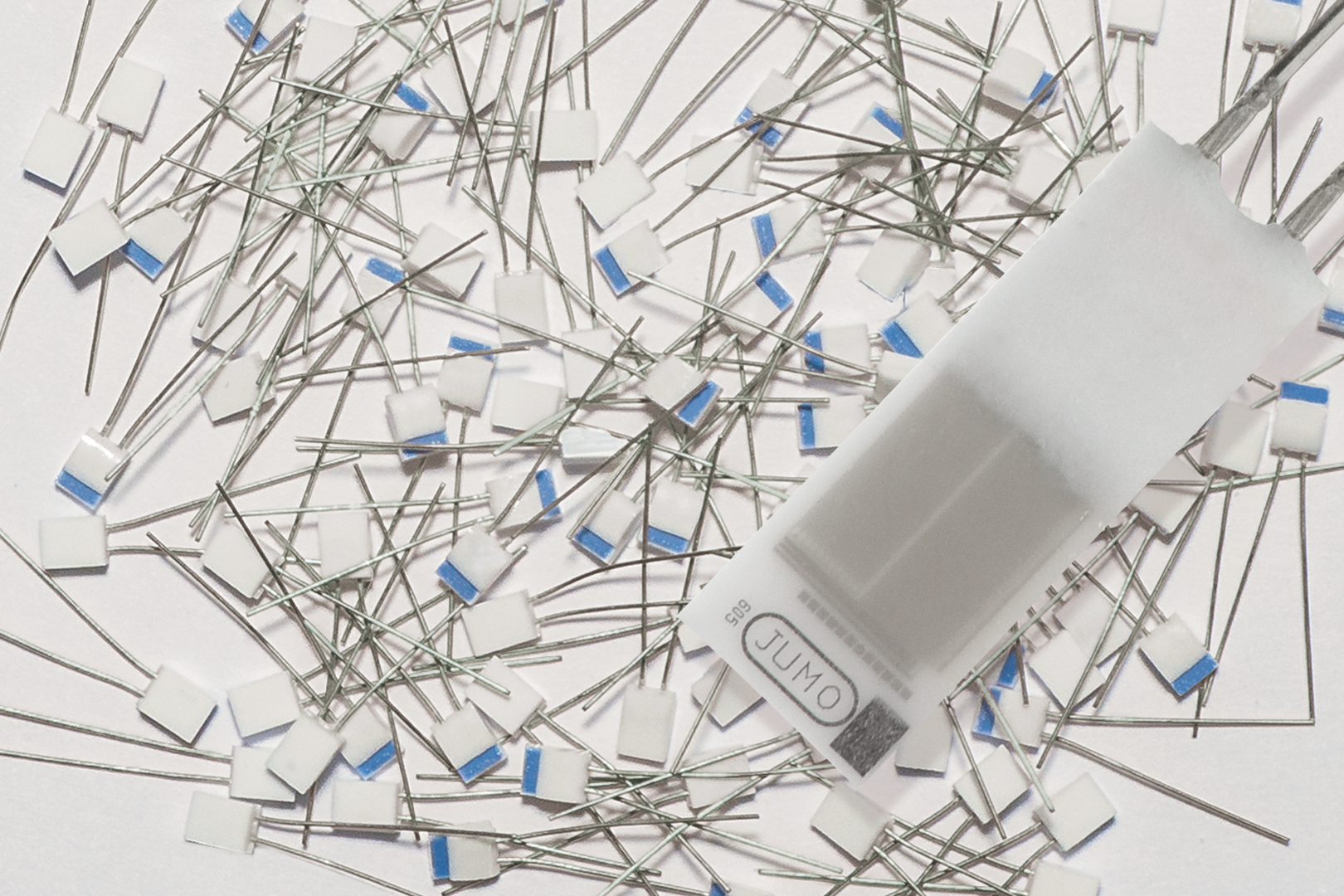
Temperature sensors are electronic components that produce an electrical signal as a measure of temperature. In industrial measurement technology, platinum has established itself as the main resistance material for temperature sensors. Its advantages include: high chemical resistance, relatively simple processing (including for the manufacture of wire), the ability to obtain high-purity material, and good reproducibility of electrical properties.
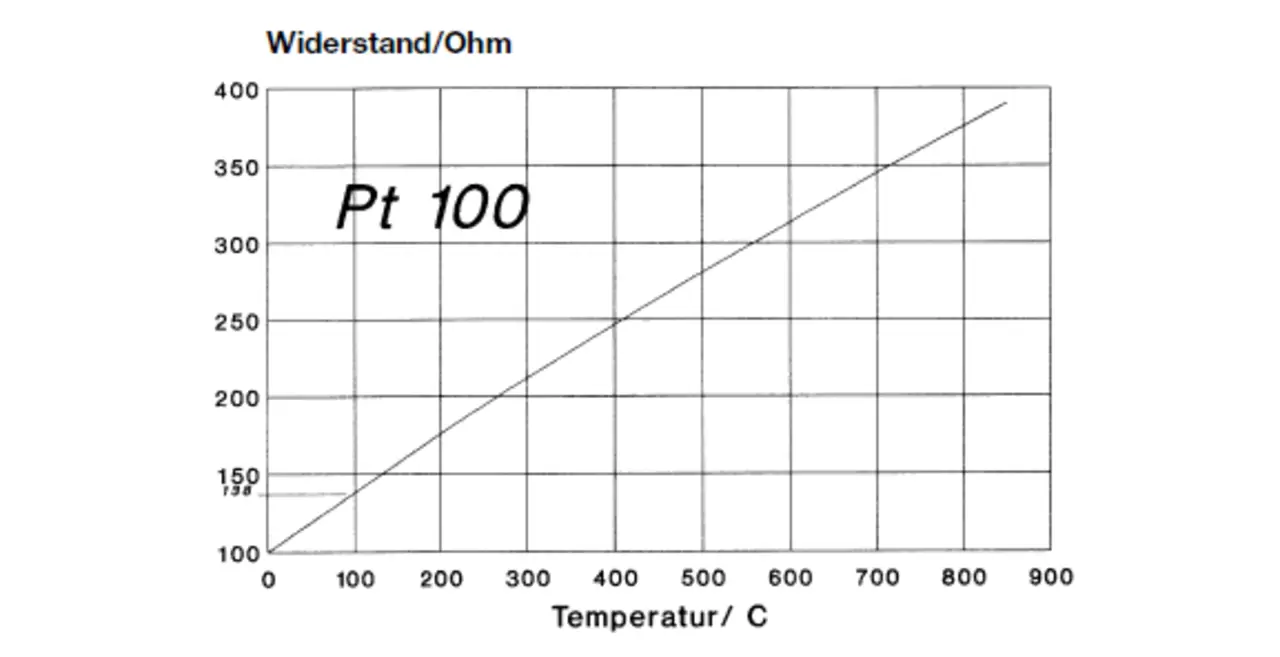
These characteristics are fully defined in the European standard DIN EN 60 751, which provides universal interchangeability of platinum resistance thermometers, a feature virtually absent from most other types of sensors. These definitions include the temperature dependence of the resistance, fixed in the table of standard values (Grundwertreihe), the nominal resistance and the corresponding reference temperature, the permissible maximum deviations, as well as the temperature range, which according to the standard is from −200 to +850 °C.
What types (designs) of temperature sensors exist?
The design of the platinum sensor varies depending on the application; In principle, in the past a distinction was made between wirewound and thin-film resistors. While thin film resistors always consist of a platinum layer deposited on a ceramic substrate, wirewound resistors may have a wire coil fused into glass or embedded in powder. Meanwhile, thin-film resistors have proven themselves in industry. Platinum chip temperature sensors with connecting wires or SMD design are preferred.
How is the temperature sensor designed? What's the difference?
There are various designs of platinum chip temperature sensors with connecting wires within the series, which differ significantly in the following characteristics:
- connecting wire material (silver, platinum, palladium, nickel, gold-plated nickel or tin nickel)
- in the processing method (soft soldering, soldering, crimping or welding)
- at operating temperature (-70 °C to maximum + 600°C)
The platinum chip temperature sensor in the SMD design does not have as many different versions compared to sensors with connecting wires. The main distinguishing feature here is the placement of the contact zone. This can be manufactured as a round contact, as a single-sided contact, or with a single-sided contact and solder back. Compared to lead wire designs, the SMD temperature sensors are specifically designed for automated assembly on printed circuit boards in large volume production.
Buy temperature sensors
What is the rated value of the temperature sensor?
The temperature sensor is available in various ratings. This is usually Pt100, Pt500 or Pt1000.
The nominal value or nominal resistance R0 represents the resistance value at 0°C. According to DIN EN 60 751, the value of 100 Ω is determined for the nominal value, so it is called Pt resistance 100. Plurals of this value are also acceptable, so measuring resistors with ratings 500 Ω and 1000 Ω are offered. Their advantage is higher sensitivity, that is, a greater change in resistance with temperature (Pt 100: approximately 0,4Ω/K; Pt 500: approximately 2.0 Ω/K; Pt 1000: 4.0 Ω/K).
How are temperature sensors used in resistance thermometers?
In the video, you will get an overview of the design and operating principle of resistance thermometers, which use temperature sensors.
Check temperature probe RTD
How accurate are temperature sensors?
The accuracy of temperature sensors is divided into so-called tolerance classes or accuracy classes. There is 4 accuracy class: F 0,1; F 0,15; F 0,3 and F 0,6. For each class, a maximum tolerance or maximum deviation is defined.
Accuracy classes for measuring resistors:
For thin film resistors | ||
|---|---|---|
Class | Range, °C | Maximum deviation, °C |
F 0,1 | from 0 to +150 | ± (0,1 + 0,0017|t|) |
F 0,15 | from -30 to +300 | ± (0,15 + 0,002|t|) |
F 0,3 | from -50 to +500 | ± (0,3 + 0,005|t|) |
F 0,6 | from -50 to +600 | ± (0,6 + 0,01|t|) |
|t| = absolute temperature value in °C without taking into account the sign | ||
Where are temperature sensors used in industry?
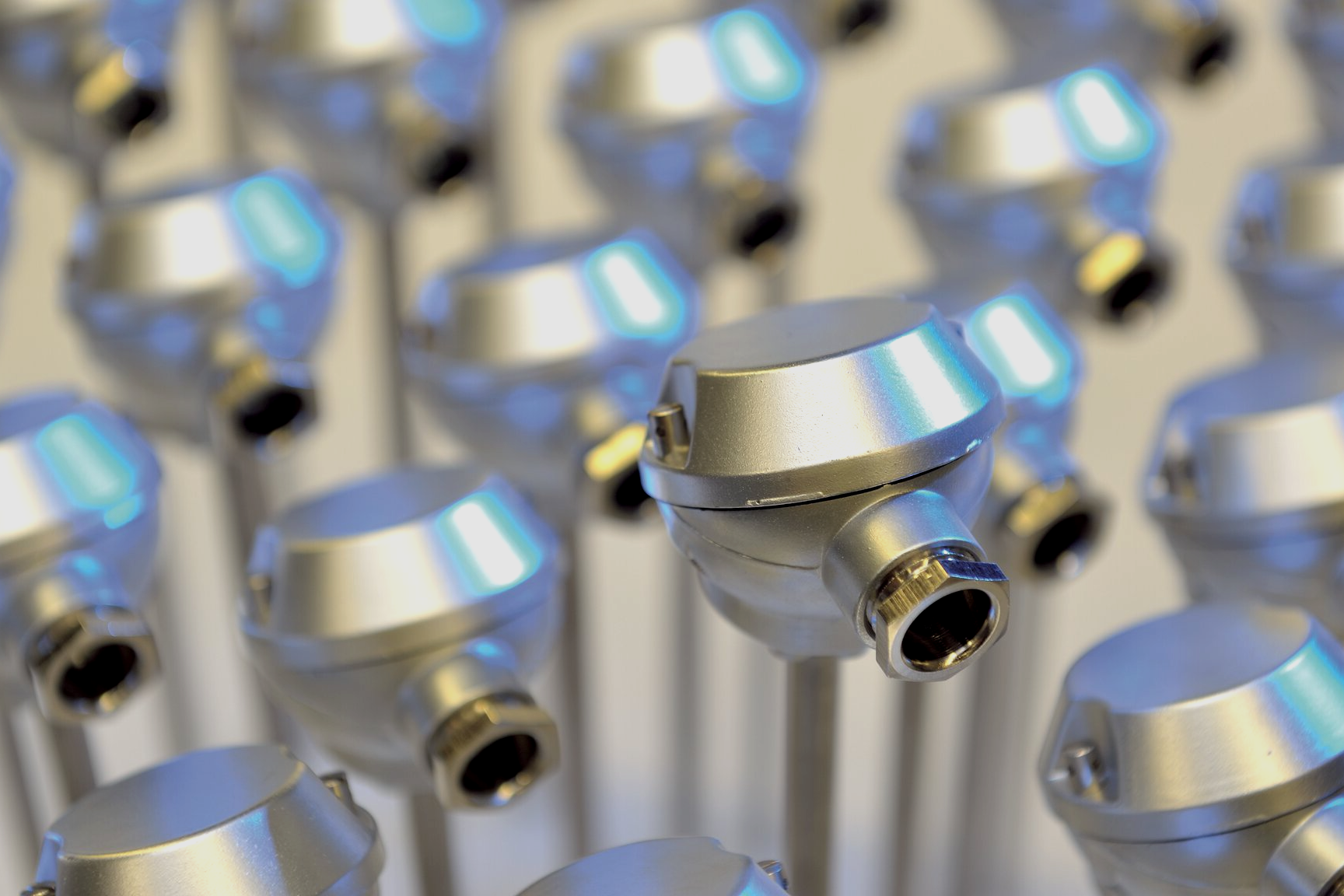
Platinum chip temperature sensors rated Pt100, Pt1000 and Pt500 are generally not used for direct temperature measurement. They are mounted in appropriate housings, thereby creating a temperature sensor suitable for industrial use - the so-called resistance thermometer (temperature sensor RTD).
Our services for you