Temperature measurement
Temperature sensors for heat meters – a brief overview of the most important facts
Temperature sensors play an important role in accurately determining energy consumption in heating and cooling systems. They ensure accurate energy billing and help optimize energy consumption. You can learn more about the functions and importance of temperature sensors and heat meters in the following FAQs.
What are heat meters
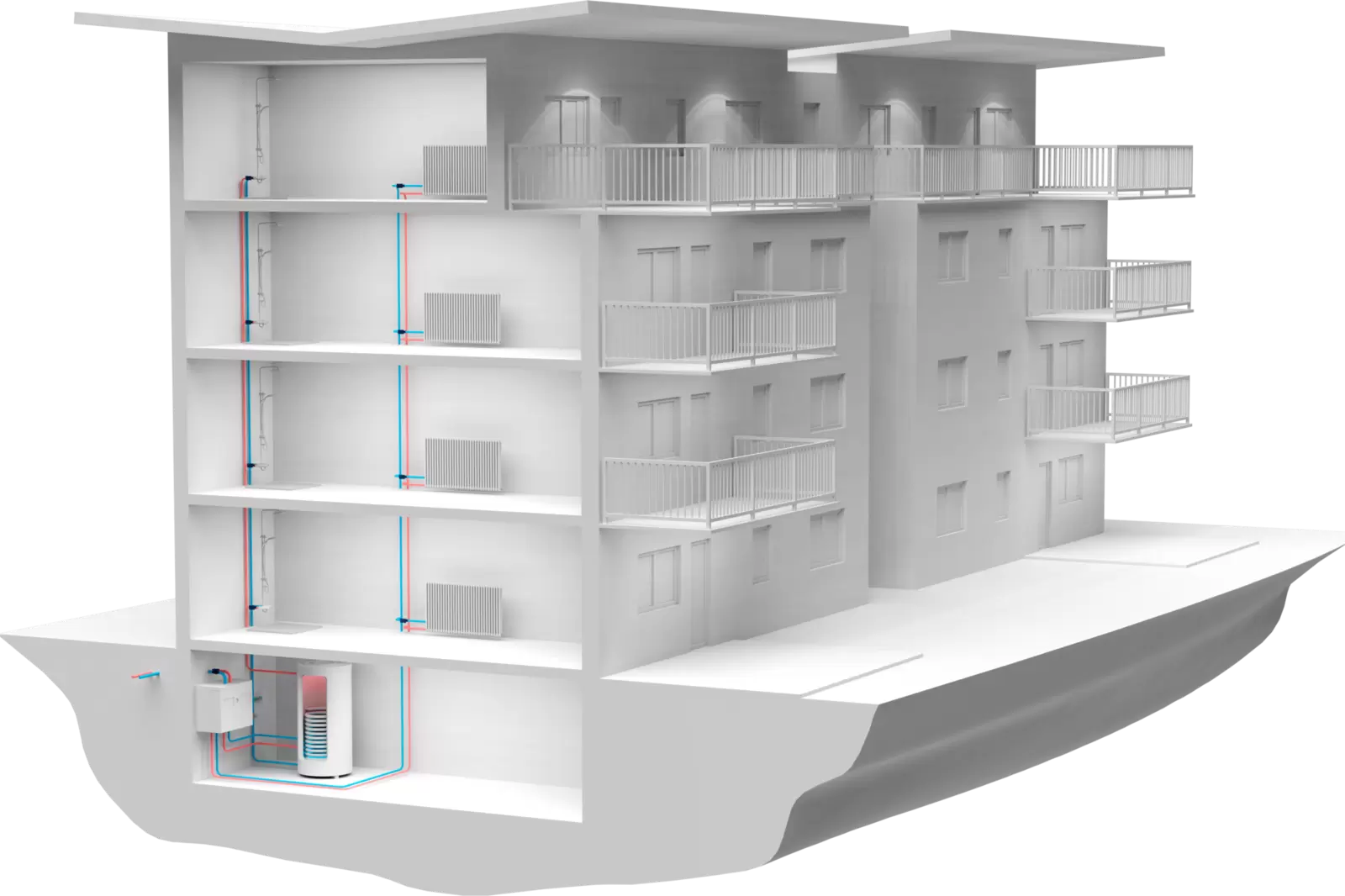
A heat meter or heat energy meter is a device for measuring thermal energy that is supplied to the consumer through a heating circuit or taken from a cooling circuit. The heat meter calculates thermal energy based on the volume flow of the circulating medium and the temperature difference between the supply and return flow. The temperature difference is determined using two temperature sensors - usually resistance thermometers or digital temperature sensors.
Buy temperature sensors for heat meters
Why is it necessary to determine the amount of thermal energy supplied?
Thermal energy must be measured wherever it is billable. This applies to residential buildings, municipal facilities and industrial enterprises. As energy prices rise, pay-as-you-go is becoming increasingly important and, in many cases, even legally required.
Why should the temperature signal of two sensors differ slightly?
Temperature sensors measure the temperature in the flow and return flow of the heating circuit. The temperature difference is used to determine the thermal energy, which must be determined as accurately as possible. If the output signals of two temperature sensors differ too much, this will lead to inaccurate calculation of energy consumption values. Therefore, the temperature sensors are interfaced according to EN 1434. This means that 2 sensors whose output signals differ slightly from each other are always combined.
What sensors are used in temperature probes for heat meters?
Platinum chip temperature sensors with ratings 100 ? (Pt100) and 1000 ? (Pt1000). However, sensors Pt500 are also used.
How are temperature sensors for heat meters designed according to EN 1434-2?
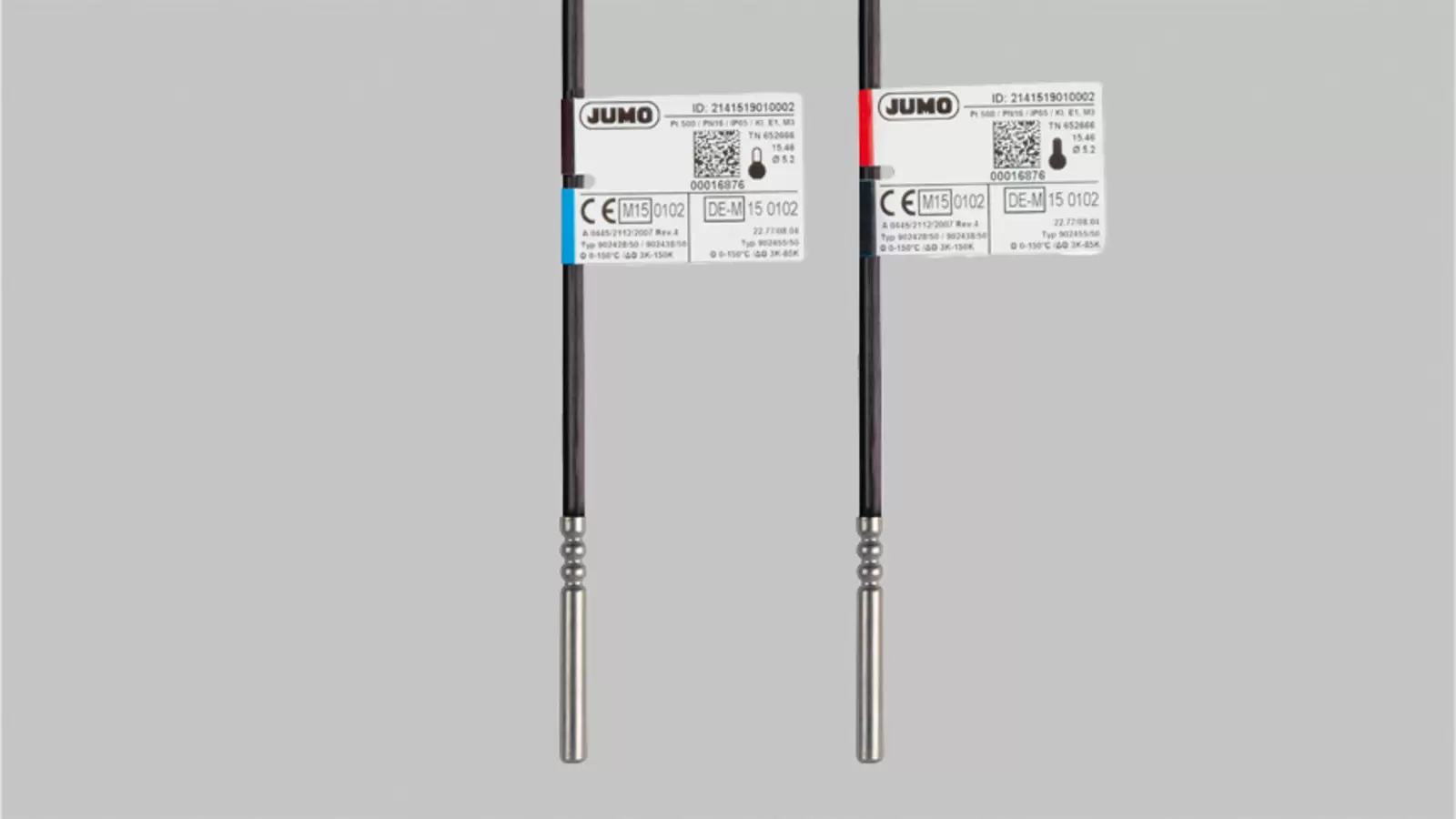
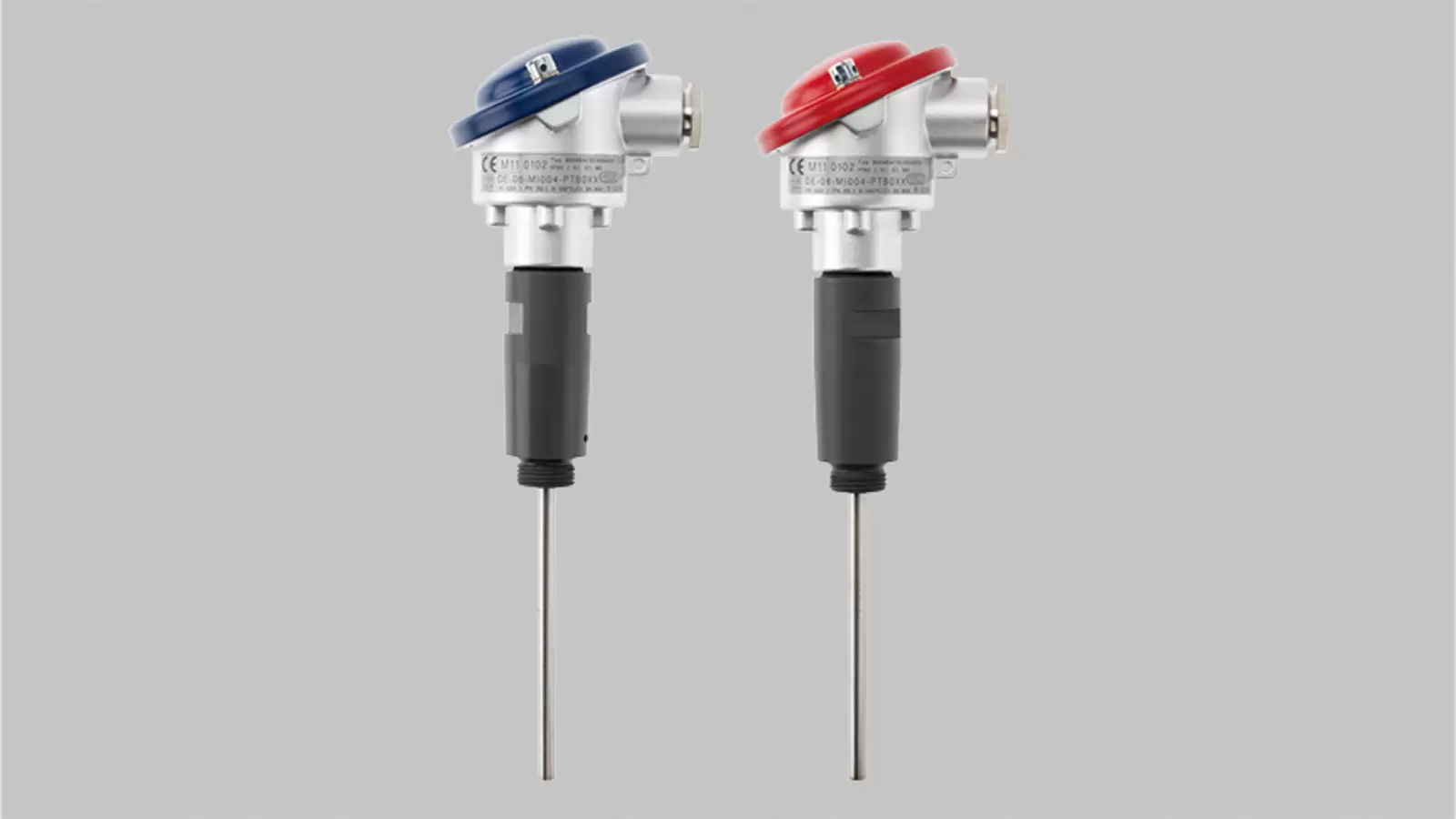
Temperature sensors for heat meters are usually designed as plug-in sensors. The thermowell diameter is usually 5,0, 5,2 or 6,0 mm. As an alternative, there are temperature sensors with a connection head. Specific requirements and recommendations for the design of temperature sensors for heat meters are set out in the standard EN 1434-2.
How are temperature sensors connected?
As a rule, temperature sensors are required for heat meters with a permanently connected connecting cable. The connecting cables of two temperature sensors of a replaceable pair with a platinum chip must be of the same length and must not be shortened. Otherwise, different wire resistances, especially in two-wire versions, will lead to additional measurement errors.
For temperature sensors with a connection head, the connection head contains a connection connector whose terminals are used to connect to the temperature sensor. The two platinum chip temperature sensors must be connected by the customer using connecting cables of the same type and length.
According to EN 1434, there are maximum cable lengths beyond which resistance thermometers must be connected using four-wire technology.
Buy temperature sensors for heat meters
Why is it important that temperature sensors can also be removed from pressurized systems?
Temperature sensors in heat meters must be replaced regularly and checked if necessary. However, turning off the pressure in the system is usually impossible or takes too much time. There are two methods to ensure the system is sealed when replacing the temperature sensor.
Using thermowells for temperature sensors
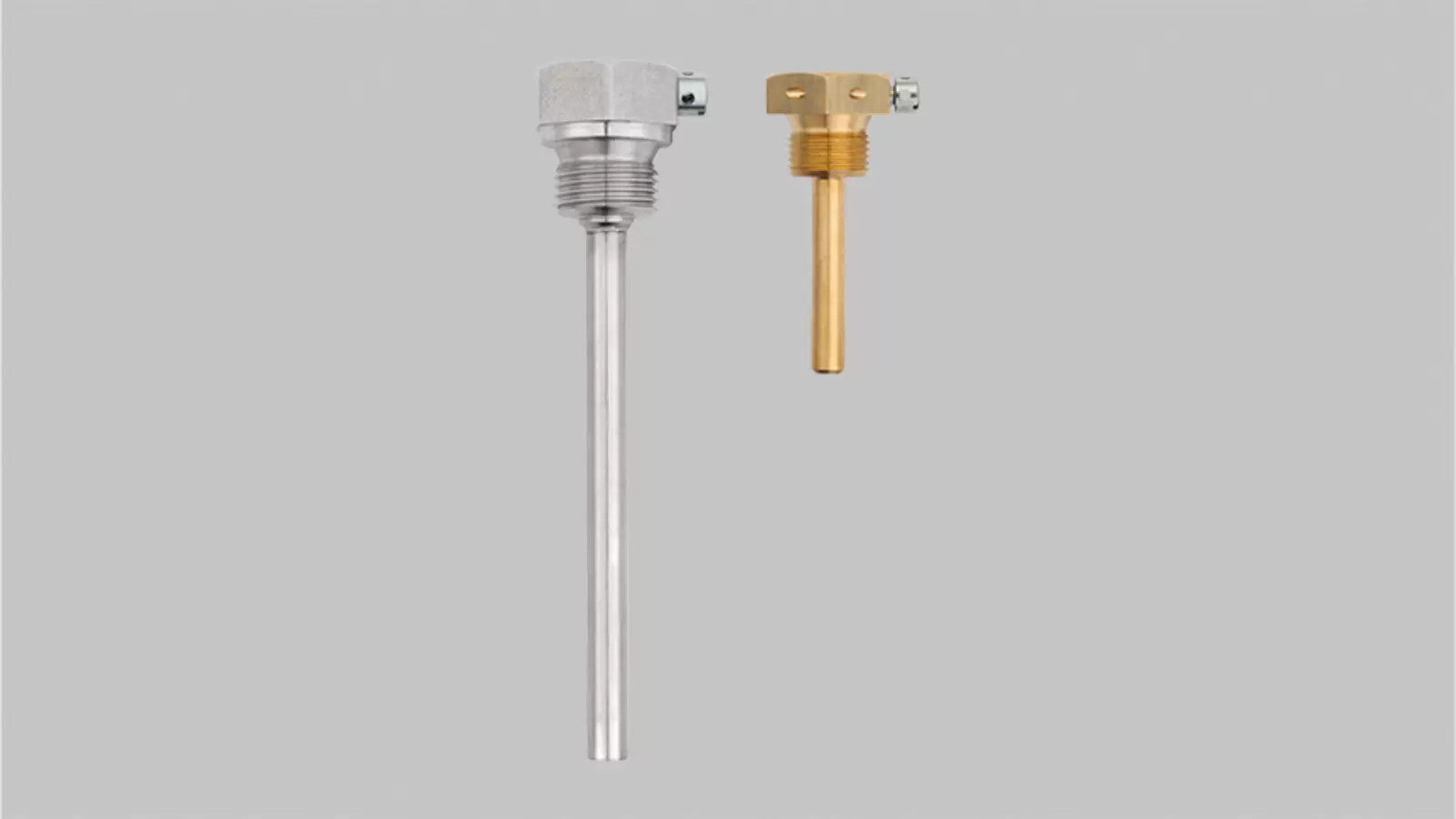
If the measuring point is equipped thermowells, temperature sensors can be installed in them.
When removing the sensors, the process remains sealed thanks to only the protective cap, but the medium does not come into direct contact with the temperature sensor. The protective cap causes a delay in the measurement response and additional heat dissipation error. For the most accurate temperature measurement, we recommend installing the sensors directly, without a protective cap.
Using a Ball Valve for Temperature Sensors
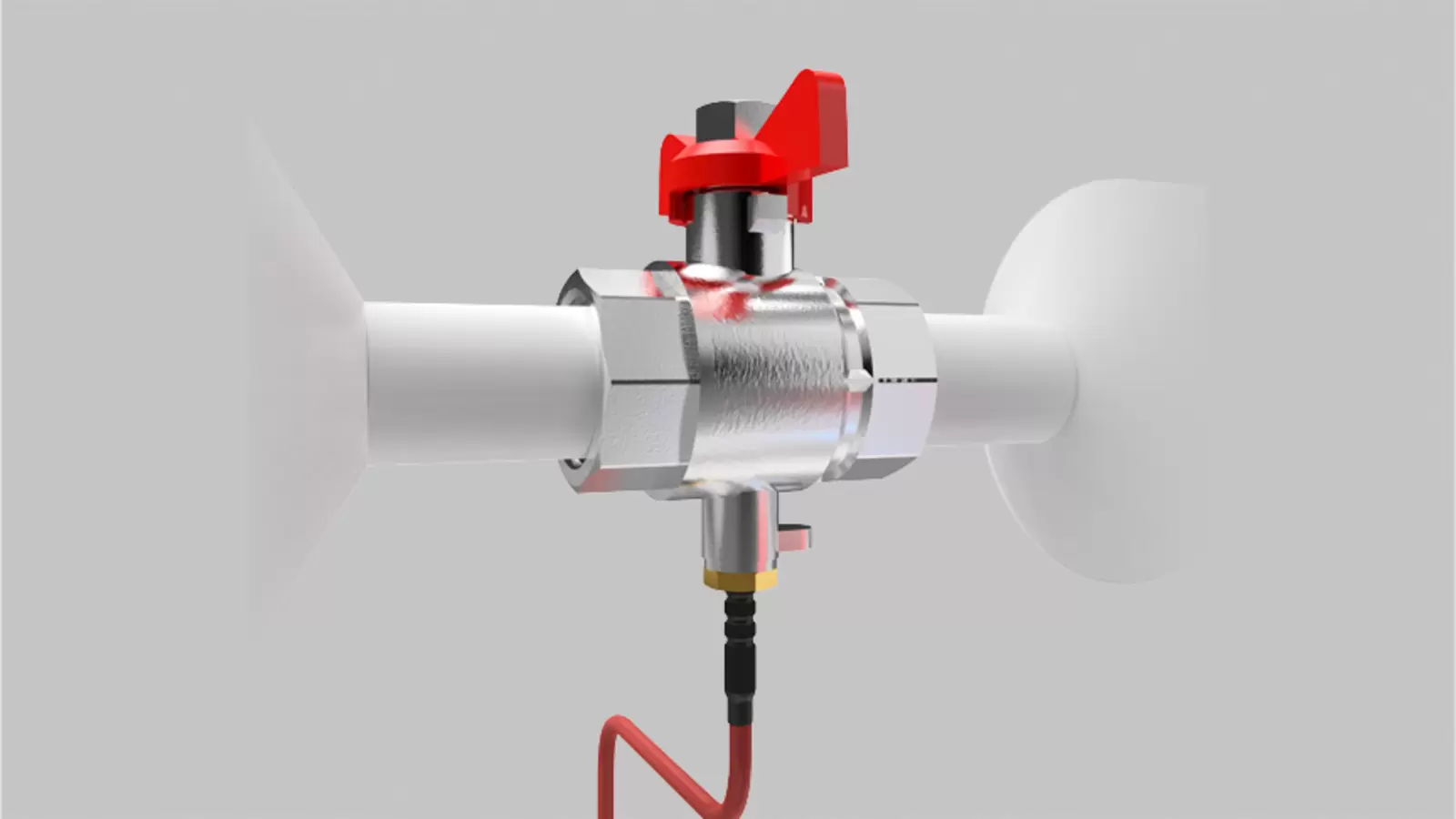
Direct installation of temperature sensors is made possible by using ball valves in accordance with EN 1434. Ball valves have an internal thread M10 into which temperature sensors are screwed. The sensor is therefore located in the ball valve and measures directly in the medium. When the ball valve is closed, the temperature sensor is separated from the process. It can be removed without opening the process.
Heat meter: sensor installation
The following video shows step by step how to properly install a temperature sensor in a ball valve. This way you can be sure that the installation is done correctly and the sensor will provide reliable measured values.
What are the differences between symmetrical and asymmetrical installation of temperature sensors?
In our new video you will learn why correct installation of temperature sensors is crucial for heat and cold meters. After all, the installation affects the accuracy of measurements and the calculation of energy costs.
We will explain not only the difference between symmetrical and asymmetrical installations, but also clarify often overlooked effects such as heat transfer uncertainty. You will also learn about the role of immersion sleeves and their influence on the measured values. In addition, you will receive valuable tips on minimizing measurement errors and ensuring accurate and reliable temperature measurements. Gain the practical knowledge you need to avoid costly mistakes.
Let JUMO help you and click on the video!
When is it necessary to maintain or replace temperature sensors in heat meters?
To ensure accurate and reliable measurement of thermal energy, temperature sensors must be regularly metrologically tested in accordance with manufacturer or national requirements and replaced if necessary. In Germany, the calibration period for thermal energy measuring instruments (heat meters) is 6 years.
The sensor should also be checked if there are inconsistent or clearly incorrect temperature measurements, or after major repairs or modifications to the heating or cooling system.
Our services for you