Understanding Temperature Switches - Technology and Applications
Temperature measurement
Temperature switches are used millions of times in the field of temperature control and monitoring in industrial and domestic applications. These essential components therefore make a significant contribution to the efficiency and safety of systems. Find out more about how they work, the different types and the wide range of applications for temperature switches.What does the temperature switch do?
Temperature switches are designed to control and monitor temperatures in a variety of systems and applications. They switch the electrical contact when the temperature exceeds or falls below a certain level, thereby preventing overheating or ensuring sufficient heating.
Buy temperature switches
What is the working principle of mechanical temperature switches?
This article discusses mechanical temperature switches that use the expansion of metals, liquids, or gases. As the temperature rises, the substances in the temperature switch continue to expand until the switch contact is activated when a certain temperature is reached. Switching currents 10 A or more is not a problem for most temperature switches. Small heaters can be controlled directly; for larger systems a drive such as a power contactor must be used. Mechanical temperature switches are also passive switches and therefore do not require a supply voltage.
What are electronic temperature switches?
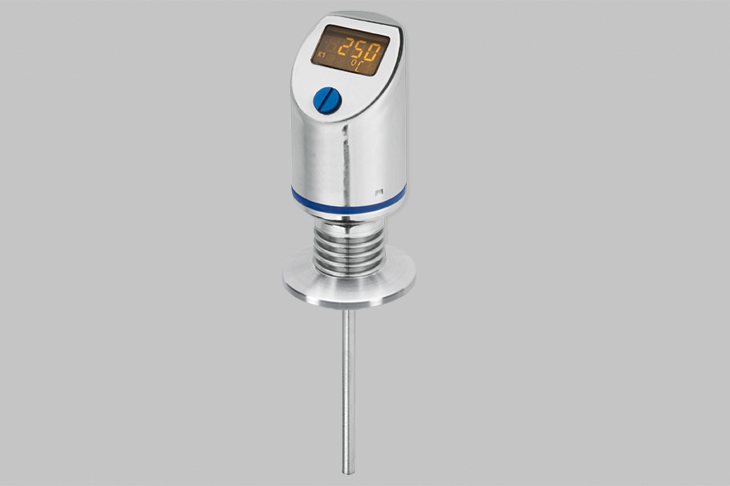
Electronic temperature switches are also available in the market. They measure temperature using resistance thermometer The switching point can be set, for example, using a keyboard, and they can be equipped with a display. Temperature can often be output via a standard signal (eg 4 to 20 mA).
What is switching hysteresis?
The switching point (or switching temperature) of a temperature switch is the temperature at which the contact opens as the temperature rises, thereby turning off the heater. The switching point is fixed for some switches, but can also be freely set for other versions. In addition, temperature switches have a so-called lower switching point (also known as reset point/backward switching point), i.e. the temperature at which the contact closes again as the process cools. The temperature difference between two switching points is the hysteresis switching value or reset/switchback value.
What is the difference between a temperature switch and a temperature controller?
Very precise control results are achieved using temperature controllers. They measure temperature using a temperature sensor and how PID controllers, they regulate the temperature exactly to the set value. In the case of binary control, fine adjustment is possible by changing the relative switching time of the drive. For example, the thermal output can vary from 0 to 10 kW.
In contrast, temperature switches are assigned to intermittent two-state controllers - the process temperature oscillates with them around a set point. In many applications, such temperature variations are acceptable, so temperature switches can be used to configure very reliable temperature control at low cost.
Buy temperature switches
How do bimetallic temperature switches work?
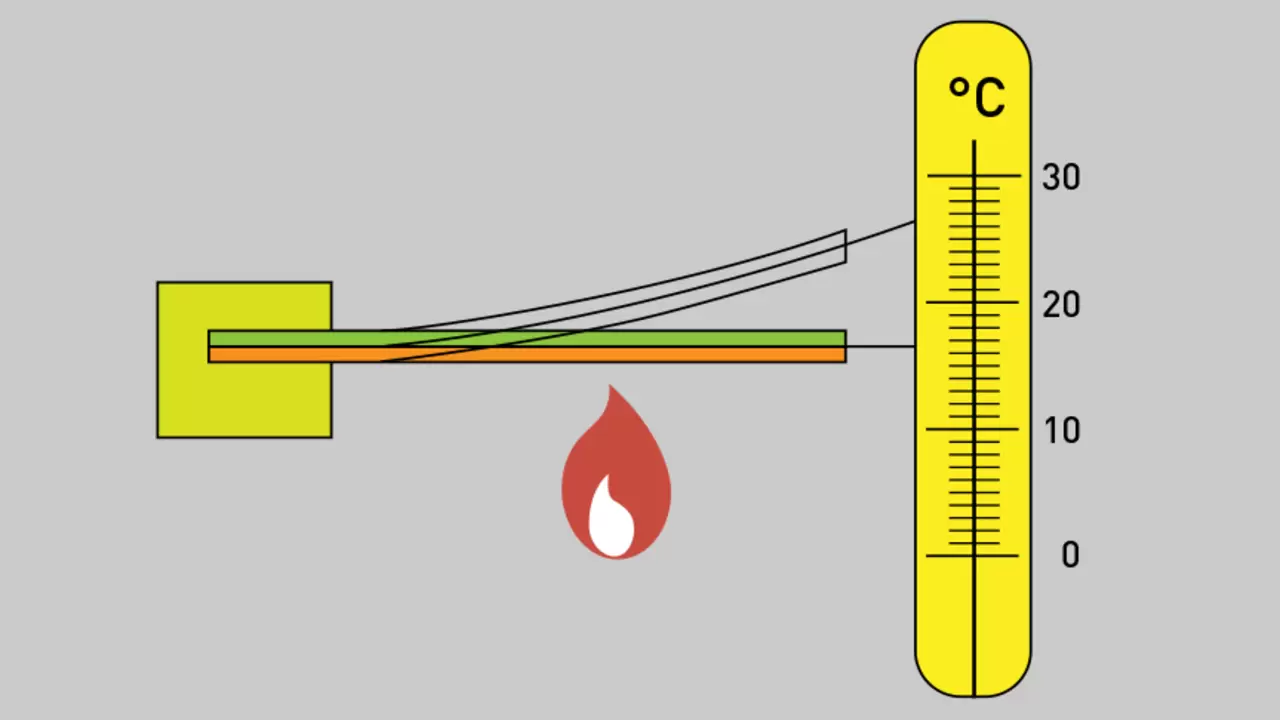
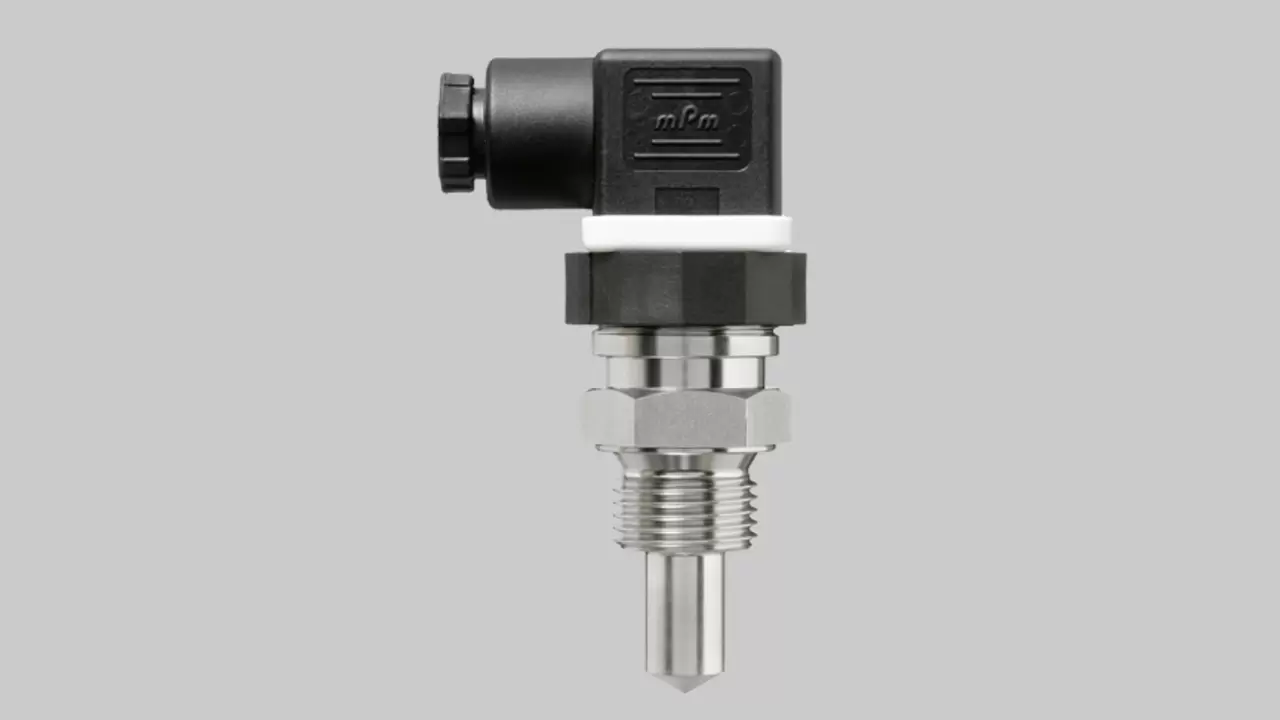
As the name suggests, bimetal is used in bimetallic switches. 2 metals that roll on top of each other (such as copper and nickel) have different expansion coefficients. As the temperature increases, the metals expand to different degrees so that deflection occurs and the contact opens (NC) or closes (NO).
Bimetallic switches in industrial environments have a very compact design and are typically screwed into the process like a sensor. Their switching point is fixed during production. They are also very resistant to vibration - vibration resistance up to 10g is not uncommon. The switches are connected in the direction of the evaluation system via a connection line. Bimetal temperature switches are used in devices such as compressors - they turn off the compressor if the temperature is exceeded or active cooling (for example, a fan) starts.
How do gas or liquid temperature switches work?
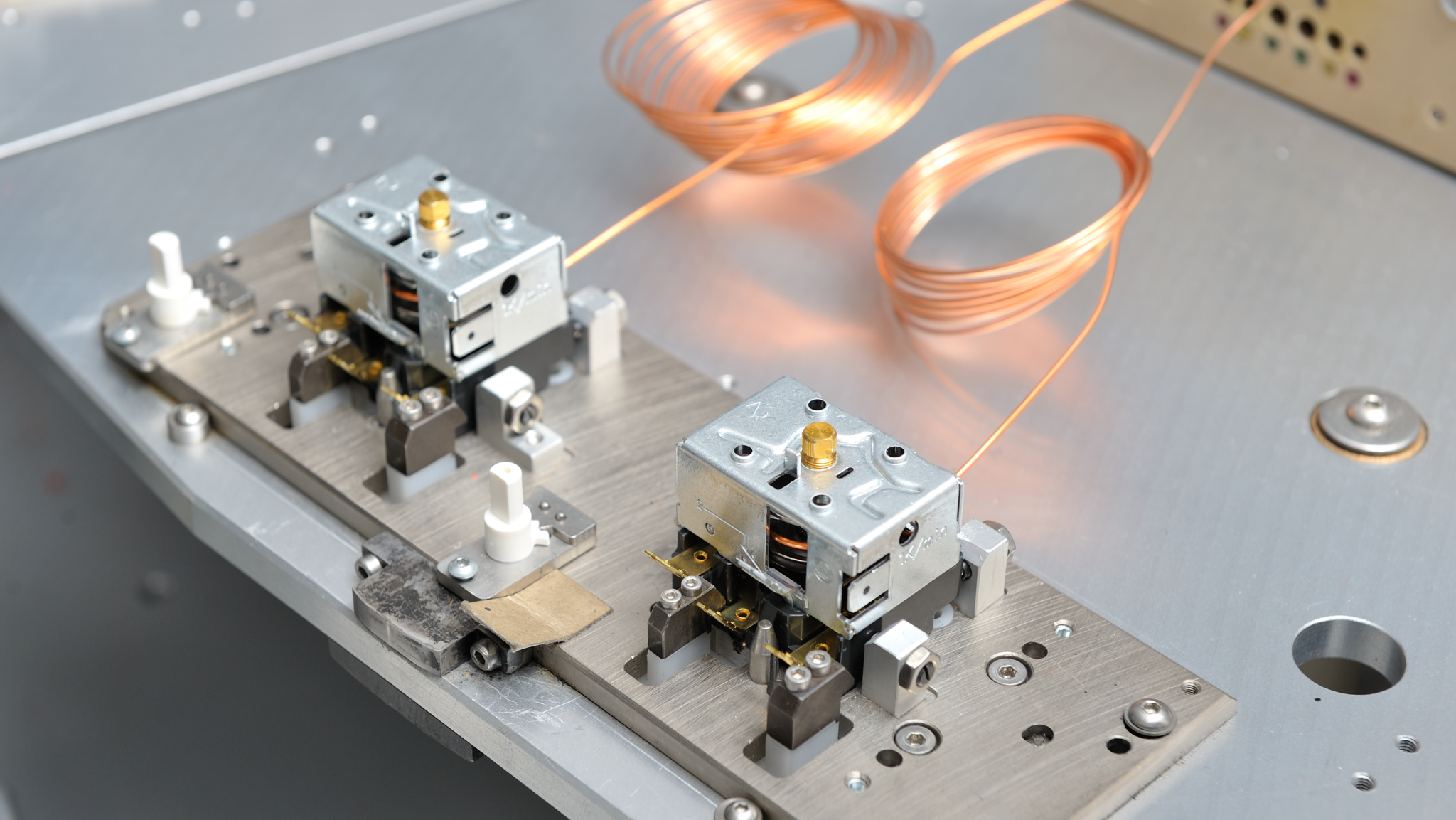
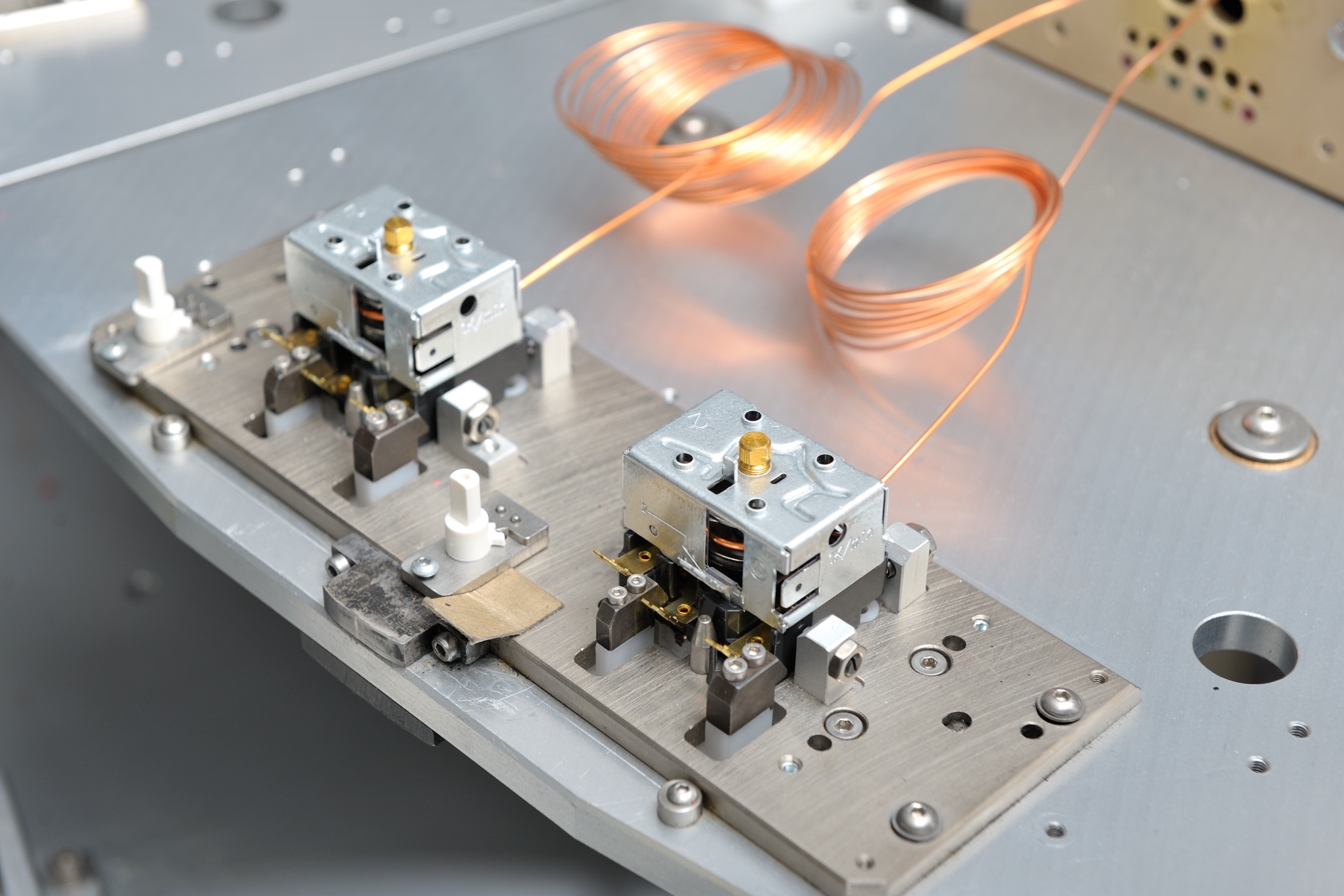
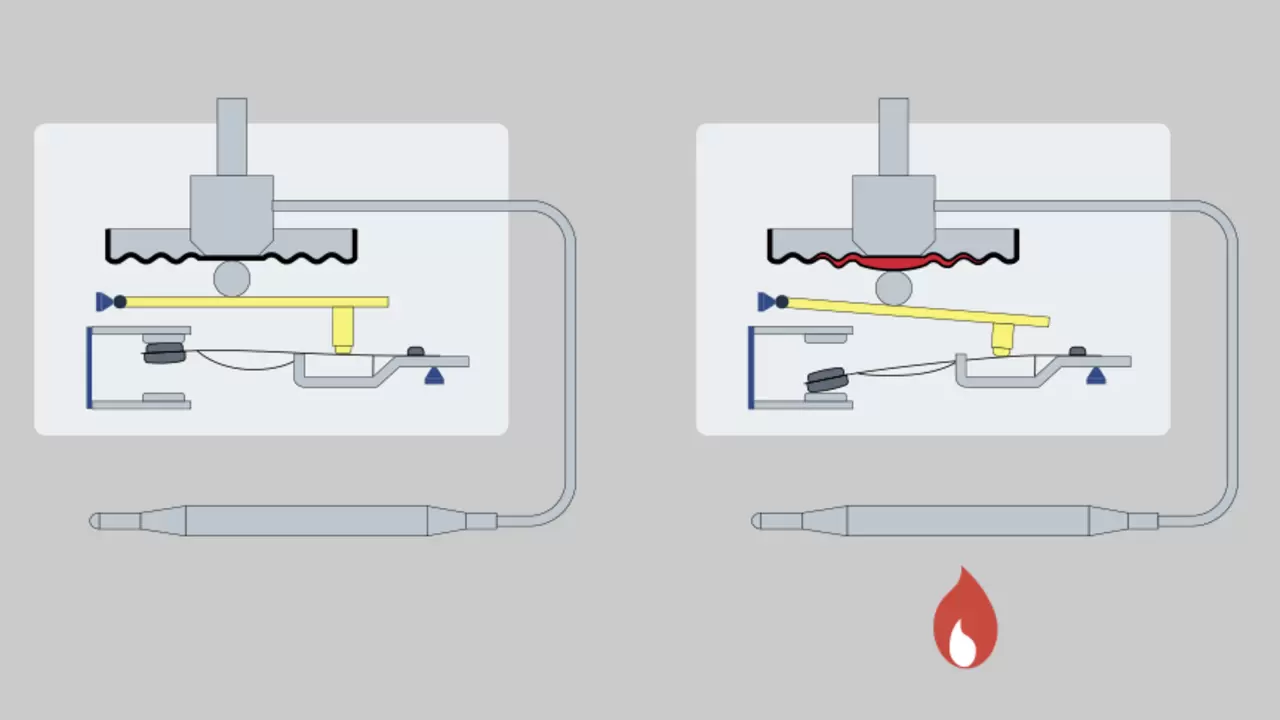
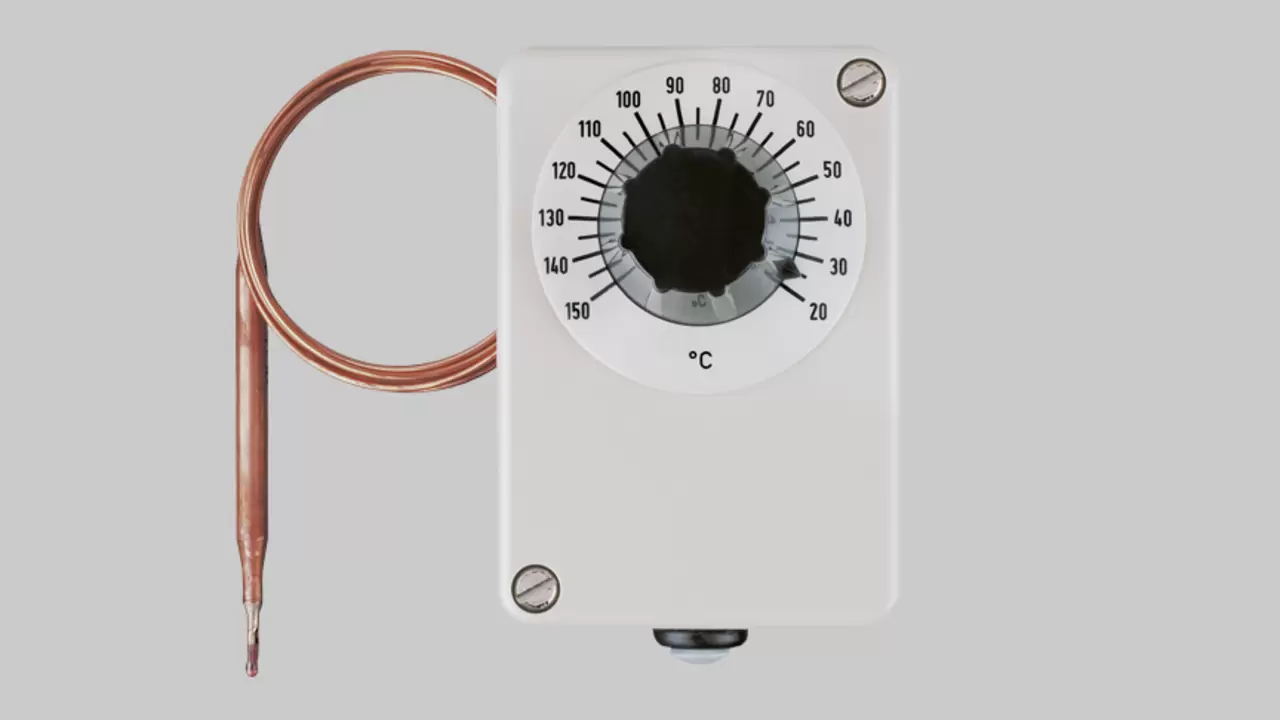
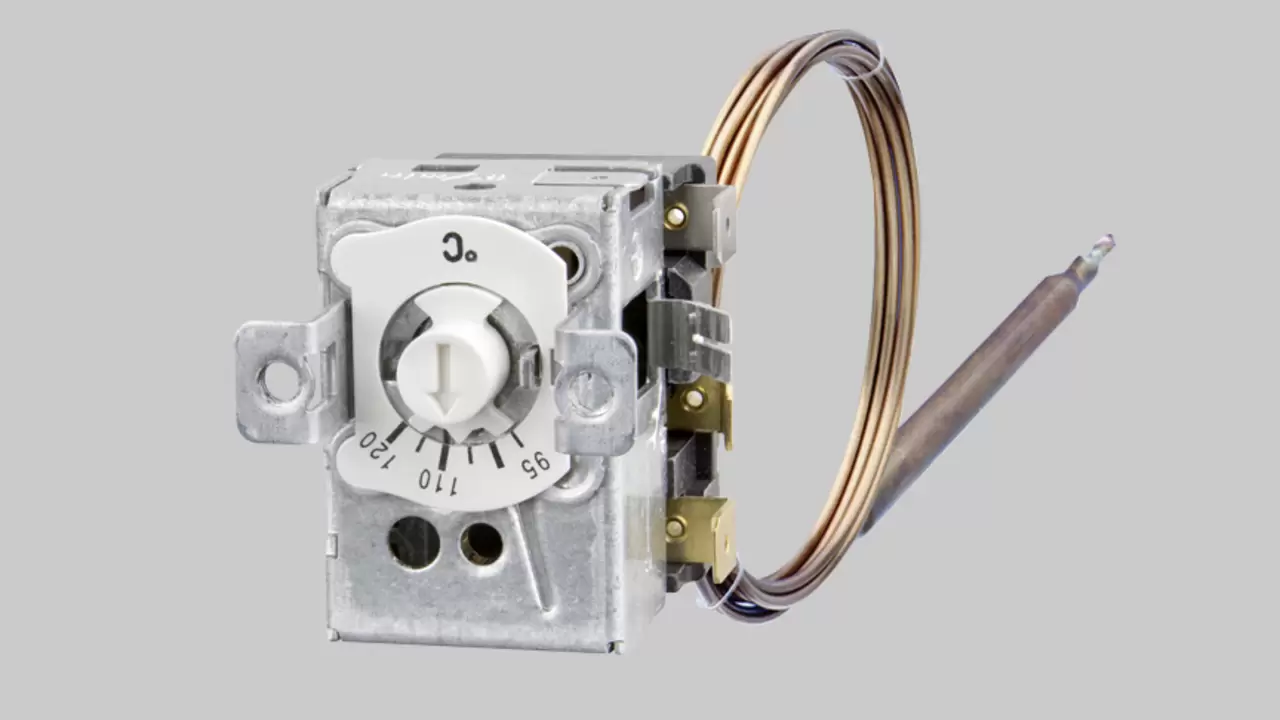
This type of temperature switch is usually called a thermostat and consists of a probe filled with gas or liquid that is placed into the process. If the temperature at the probe increases, the system pressure increases. Since the membrane is connected to the sensor through a capillary line, the same pressure is created in it. The membrane expands and the momentary switch is activated. The internal diameter of the capillary line 0,2 mm is only twice the diameter of a human hair (up to 0,1 mm).
The probe and thermostat housing are connected to each other through a capillary line. A maximum capillary line length of up to 5 m can be considered practical. The switching point can usually be installed on the housing.
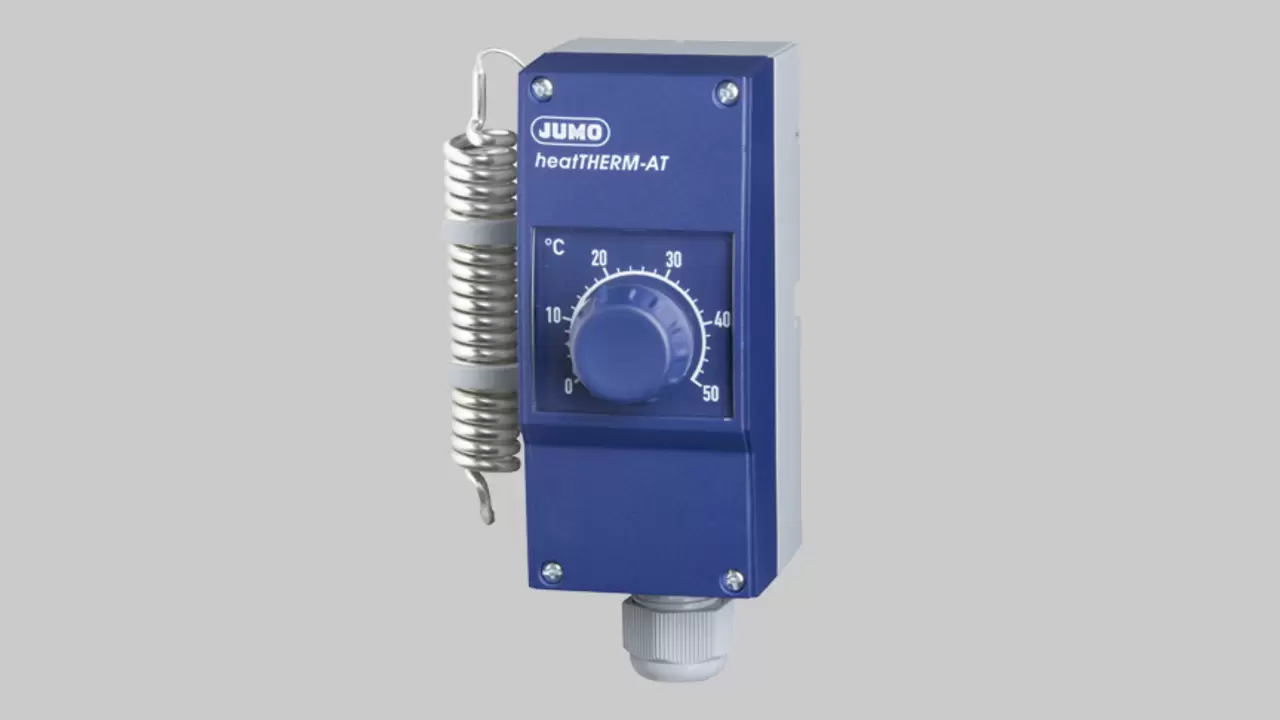
The figure shows a temperature switch for controlling room temperature. In this option, the capillary is directed only to the spiral probe, which is located directly on the thermostat body.
What applications also use temperature switches?
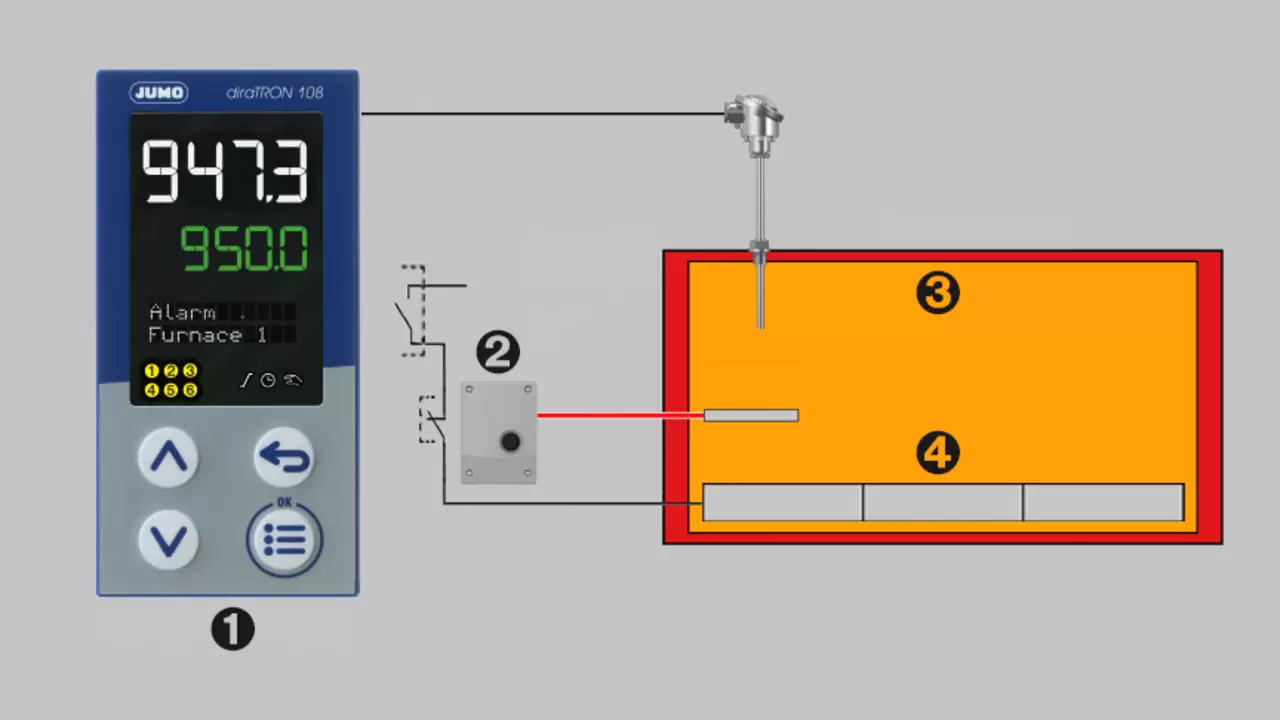
In many cases, for example, a compact controller regulates the process temperature, which is measured with an electric thermometer. The set point is set on the controller in such a way that the temperature in the process is regulated exactly to the set value by activating the heater respectively through the output of the controller. The temperature switch also senses the temperature and turns off the heating at the limit temperature (eg 1000 °C).
Too high a temperature may be caused by a technical defect or improper operation. There are systems for which the described shutdown is mandatory. Examples are oil heat transfer systems or grain dryers. However, it is often just a matter of common sense to protect the product or system being processed from overheating by turning it off to prevent damage.
Too high a temperature may be caused by a technical defect or improper operation. There are systems for which the described shutdown is mandatory. Examples are oil heat transfer systems or grain dryers. However, it is often simply a matter of common sense to protect the plant or processed goods from damaging heat.
How do thermostats differ in terms of task specification and switching behavior?
In the case of temperature switches, control can be done by simple specification of a set point - usually via a rotary knob. temperature regulators.
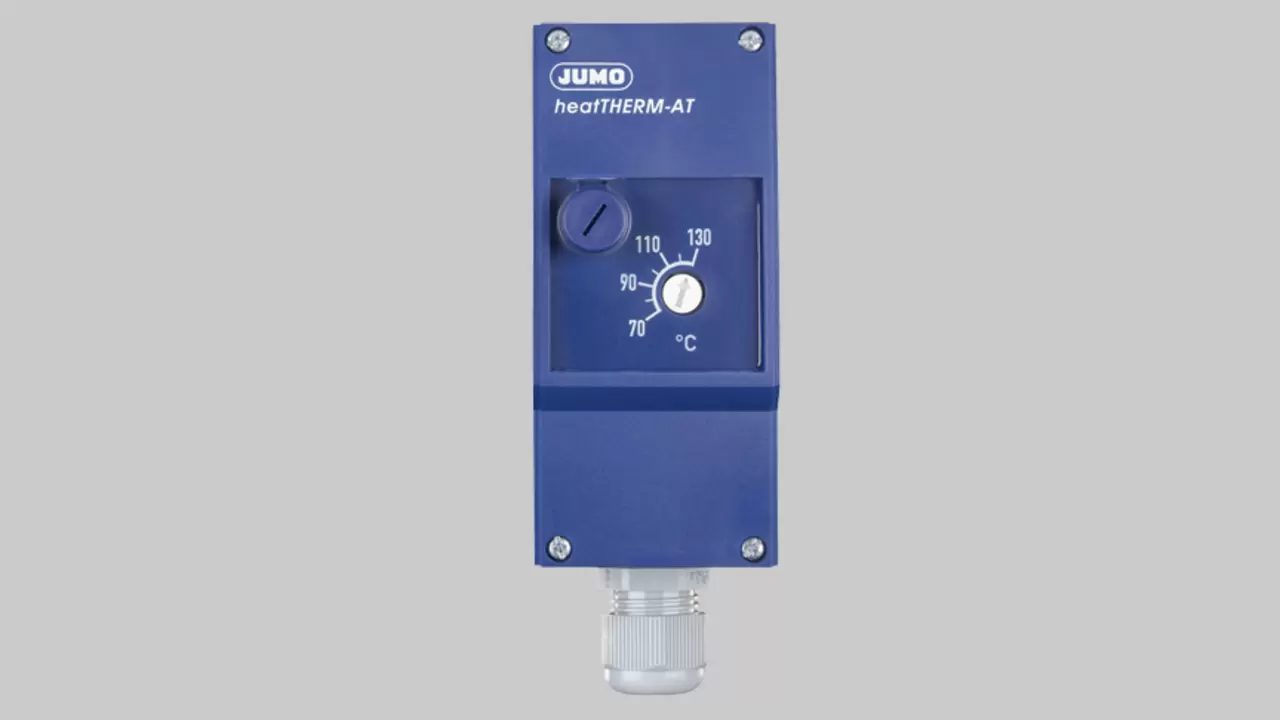
Temperature switches for switching off at a certain limit temperature are called temperature monitorsWith these temperature switches, the set point can usually only be set using a tool.
There are also temperature switches to turn off that require a reset. If the contact was opened due to excess temperature, it does not close automatically when the temperature returns to a good range. The reset button must also be pressed. These so-called temperature limiters They are often used in uncontrolled systems where there is no technical staff.
Temperature monitors and limiters are usually equipped with an additional safety feature and are then called safety temperature monitors or safety temperature limiters.
1 from 3
Our services